The Bowery Boys and the Black Rose
Howard Colby Ives, Portals to Freedom, (1937), George Ronald · Read original
When in Bahá'í history
New York (today: New York, NY, USA)
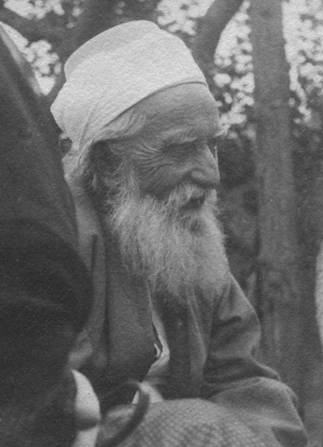
A retelling based on Portals to Freedom by Howard Colby Ives (George Ronald, 1937), chapter 4. The lines in quotation marks are Ives's own words.
In the spring of 1912 Howard Colby Ives, then a minister, had fallen into the habit of hurrying into New York after his Sunday service and spending the rest of the day at the home of Mr. and Mrs. Kinney, where 'Abdu'l-Bahá passed many hours with the friends.
Late one Sunday afternoon toward the end of April, Ives was standing alone at a window when a large group of boys came rushing up the steps, twenty or thirty of them, noisy and poorly dressed but scrubbed clean as if for an occasion. Mrs. Kinney explained. A few days earlier 'Abdu'l-Bahá had walked through the East Side to speak at the Bowery Mission, and a number of boys had followed His party, calling names and, as Ives remembered, throwing sticks. She had dropped back, told them Who He was, and invited them to her home the next Sunday so that they could see Him. Now they had come.
Ives followed them upstairs to 'Abdu'l-Bahá's room. The Master stood at the door and greeted each boy as he entered, with a handclasp or an arm around the shoulder, and with so much laughter that, Ives wrote, it almost seemed He was a boy with them.
Among the last to enter was a Black boy of about thirteen, the only boy of his race in the group, who evidently feared he might not be welcome. When 'Abdu'l-Bahá saw him, His face lit up with a smile. In Ives's words, "He raised His hand with a gesture of princely welcome and exclaimed in a loud voice so that none could fail to hear; that here was a black rose."
The room fell silent. The boy's face shone with happiness, and the other boys looked at him with new eyes. Ives caught them glancing at him again and again with thoughtful eyes.
Watching them, Ives wondered what would happen in New York if these boys remembered the afternoon all their lives, and whenever they met people of the city's many races thought of them as "different colored flowers in the Garden of God."
A retelling based on Portals to Freedom (Howard Colby Ives, George Ronald, 1937), chapter 4. For Ives's full account, see the original.
Cite this story
Ives, H. C.. (1937). *Portals to Freedom*. George Ronald. https://bahai-library.com/ives_portals_freedom
Record yourself reading this story
Recording stays on this device only. Nothing is uploaded.
Related stories
A Black Rose
A crowd of boys came to meet 'Abdu'l-Bahá in New York. The only Black boy among them was afraid he would not be welcome, but 'Abdu'l-Bahá greeted him, loud enough for all to hear, as a black rose.
The Black Rose
A boy of about thirteen, the only Black boy in a group visiting 'Abdu'l-Bahá in New York, was afraid he might not be welcome. 'Abdu'l-Bahá called him "a black rose" in front of everyone.
The Master's Last Instructions in New York
On December 2, 1912, three days before He sailed from America, 'Abdu'l-Bahá gave His last instructions to a group of friends in New York. Howard Colby Ives, sitting close to Him, later quoted the talk in full.
A Black Rose
A group of boys from New York's East Side came to meet 'Abdu'l-Bahá. The only Black boy among them feared he might not be welcome, and the Master greeted him before them all as "a black rose."