A Cup of Tea: The Master Listens to a Tired Minister
Howard Colby Ives, Portals to Freedom, (1937), George Ronald · Read original
When in Bahá'í history
New York (today: New York, NY, USA)
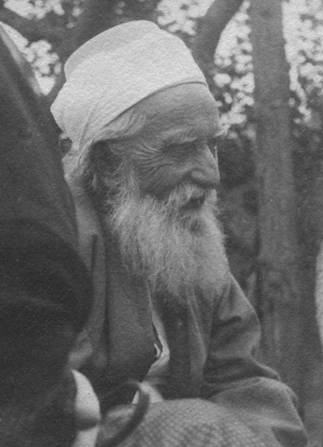
In Portals to Freedom Howard Colby Ives describes one of the small after-meeting moments that, more than any of the great public addresses, gave him the measure of the Master’s person.
The occasion was a public meeting in New York in May 1912. The hall had been crowded; the Master had spoken at length on the oneness of religion; the audience had come forward in long queues to greet Him. By the time the room had cleared, the hour was late. Ives, who had assisted with the introductions, was preparing to make his own way home.
The Master, on the way out of the hall, looked at him and made a small gesture. Ives was to come back to the residence with Him. He went.
In the upper room of the residence the Master settled Himself on a low couch. Tea had been prepared on a small table. He indicated that Ives should sit beside Him. He poured the tea Himself, into two small cups. He handed one to Ives.
Ives writes that he had carried into the room, that evening, a private question. He had been in some spiritual difficulty about whether his work as a minister was finally honest — whether he could continue to serve from a Christian pulpit doctrines that he no longer believed, and whether he had the courage to give up his salaried ministry for the unsalaried life of an ordinary believer.
He had not voiced the question. He had not, in fact, voiced it even to himself in clear terms. He had simply carried it, all day, as a kind of weight in the chest.
The Master, holding His own small cup of tea, looked at him. He spoke quietly. He spoke, Ives records, of the courage that the truth-loving life eventually requires. He spoke of the small fidelities that prepare a person for the larger ones. He spoke of the freedom that follows, in the soul, when one has stopped saying with one’s mouth what one no longer believes with one's heart. He did not name Ives’s situation; He did not need to.
He poured my tea Himself, and answered, before I had asked it, the question I had carried in.
Ives left the residence later that evening. He walked back across the city in considerable inward stillness. Within a few months he would have resigned the Unitarian ministry. Within a year he would have taken up a small new life as an itinerant Bahá’í teacher, supporting himself with what work he could find. The freedom the Master had named, in the small cup of tea, had begun.
Paraphrased from Portals to Freedom (Howard Colby Ives, George Ronald, 1937); see original for full text.
Cite this story
Ives, H. C.. (1937). *Portals to Freedom*. George Ronald. https://bahai-library.com/ives_portals_freedom
Record yourself reading this story
Recording stays on this device only. Nothing is uploaded.
Related stories
The Quiet Cup of Tea
A tired man carried a heavy worry he had never said out loud — and over a small cup of tea, 'Abdu'l-Bahá answered the very question hiding in his heart.
Fragrance of Lilies: A Sunday in the Master's Garden
In *Portals to Freedom* Howard Colby Ives describes a Sunday afternoon in 1912 when 'Abdu'l-Bahá received the believers in a small New Jersey garden — and the way the smell of lilies, the ordinary furniture of the house, and the laughter of children combined into what Ives later called the *fragrance* of the Cause.
The Master in the Unitarian Pulpit: Brooklyn, 1912
In *Portals to Freedom* Howard Colby Ives describes the Sunday morning in 1912 when he invited 'Abdu'l-Bahá to speak from his own Unitarian pulpit in Brooklyn — and the strange experience of standing in his own church and watching his own congregation be addressed by the man whose presence had reorganised his ministry from within.
The First Meeting in the Ansonia Hotel
In *Portals to Freedom* Howard Colby Ives describes the first morning in April 1912 when, summoned to the Ansonia Hotel in New York, he climbed the stair and entered the room where 'Abdu'l-Bahá was receiving — and found that all the arguments of his Unitarian ministry suddenly fell silent.