Fragrance of Lilies: A Sunday in the Master's Garden
Howard Colby Ives, Portals to Freedom, (1937), George Ronald · Read original
When in Bahá'í history
New Jersey (today: New Jersey, USA)
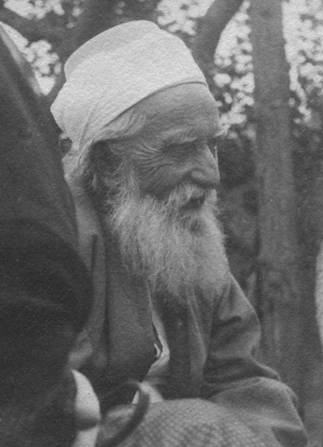
Howard Colby Ives, in Portals to Freedom, devotes more than one chapter to small unhurried afternoons of His company that, he writes, taught him more than the great public meetings of the same year. One of them was a Sunday in the spring of 1912 spent at a small house and garden in New Jersey, where a Bahá’í family had asked the Master to come for a meal and an afternoon’s rest from the strain of the public schedule.
The Master accepted. The motor-car bore Him out of the city in the morning; He was greeted at the gate of the small property by the family and by perhaps a dozen close believers. Ives was among them.
He describes the afternoon in the unfussed prose he reserved for what he most wanted preserved. The Master sat for some time in the parlour, taking tea and answering individual inquiries from the friends who had come up. After a while He asked to walk in the garden. The garden was small but disciplined: a strip of lawn, a few flower-beds, a row of pot lilies along the path. The lilies, Ives records, were just opening; the perfume reached the steps of the house.
The Master walked along the lily-bed. He bent over each in turn. He named one or two by their petal-shape; He spoke to the children of the family about how the long lily flower opens. The children laughed at His remarks. He laughed back. The flowers, the lawn, the children, the Master, the small circle of believers — Ives writes that the whole afternoon took on, for him, a single quality.
The fragrance of the lilies and the laughter of the children combined into the fragrance of the Cause itself.
He dwells on the word fragrance. The Cause, he had come to think, was not a doctrine that one believed. It was a fragrance that a particular Person carried, and that, where He sat, spread to everything around Him — to the lilies, to the laughter, to the chairs the company was sitting on, to the food the family had prepared. One left such an afternoon, he writes, not with new arguments but with the smell of the lilies on one’s coat.
The afternoon ended, in the late sun, with a final cup of tea on the porch. The Master blessed the family; He blessed the children; He took His seat in the motor-car. The party stood on the porch and watched Him driven down the lane. Ives writes that for many days afterwards the smell of lilies, in any garden, brought back the afternoon.
Paraphrased from Portals to Freedom (Howard Colby Ives, George Ronald, 1937); see original for full text.
Cite this story
Ives, H. C.. (1937). *Portals to Freedom*. George Ronald. https://bahai-library.com/ives_portals_freedom
Record yourself reading this story
Recording stays on this device only. Nothing is uploaded.
Related stories
A Cup of Tea: The Master Listens to a Tired Minister
In *Portals to Freedom* Howard Colby Ives recounts an evening in May 1912 when, having sat through one of the great public meetings, he was invited into the Master's private room for a small cup of tea — and a quiet conversation that addressed, without his having spoken them, the very fears he had carried in.
The Master in the Unitarian Pulpit: Brooklyn, 1912
In *Portals to Freedom* Howard Colby Ives describes the Sunday morning in 1912 when he invited 'Abdu'l-Bahá to speak from his own Unitarian pulpit in Brooklyn — and the strange experience of standing in his own church and watching his own congregation be addressed by the man whose presence had reorganised his ministry from within.
The First Meeting in the Ansonia Hotel
In *Portals to Freedom* Howard Colby Ives describes the first morning in April 1912 when, summoned to the Ansonia Hotel in New York, he climbed the stair and entered the room where 'Abdu'l-Bahá was receiving — and found that all the arguments of his Unitarian ministry suddenly fell silent.
The Quiet Cup of Tea
A tired man carried a heavy worry he had never said out loud — and over a small cup of tea, 'Abdu'l-Bahá answered the very question hiding in his heart.