The Master at the Brotherhood Church
Howard Colby Ives, Portals to Freedom, (1937), George Ronald · Read original
When in Bahá'í history
Jersey City (today: Jersey City, NJ, USA)
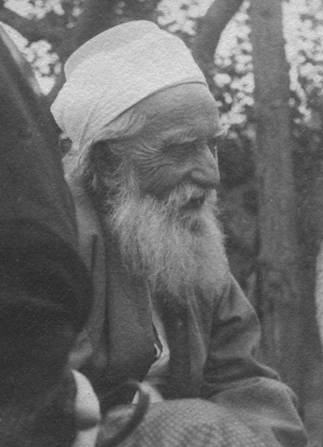
A retelling based on Portals to Freedom by Howard Colby Ives (George Ronald, 1937). The lines in quotation marks are verbatim from the book.
In the spring of 1912 Howard Colby Ives was the unsalaried minister of the Brotherhood Church in Jersey City, a congregation he had organized some months before out of what he later called his own spiritual unrest. About the first of May, a few weeks after he first met the Master in New York, he asked 'Abdu'l-Bahá whether He could speak to that congregation. The Master considered a moment and answered, smiling, God willing. The reply puzzled Ives, who needed a date to announce. When he explained that he would need to know a week or ten days ahead, the Master told him to ask then. A week later Ives proposed Sunday evening, May 19, and He said it was very good.
Ives thought it was in connection with this visit that the Master remarked to him one day that many ministers and public speakers prepare their addresses in advance and speak the same words to many audiences. He wondered, He said, how they could be sure of what God wanted them to say until they looked into the faces of their people. Ives felt the remark like a searchlight turned on his own heart.
On the evening of Sunday, May 19, 1912, only five weeks after Ives's first meeting with Him, 'Abdu'l-Bahá came to the Brotherhood Church. Ives estimates that five or six hundred people had gathered. He remembered it as a thrilling sight when the Master strode up the aisle at the head of a small company of believers from many parts of the world.
Ives rose to introduce Him. 'Abdu'l-Bahá sat in the place of honor just behind the pulpit, with His interpreter beside Him softly translating the gist of Ives's words. Ives stood at one side of the platform so as not to stand in front of his guest. He spoke of the Master's forty years in the prison city of 'Akká and His sixty years of exile and suffering. What he remembered most was the attentive, smiling face that met his glance. Lua Getsinger, one of the first American believers, sat in the audience.
Then 'Abdu'l-Bahá rose, the interpreter a little behind Him, and began:
Because this is called the Church of Brotherhood I wish to speak upon the Brotherhood of Mankind.
Ives writes that as that voice stressed the word Brotherhood, shame crept into his heart. He had named the church; but this Man had lived what the word meant, through prison, chains and privation, while he himself had only talked about it.
The Master contrasted physical brotherhood with spiritual brotherhood, which alone is real and lasting, and which exists, He said, through the breaths of the Holy Spirit. Pointing to the electric lamps lighting the hall, He said that the lamps were many but the light was one. He spoke of how Bahá'u'lláh had blended warring peoples of the East into unity, and closed, in answer to a question from the audience, with words later printed in The Promulgation of Universal Peace: that we must not look at our own capacities, for the divine bestowals can transform a drop into an ocean.
Ives had asked Him beforehand to speak longer than usual; He spoke for about fifteen minutes, one of the briefest of His public talks. Looking back, Ives understood the brevity as a lesson meant for him: that a few words inspired by the Holy Spirit outweigh all the man-made sermons ever printed. The talk that evening, together with the Master's address to the Unitarians in Boston five days later, marked for Ives a new phase in his journey from self to God.
A retelling based on Portals to Freedom (Howard Colby Ives, George Ronald, 1937), chapters 1, 5 and 6. For the fuller account, see the original.
Cite this story
Ives, H. C.. (1937). *Portals to Freedom*. George Ronald. https://bahai-library.com/ives_portals_freedom
Record yourself reading this story
Recording stays on this device only. Nothing is uploaded.
Related stories
The Church Named Brotherhood
Howard Colby Ives invited 'Abdu'l-Bahá to speak at the church he had named the Brotherhood Church. When 'Abdu'l-Bahá spoke on brotherhood, Howard felt ashamed of how little he had lived the word.
The Heart That Speaks
Howard Colby Ives wished he could meet 'Abdu'l-Bahá alone, without even an interpreter. At a crowded New York hotel, 'Abdu'l-Bahá called him over, sent everyone out, and sat with him in silence.
The Hand That Did Not Move
Saying goodbye to 'Abdu'l-Bahá on the ship that took Him from America, Howard Colby Ives knelt and placed the Master's hand on his head. He never forgot how still that hand lay.
The Minister the Master Beckoned
Howard Colby Ives, an unhappy minister, met 'Abdu'l-Bahá in New York in 1912. Months of study and turmoil followed, and when his Brotherhood Church had to close, 'Abdu'l-Bahá wrote to him that it had happened to free him to call people to the Kingdom.