The Heart That Speaks
Howard Colby Ives, Portals to Freedom, (1937), George Ronald · Read original
When in Bahá'í history
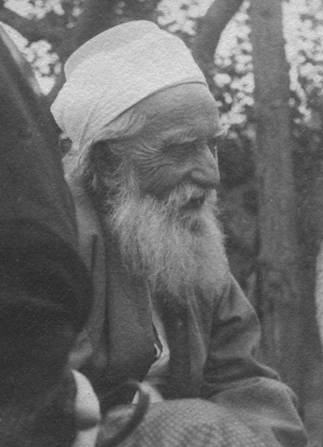
A retelling for children, based on Portals to Freedom by Howard Colby Ives (George Ronald, 1937), chapter 1. The words in quotation marks are Howard's own, as he wrote them down.
In 1912 there was a minister in New Jersey named Howard Colby Ives. He was unhappy, because he was searching for God and had not found the peace he longed for. He had been reading about the Bahá'í Faith and meeting Bahá'ís, but none of them could calm his restless heart.
Howard heard that 'Abdu'l-Bahá was coming to America. One cold February day, walking with his friend Mountfort Mills, he said, "When 'Abdu'l-Bahá arrives I would like very much to have a talk with Him alone, without even an interpreter."
His friend smiled. 'Abdu'l-Bahá spoke very little English, and Howard spoke no Persian at all. But Howard did not change his mind. He was very tired of words, he said.
When 'Abdu'l-Bahá arrived in New York, Howard went to a gathering to see Him. It was so crowded that he could only peep over someone's shoulder. Early the next morning he went to the Hotel Ansonia, where 'Abdu'l-Bahá was staying.
The big reception room was already full of people. Howard did not want to talk to anyone, and he had no appointment. He stood by the window with his back to the room, wondering why he had come.
Then a door opened on the far side of the room, and 'Abdu'l-Bahá came out to say goodbye to some visitors. His eyes met Howard's. He smiled and beckoned to him to come.
Howard looked around. Surely 'Abdu'l-Bahá meant someone else! But no one was near him. 'Abdu'l-Bahá beckoned again.
When Howard came near, 'Abdu'l-Bahá took his hand as if He had always known him. Then He signalled to everyone else to leave the room, even His interpreter, and closed the door. Howard's wish had come true. He was alone with 'Abdu'l-Bahá.
'Abdu'l-Bahá led him across the room toward two chairs by the window. Softly, in English, He told Howard that he was His very dear son. Howard could not say a word. They sat down knee to knee, and tears ran down his face. 'Abdu'l-Bahá wiped them away with His thumbs and told him not to cry, because one must always be happy. Then He laughed a happy, ringing laugh.
For a long time they sat together in silence, and a great peace came to Howard. Then 'Abdu'l-Bahá put His hand on Howard's chest and said that it is the heart that speaks.
Howard did not make a single sound the whole time. He did not need to. At last 'Abdu'l-Bahá jumped up, laughing, and gave him a hug so strong that Howard said his ribs cracked. Then He kissed him on both cheeks and walked him to the door.
Howard wrote many years later, "That is all. But life has never been quite the same since."
This is a retelling for children. For the fuller account, see "First Meeting at the Hotel Ansonia".
Cite this story
Ives, H. C.. (1937). *Portals to Freedom*. George Ronald. https://bahai-library.com/ives_portals_freedom
Record yourself reading this story
Recording stays on this device only. Nothing is uploaded.
Related stories
The Hand That Did Not Move
Saying goodbye to 'Abdu'l-Bahá on the ship that took Him from America, Howard Colby Ives knelt and placed the Master's hand on his head. He never forgot how still that hand lay.
The Minister the Master Beckoned
Howard Colby Ives, an unhappy minister, met 'Abdu'l-Bahá in New York in 1912. Months of study and turmoil followed, and when his Brotherhood Church had to close, 'Abdu'l-Bahá wrote to him that it had happened to free him to call people to the Kingdom.
The Master at the Brotherhood Church
On May 19, 1912, 'Abdu'l-Bahá spoke on brotherhood at the Brotherhood Church in Jersey City, where Howard Colby Ives was the unpaid minister. Ives, who had named the church, felt ashamed of how little he had lived the word.
First Meeting at the Hotel Ansonia
In April 1912 Howard Colby Ives went without an appointment to the Hotel Ansonia in New York. 'Abdu'l-Bahá beckoned him across a crowded room, sent everyone else out, and sat with him alone.