The Minister the Master Beckoned
Howard Colby Ives, Portals to Freedom, (1937), George Ronald · Read original
When in Bahá'í history
New York City (today: New York, NY, USA)
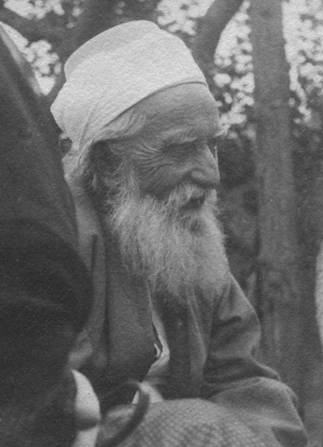
A retelling based on Portals to Freedom by Howard Colby Ives, his memoir of meeting 'Abdu'l-Bahá in America in 1912. Words in quotation marks are from that book.
Howard Colby Ives was a minister with a suburban church near New York. After years of study he had moved from orthodox belief to agnosticism and then to what he called the "Liberal Faith," and none of it had satisfied him. "The fall and winter of 1911-12," he wrote, "is a period marked in my memory as months of great unhappiness." He added: "I know of no greater disappointment, no more terrible depression than that which comes to the sincere soul who, seeking God, finds Him not."
In October 1911 he read a magazine article about 'Abdu'l-Bahá and His planned visit to America. What struck him most was that 'Abdu'l-Bahá placed money beneath His feet: "He never took up a collection!" Around the same time a friend from the small Brotherhood Church that Ives had started in Jersey City asked for his opinion of some notes from a Bahá'í meeting. Ives went to a meeting himself, then invited a Bahá'í, Mountfort Mills, to speak to his congregation. For the next three months he read everything he could find. Of The Seven Valleys he wrote: "Not one word in ten did I understand but doors seemed to be opening before me." He was not convinced, and at times he was repelled. "My heart was in a turmoil and yet incredibly attracted."
One day, walking with Mills, he said he would like to talk with 'Abdu'l-Bahá alone, "without even an interpreter." Mills told him that would be difficult, since 'Abdu'l-Bahá spoke little English.
At the Hotel Ansonia
After 'Abdu'l-Bahá reached New York in April 1912, Ives managed only a glimpse of Him at a crowded reception. The next morning he was at the Hotel Ansonia before nine o'clock. He had no appointment. He stood by a window, apart from the other visitors, until a door opened across the room and 'Abdu'l-Bahá came out to say farewell to a group. Their eyes met, and 'Abdu'l-Bahá beckoned to him. Ives looked around, sure the gesture was meant for someone else, but there was no one near him, and 'Abdu'l-Bahá beckoned again.
As Ives came to the door, 'Abdu'l-Bahá took his hand "as if He had always known me," sent everyone else out of the room, the interpreter included, and closed the door. The wish Ives had spoken of weeks before was fulfilled. They sat by the window, knee to knee. "Softly came the assurance that I was His very dear son." Then 'Abdu'l-Bahá looked at him: "It seemed as though never before had anyone really seen me." Ives began to weep. 'Abdu'l-Bahá wiped the tears away with His thumbs, told him not to cry, that one must always be happy, and laughed. He placed His hand on Ives's breast and said that it was the heart that speaks. Ives never said a word. At the end 'Abdu'l-Bahá lifted him to his feet, embraced him, kissed him on both cheeks and led him to the door. "That is all," Ives wrote. "But life has never been quite the same since."
The closing of a church
Even so, Ives was honest that nothing was settled yet. A few weeks later, he wrote, "I was not a Bahá'í. I did not accept Bahá'u'lláh as the Manifestation of God." Through the summer of 1912, travelling in the Eastern States, he carried a satchel of Bahá'í books and Tablets and read nothing else, not even newspapers. "It seemed as though the focal center of my life had suddenly shifted, and all my interests were revolving around a new and most disturbing axis."
In the fall he could not raise the money to keep the Brotherhood Church going. He wrote to 'Abdu'l-Bahá about the closing, and about his growing interest in the teachings of Bahá'u'lláh. The reply, translated in New York on 14 November 1912, began: "I was made very sad on account of the event of the closing of the Church of Brotherhood." It went on with a gentle joke about the church's "first assistant," whom Ives had described as a philosopher, and then said:
"In brief: be thou not unhappy. This event has happened so that thou mayest become freed from all other occupations, day and night thou mayest call the people to the Kingdom; spread the teachings of Bahá'u'lláh; inaugurate the Era of the New Life; promulgate the Reality, and be sanctified and purified from all save God."
Ives took two things from the Tablet. One was its humour; when they next met, 'Abdu'l-Bahá laughed as He brought the joke up again. The other was its closing charge, which gave him, he wrote, "the first glimmer of realization" of the kind of greatness 'Abdu'l-Bahá had meant when He told him that this is a Day for Very Great Things.
This is a retelling. For the full account, see Portals to Freedom by Howard Colby Ives.
Cite this story
Ives, H. C.. (1937). *Portals to Freedom*. George Ronald. https://bahai-library.com/ives_portals_freedom
Record yourself reading this story
Recording stays on this device only. Nothing is uploaded.
Related stories
The Question Answered by Silence
Howard Colby Ives asked ‘Abdu’l-Bahá why he should believe in Bahá’u’lláh. After a long silence the Master spoke of the sincerity a minister's heart must have, and only months later did Ives realize his question had been answered.
The Question That Came Back
Howard Colby Ives went to ask 'Abdu'l-Bahá what renunciation means. The Master talked about something else on the walk back, and then asked Howard a question of His own.
The Heart That Speaks
Howard Colby Ives wished he could meet 'Abdu'l-Bahá alone, without even an interpreter. At a crowded New York hotel, 'Abdu'l-Bahá called him over, sent everyone out, and sat with him in silence.
The Hand That Did Not Move
Saying goodbye to 'Abdu'l-Bahá on the ship that took Him from America, Howard Colby Ives knelt and placed the Master's hand on his head. He never forgot how still that hand lay.