The First Meeting in the Ansonia Hotel
Howard Colby Ives, Portals to Freedom, (1937), George Ronald · Read original
When in Bahá'í history
New York (today: New York, NY, USA)
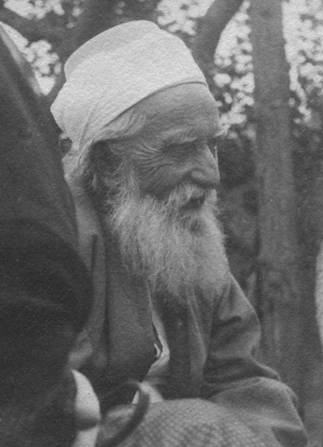
Howard Colby Ives was, in April 1912, the Unitarian minister of a small congregation in Brooklyn. He had heard, by the Christian press of the city, that an Eastern teacher of universal religion was lodging at the Ansonia Hotel on the Upper West Side, and would be receiving inquirers on certain mornings of the week. Ives — who was at that period in some spiritual difficulty, having begun to feel that the boundaries of his Unitarian theology were no longer adequate to the questions his ministry was raising — went to call.
The first chapters of Portals to Freedom describe the visit. He had brought, he records, a careful list of questions. He had prepared the apologetic positions he wished to test against this Eastern visitor. He had imagined the conversation in advance.
He climbed the stair to the upper floor of the Ansonia. He was ushered into a small ante-room. He was, in due course, brought into the inner room where the Master was receiving.
‘Abdu’l-Bahá was seated by the window. He was perhaps sixty-eight years old; the white hair flowed from beneath the white turban; the eyes were dark and fully present. He rose. He came forward. He took both of Ives’s hands in His own. He sat the visitor down beside Himself.
Ives writes, with the disarming honesty that gives the book its character, what then happened to the prepared list of questions:
All my prepared questions seemed, in the room, suddenly small.
He did not, he records, ask any of them. The Master spoke. He asked after Ives’s family. He asked after his ministry. He asked after the well-being of his congregation. The questions were ordinary; the warmth in which they were asked was not. Ives found himself answering — first in monosyllables, then fully — and as he answered he discovered that the inward restlessness which had brought him to the Ansonia was quietening of its own accord, without anything having yet been formally settled.
He stayed in the room perhaps half an hour. The Master released him with a blessing. Ives walked out of the Ansonia into the bright spring morning of Broadway and could not, he says, remember what he had been about to do that day.
The book that grew, twenty-five years later, from that first half-hour is the record of a conversion that began before any argument had been mounted and that lasted the rest of his life. Ives became, in the years that followed, one of the most beloved early American Bahá’ís. The portal, as he chose to call it in his title, had opened on a Tuesday morning in April 1912, when a tired Unitarian minister had climbed a hotel stair and discovered that he had been awaited.
Paraphrased from Portals to Freedom (Howard Colby Ives, George Ronald, 1937); see original for full text.
Cite this story
Ives, H. C.. (1937). *Portals to Freedom*. George Ronald. https://bahai-library.com/ives_portals_freedom
This story shares quotes with 1 other story
“All my prepared questions seemed, in the room, suddenly small.”
Also in
- The List of Questions— Howard Colby Ives, Portals to Freedom
Record yourself reading this story
Recording stays on this device only. Nothing is uploaded.
Related stories
A Cup of Tea: The Master Listens to a Tired Minister
In *Portals to Freedom* Howard Colby Ives recounts an evening in May 1912 when, having sat through one of the great public meetings, he was invited into the Master's private room for a small cup of tea — and a quiet conversation that addressed, without his having spoken them, the very fears he had carried in.
Fragrance of Lilies: A Sunday in the Master's Garden
In *Portals to Freedom* Howard Colby Ives describes a Sunday afternoon in 1912 when 'Abdu'l-Bahá received the believers in a small New Jersey garden — and the way the smell of lilies, the ordinary furniture of the house, and the laughter of children combined into what Ives later called the *fragrance* of the Cause.
The Master in the Unitarian Pulpit: Brooklyn, 1912
In *Portals to Freedom* Howard Colby Ives describes the Sunday morning in 1912 when he invited 'Abdu'l-Bahá to speak from his own Unitarian pulpit in Brooklyn — and the strange experience of standing in his own church and watching his own congregation be addressed by the man whose presence had reorganised his ministry from within.
The Quiet Cup of Tea
A tired man carried a heavy worry he had never said out loud — and over a small cup of tea, 'Abdu'l-Bahá answered the very question hiding in his heart.