The Church Named Brotherhood
Howard Colby Ives, Portals to Freedom, (1937), George Ronald · Read original
When in Bahá'í history
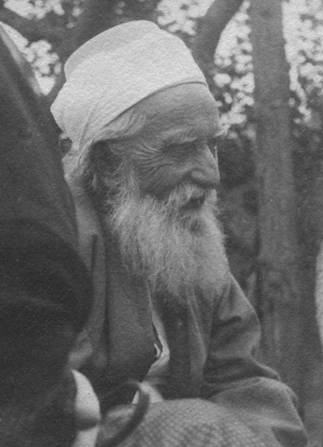
A retelling for children, based on Portals to Freedom by Howard Colby Ives (George Ronald, 1937).
In the spring of 1912 a man named Howard Colby Ives was the minister of a church in Jersey City, just across the river from New York. He was not paid for the work. He had started the church himself, and he had named it the Brotherhood Church.
That spring, 'Abdu'l-Bahá had come all the way from the East to America. Howard had met Him only a few weeks before. One day he asked whether 'Abdu'l-Bahá would come and speak to the people of his church.
'Abdu'l-Bahá thought for a moment, smiled, and said, God willing.
Howard needed a date to tell his congregation. When he explained this, 'Abdu'l-Bahá told him to ask again when the time came. A week later Howard asked if Sunday evening, May 19, would do, and 'Abdu'l-Bahá said it was very good.
When the evening came, five or six hundred people filled the hall. Howard remembered it as a thrilling sight when 'Abdu'l-Bahá walked up the aisle, leading a small group of believers who had come from many different countries.
Howard stood up first to introduce his guest. 'Abdu'l-Bahá sat in the seat of honor just behind the pulpit, with an interpreter beside Him softly translating Howard's words for Him. Howard stood off to one side, so that he would not be standing in front of 'Abdu'l-Bahá. He told the people how 'Abdu'l-Bahá had spent forty years as a prisoner in the city of 'Akká. Whenever he turned to look, he saw 'Abdu'l-Bahá's face, listening and smiling at him.
Then 'Abdu'l-Bahá stood up to speak. His very first words were these:
Because this is called the Church of Brotherhood I wish to speak upon the Brotherhood of Mankind.
When Howard heard the way 'Abdu'l-Bahá said the word Brotherhood, he felt ashamed. He had given the church that name. He had talked about brotherhood many times. But here was Someone who had truly lived it, through prison and chains and hardship.
'Abdu'l-Bahá explained that there are two kinds of brotherhood. One is the kind of family we are born into. The other is spiritual brotherhood, which comes from the Holy Spirit and is the only kind that is real and lasting. He pointed to the electric lamps shining in the hall. The lamps are many, He said, but the light is one.
Howard had asked 'Abdu'l-Bahá to give a longer talk than usual. Instead, He spoke for only about fifteen minutes. Later Howard understood why: a few words inspired by the Holy Spirit can do more than all the long sermons ever printed.
This is a retelling for children. For the fuller account, see "The Master at the Brotherhood Church".
Cite this story
Ives, H. C.. (1937). *Portals to Freedom*. George Ronald. https://bahai-library.com/ives_portals_freedom
Record yourself reading this story
Recording stays on this device only. Nothing is uploaded.
Related stories
The Master at the Brotherhood Church
On May 19, 1912, 'Abdu'l-Bahá spoke on brotherhood at the Brotherhood Church in Jersey City, where Howard Colby Ives was the unpaid minister. Ives, who had named the church, felt ashamed of how little he had lived the word.
The Heart That Speaks
Howard Colby Ives wished he could meet 'Abdu'l-Bahá alone, without even an interpreter. At a crowded New York hotel, 'Abdu'l-Bahá called him over, sent everyone out, and sat with him in silence.
The Hand That Did Not Move
Saying goodbye to 'Abdu'l-Bahá on the ship that took Him from America, Howard Colby Ives knelt and placed the Master's hand on his head. He never forgot how still that hand lay.
The Minister the Master Beckoned
Howard Colby Ives, an unhappy minister, met 'Abdu'l-Bahá in New York in 1912. Months of study and turmoil followed, and when his Brotherhood Church had to close, 'Abdu'l-Bahá wrote to him that it had happened to free him to call people to the Kingdom.