A Place of Honor for Louis Gregory
Mírzá Maḥmúd-i-Zarqání, Mahmúd's Diary: The Diary of Mírzá Maḥmúd-i-Zarqání, (1998), George Ronald
When in Bahá'í history
Washington, D.C. (today: Washington, D.C., USA)
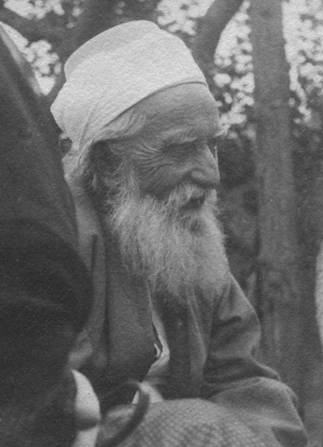
On Tuesday, April 23, 1912, ‘Abdu’l-Bahá spoke at Howard University in Washington, D.C., a university for Black students, on the harmony of black and white and the unity of humankind. Joseph Hannen, a Washington Bahá’í, wrote of that occasion in Star of the West:
This was a most notable occasion, and here, as everywhere when both white and colored people were present, Abdul-Baha seemed happiest.
From Howard the Master went to lunch at the home of Ali-Kuli Khan, the Persian chargé d’affaires, and his wife Florence, who had arranged a luncheon in His honor. According to Agnes Parsons, who was there, nineteen people were present besides ‘Abdu’l-Bahá. Louis Gregory, a Black lawyer and Bahá’í, was not among the invited guests.
Harlan Ober’s account, published after Louis Gregory’s passing, tells what happened. An hour before the luncheon ‘Abdu’l-Bahá sent word to Mr. Gregory to come to Him for a conference they had planned. The conversation went on until luncheon was announced. Everyone followed the Master into the dining room except Louis Gregory, who waited quietly for a chance to leave the house.
When all were seated, ‘Abdu’l-Bahá stood up, looked around and said to Ali-Kuli Khan, “Where is Mr. Gregory? Bring Mr. Gregory!” The Khan found him still in the house and brought him in. By then the Master had rearranged the places at the table and made room for him at His own right, the seat of honor. He said He was very pleased to have Mr. Gregory there, and then spoke on the oneness of mankind.
Louis Gregory went on to a lifetime of teaching the Faith and serving the cause of racial unity. After his passing in 1951, Shoghi Effendi named him a Hand of the Cause of God.
A retelling based on Mahmúd's Diary: The Diary of Mírzá Maḥmúd-i-Zarqání (George Ronald, 1998), entry for April 23, 1912 and its notes, which cite Agnes Parsons' diary and Harlan Ober's account of the luncheon in The Bahá'í World, vol. 12. Joseph Hannen's words are from Star of the West, vol. 3, no. 3. For the fuller account, see the original.
Cite this story
Maḥmúd-i-Zarqání, M.. (1998). *Mahmúd's Diary: The Diary of Mírzá Maḥmúd-i-Zarqání*. George Ronald.
Record yourself reading this story
Recording stays on this device only. Nothing is uploaded.
Related stories
The Marriage of Louis and Louisa Gregory
Louis Gregory, an African American lawyer, and Louisa Mathew, an Englishwoman, met as pilgrims in 1911. 'Abdu'l-Bahá expressed the wish that they marry, and on 27 September 1912 they became the first interracial Bahá'í couple in America.
The Seat Beside Him
Louis Gregory had not been invited to a luncheon for 'Abdu'l-Bahá in Washington, but 'Abdu'l-Bahá asked for him and gave him the seat of honor beside Himself.
The First Convention for Amity Between the Races
When Agnes Parsons made her pilgrimage in 1920, 'Abdu'l-Bahá asked her to arrange a convention in Washington for amity between the white and colored races. It met in May 1921, and Mountfort Mills read a message from the Master to it.
Louis Gregory's Place at the Table
During 'Abdu'l-Bahá's visit to segregated Washington, D.C., He shocked white socialites by insisting that Louis Gregory, an African-American Bahá'í and lawyer, be seated next to Him at a society luncheon, and He asked the Bahá'ís to hold integrated meetings.