The First Convention for Amity Between the Races
Louis G. Gregory, Star of the West, vol. 12, no. 6 (June 24, 1921), (1921), Bahai News Service · Read original
When in Bahá'í history
Washington, D.C. (today: Washington, D.C., USA)
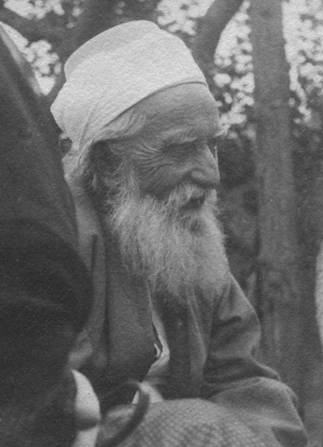
A retelling based on Louis G. Gregory's report "Convention for Amity Between the Colored and White Races" in Star of the West, vol. 12, no. 6 (June 24, 1921), with details from vol. 12, no. 4 and from the Bahá'ís of the United States. Words in quotation marks are quoted from those accounts.
In 1920 Agnes Parsons of Washington, D.C., made a pilgrimage to 'Abdu'l-Bahá in Haifa. During that visit He asked her to arrange a convention in Washington for amity between the white and colored races. Louis Gregory later wrote that "instructions for this great event were given by Abdul-Baha to Mrs. A. S. Parsons during her pilgrimage."
Mrs. Parsons carried what Gregory called "full responsibility" for the convention. She was assisted by a group of women that included Mariam Haney, Coralie F. Cook, Louise D. Boyle, Gabrielle Pelham and Martha Root. The Bahá'í assembly of Washington advised on the plans for many months. At the national Bahá'í convention in April 1921, Mountfort Mills, who had recently been with 'Abdu'l-Bahá in Haifa, stressed "the importance which Abdul-Baha gives to it," and Mrs. Parsons reported on the progress of the plans.
The printed program set out the purpose: "Half a century ago in America slavery was abolished. Now there has arisen need for another great effort in order that prejudice may be overcome."
The convention met on May 19, 20 and 21, 1921, in the First Congregational Church, which Gregory described as "historically famous for its opposition to race prejudice." Among the speakers were Senator Samuel M. Shortridge of California, former Senator Moses E. Clapp and Martin B. Madden of Illinois, along with Bahá'í speakers. Louis Gregory spoke on "The New Springtime." The Dunbar Community Singers sang spirituals, the Howard University Chorus sang, and Joseph H. Douglass, grandson of Frederick Douglass, played the violin. Dr. Alain Locke of Howard University chaired the Friday evening session. According to the Bahá'ís of the United States, the gathering drew more than two thousand people.
Mountfort Mills, presiding at one of the later sessions, read the message 'Abdu'l-Bahá had sent to the convention:
"Say to this convention that never since the beginning of time has a convention of more importance been held. This convention stands for the oneness of humanity. It will become the cause of the removal of hostilities between the races. It will become the cause of the enlightenment of America. It will, if wisely managed and continued, check the deadly struggle between these races, which otherwise will inevitably break out."
At the close, the chairman told the audience that suggestions would be welcome "with a view to crystallizing into workable shape for permanent organizations the noble ideals expressed during the interesting sessions." Gregory wrote that "the full significance of this convention can perhaps be realized only in years to come."
This is a retelling. For the full report, see Louis G. Gregory, "Convention for Amity Between the Colored and White Races," Star of the West, vol. 12, no. 6.
Cite this story
Gregory, L. G.. (1921). *Star of the West, vol. 12, no. 6 (June 24, 1921)*. Bahai News Service. https://bahai.works/Star_of_the_West/Volume_12/Issue_6
Record yourself reading this story
Recording stays on this device only. Nothing is uploaded.
Related stories
The First Race Amity Convention
At 'Abdu'l-Bahá's instruction, Agnes Parsons organized a convention for amity between the white and colored races, held in Washington in May 1921. There Mountfort Mills read the Master's message to the gathering.
A Place of Honor for Louis Gregory
On April 23, 1912, at a Washington luncheon given in 'Abdu'l-Bahá's honor by Ali-Kuli Khan, the Master asked for Louis Gregory, who had not been invited, and gave him the seat of honor at His right.
The Marriage of Louis and Louisa Gregory
Louis Gregory, an African American lawyer, and Louisa Mathew, an Englishwoman, met as pilgrims in 1911. 'Abdu'l-Bahá expressed the wish that they marry, and on 27 September 1912 they became the first interracial Bahá'í couple in America.
Louis Gregory's Place at the Table
During 'Abdu'l-Bahá's visit to segregated Washington, D.C., He shocked white socialites by insisting that Louis Gregory, an African-American Bahá'í and lawyer, be seated next to Him at a society luncheon, and He asked the Bahá'ís to hold integrated meetings.