The Marriage of Louis and Louisa Gregory
Bahá'í Chronicles editors, Bahá'í Chronicles · Read original
When in Bahá'í history
New York (today: New York City, USA)
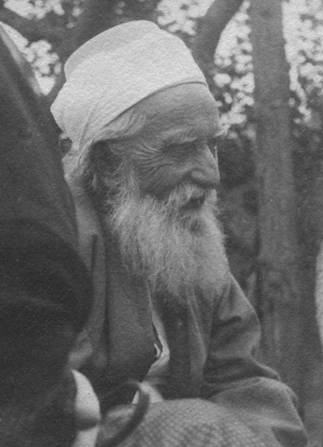
A retelling based on the biography of Louis G. Gregory in Bahá'í Chronicles, with details from Gregory's own pilgrim account A Heavenly Vista, from Mahmúd's Diary, and from Annamarie Honnold's Vignettes from the Life of 'Abdu'l-Bahá. Words in quotation marks are as recorded in those sources.
Louis George Gregory was born in Charleston, South Carolina, in 1874, less than a decade after his parents were freed from slavery. He studied law at Howard University in Washington, D.C., was admitted to the bar of the District of Columbia in 1902, and became a Bahá'í in 1909.
In 1911, at 'Abdu'l-Bahá's invitation, he made his pilgrimage, first to Ramleh, near Alexandria in Egypt, where the Master was then staying, and afterwards to Haifa and 'Akká. Among the other pilgrims was Louisa Mathew, an Englishwoman who had become a Bahá'í in Paris. In A Heavenly Vista Gregory records that he, Miss Mathew and Mr. Meakin took leave of 'Abdu'l-Bahá in Ramleh together before leaving for the Holy Land, and that on the first day of Riḍván they were in the party that visited 'Akká and the Shrine of Bahá'u'lláh.
At Ramleh 'Abdu'l-Bahá was asked whether, given the difficulties in America, the Black believers should hold their Nineteen-Day Feasts separately. He answered: "The colored people must attend all the unity meetings. There must be no distinctions. All are equal. If you have any influence to get the races to intermarry, it will be very valuable." In a Tablet answering a believer who had written of separate meetings for white and colored people, He wrote: "If it be possible, gather together these two races, black and white, into one Assembly, and put such love into their hearts that they shall not only unite but even intermarry."
Honnold records that toward the end of the pilgrimage "'Abdu'l-Bahá summoned Louis Gregory and Louisa Mathew" and, "to their surprise, expressed the wish that they should join their lives together."
In the spring of 1912 Louisa Mathew joined 'Abdu'l-Bahá's party at Naples and crossed with Him to New York on the S.S. Cedric. That August, according to Mahmúd's Diary, the Master spoke at a meeting in Dublin, New Hampshire, of the coming wedding of Miss Mathew and Mr. Gregory; the white people present, the diarist wrote, "were astonished to see the influence of the Cause."
Louis Gregory and Louisa Mathew were married in a quiet ceremony in New York City on 27 September 1912. They were the first interracial Bahá'í couple in America, at a time when such a marriage was a criminal offence in much of the United States. The account Honnold quotes says the marriage "brought all the obstacles to understanding and amity, and often cruel pressures," but that "it endured."
Louis Gregory gave the rest of his life to teaching the Faith, mostly in the South, and visited forty-six states as well as parts of Canada. After his death in 1951 Shoghi Effendi named him a Hand of the Cause of God.
This is a retelling. For the fuller account, see the biography of Louis G. Gregory in Bahá'í Chronicles and Gregory's A Heavenly Vista.
Cite this story
editors, B. C.. *Bahá'í Chronicles*. https://bahaichronicles.org/louis-george-gregory/
Record yourself reading this story
Recording stays on this device only. Nothing is uploaded.
Related stories
A Place of Honor for Louis Gregory
On April 23, 1912, at a Washington luncheon given in 'Abdu'l-Bahá's honor by Ali-Kuli Khan, the Master asked for Louis Gregory, who had not been invited, and gave him the seat of honor at His right.
The First Convention for Amity Between the Races
When Agnes Parsons made her pilgrimage in 1920, 'Abdu'l-Bahá asked her to arrange a convention in Washington for amity between the white and colored races. It met in May 1921, and Mountfort Mills read a message from the Master to it.
The Marriage of Louis and Louisa Gregory
Near the end of Louis Gregory’s pilgrimage, ‘Abdu’l-Bahá expressed the wish that he and Louisa Mathew, a white English pilgrim, should marry. They did, and their marriage endured many pressures as a symbol of the unity of the races.
Unity and Amity at Dublin
Near Lake Dublin, New Hampshire, in August 1912, 'Abdu'l-Bahá spoke to a gathering of Black people about unity between Black and white, and told them of the coming marriage of Louisa Mathew and Louis Gregory.