The Master's Last Instructions in New York
Howard Colby Ives, Portals to Freedom, (1937), George Ronald · Read original
When in Bahá'í history
New York (today: New York, NY, USA)
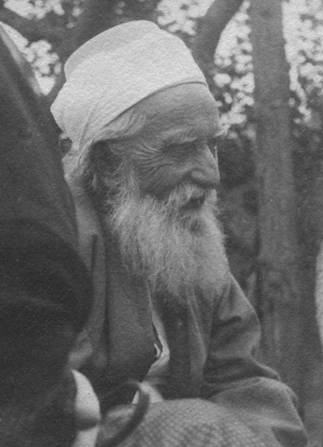
A retelling based on Portals to Freedom by Howard Colby Ives (George Ronald, 1937), chapter 11. The lines in quotation marks are verbatim from the book.
As the day of 'Abdu'l-Bahá's departure from America drew near, Howard Colby Ives found the thought of losing Him almost unbearable. In Portals to Freedom he admits that during the first five days of December 1912 his home and church saw little of him. Wherever the Master was, he tried to be, above all at the home at 780 West End Avenue in New York where 'Abdu'l-Bahá spent His last days in the country.
The occasion that stood out above the rest was the afternoon of December 2, when the Master spoke to a group of the friends in words so simple and so stirring that Ives could find no parallel for them except the last words of Jesus to His disciples. He left it to the reader, he says, to judge whether the comparison was justified.
The Master spoke very briefly, about three hundred words as they are recorded in the collection of His American addresses, and Ives quotes them in full. No record of the words, he adds, could convey the majesty, gentleness, humility and love that animated them. He wrote:
I sat very close to Him and it seemed there flowed from Him to me a veritable stream of spiritual energy which at times was overpowering.
'Abdu'l-Bahá said that since these were His last days with them He wished to give them His last instructions and exhortations, and that these were none other than the teachings of Bahá'u'lláh. Then He began:
You must manifest complete love and affection towards all mankind. Do not exalt yourselves above others but consider all as your equals, recognizing them as the servants of one God.
He went on to counsel them to love all from the depths of the heart, to prefer the followers of every religion to oneself, never to speak disparagingly of others, to see enemies as friends, to forgive instantly any wrong, to turn every thought toward bringing joy to hearts. He asked each of them to be as a lamp shining with the virtues of the world of humanity, and ended with the words "Be a Bahá'í."
Ives set these words down some twenty-five years later, quoting them in full because, as he said, they were worth it. Three days after that afternoon, on December 5, the Master sailed from New York on the S.S. Celtic.
A retelling based on Portals to Freedom (Howard Colby Ives, George Ronald, 1937), chapter 11. For the fuller account, see the original.
Cite this story
Ives, H. C.. (1937). *Portals to Freedom*. George Ronald. https://bahai-library.com/ives_portals_freedom
Record yourself reading this story
Recording stays on this device only. Nothing is uploaded.
Related stories
The Last Words Before the Ship Sailed
A few days before 'Abdu'l-Bahá sailed from America, Howard Colby Ives sat close to Him as He gave His last instructions to His friends, and later put all of the words into his book.
A Black Rose
A crowd of boys came to meet 'Abdu'l-Bahá in New York. The only Black boy among them was afraid he would not be welcome, but 'Abdu'l-Bahá greeted him, loud enough for all to hear, as a black rose.
The Bowery Boys and the Black Rose
Howard Colby Ives recalls a Sunday in New York in April 1912 when some twenty or thirty boys from the East Side came to see 'Abdu'l-Bahá, and He welcomed the only Black boy among them, before them all, as a black rose.
Saying Goodbye on the Celtic
On December 5, 1912, many friends came aboard the ship Celtic in New York to say goodbye to 'Abdu'l-Bahá. In His last words to them He said that the whole earth is one globe and all nations are one family.