Saying Goodbye on the Celtic
Mírzá Maḥmúd-i-Zarqání, Mahmúd's Diary: The Diary of Mírzá Maḥmúd-i-Zarqání, (1998), George Ronald
When in Bahá'í history
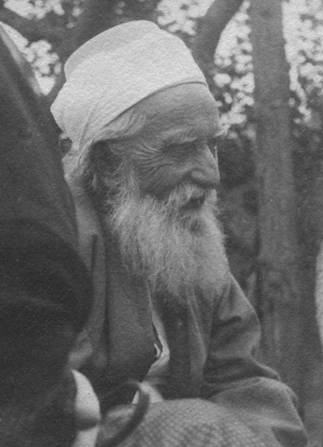
A retelling for children, based on Mahmúd's Diary (entry of December 5, 1912).
On December 5, 1912, a big ship called the Celtic was waiting in the harbor of New York. She would carry 'Abdu'l-Bahá across the ocean to a city called Liverpool, in England.
For almost eight months 'Abdu'l-Bahá had traveled across America. He had arrived in this same harbor in April, and now He was leaving from it.
A man named Mírzá Maḥmúd was traveling with Him, and he wrote down in his diary what happened that day. He tells us that a great many friends came onto the ship to say goodbye, from New York and from other cities too. There were so many that the big lounge of the ship could not hold them all. Some sat inside, and others stood outside the doors. Young and old were crying, because He was going away.
'Abdu'l-Bahá walked among them, comforting them. Then He gave them His last words. "This is our last day and my last meeting with you," He said. "In a few minutes our steamer will leave these shores and this is my last exhortation to you." And in His talk He said this:
We must also be kind to the people of the world and forget all religious, racial, patriotic and political prejudices. The whole earth is one globe. All nations are one family.
A prejudice is an unfair idea about people, such as thinking that people of another religion, race or country are worse than we are. 'Abdu'l-Bahá asked His friends to forget all such ideas and to be kind to everyone.
He also told them what kindness looks like: making someone's heart glad, giving food to the hungry and clothes to those who have none, and loving everyone, even their enemies.
Then the time came to leave. One by one the friends shook His hand and left the ship. They stood on the wharf, crying and praying. As the Celtic moved out to sea, the crowd of friends waved to their Master until He was far away in the distance.
This is a retelling for children. For the fuller account, see "Farewell Aboard the Celtic".
Cite this story
Maḥmúd-i-Zarqání, M.. (1998). *Mahmúd's Diary: The Diary of Mírzá Maḥmúd-i-Zarqání*. George Ronald.
This story shares quotes with 1 other story
“We must also be kind to the people of the world and forget all”
Also in
- Farewell Aboard the Celtic— Mírzá Maḥmúd-i-Zarqání, Mahmúd's Diary: The Diary of Mírzá Maḥmúd-i-Zarqání
“religious, racial, patriotic and political prejudices. The”
Also in
- Farewell Aboard the Celtic— Mírzá Maḥmúd-i-Zarqání, Mahmúd's Diary: The Diary of Mírzá Maḥmúd-i-Zarqání
“whole earth is one globe. All nations are one family.”
Also in
- Farewell Aboard the Celtic— Mírzá Maḥmúd-i-Zarqání, Mahmúd's Diary: The Diary of Mírzá Maḥmúd-i-Zarqání
Record yourself reading this story
Recording stays on this device only. Nothing is uploaded.
Related stories
Farewell Aboard the Celtic
On December 5, 1912, Mahmúd's Diary records, a great crowd of believers from New York and other cities filled the lounge of the SS *Celtic* to bid 'Abdu'l-Bahá farewell. In His parting address He summed up the teaching of His American journey: the whole earth is one globe, and all nations one family.
A Great Ship Comes to New York
When 'Abdu'l-Bahá's ship reached New York in April 1912, reporters came on board to ask why He had come. He told them He had come for universal peace and the unity of humankind.
The Master Arrives in New York
When the Cedric reached New York on 11 April 1912, reporters came aboard to ask 'Abdu'l-Bahá why He had come. He told them His object was universal peace and the unity of humankind.
An Evening at Columbia University
On 19 April 1912, His last evening in New York, 'Abdu'l-Bahá spoke at Earl Hall, Columbia University, on science, the power of the human spirit and the oneness of humanity. Afterwards so many came to meet Him that a planned tour of the university was given up.