An Evening at Columbia University
Mírzá Maḥmúd-i-Zarqání, Mahmúd's Diary: The Diary of Mírzá Maḥmúd-i-Zarqání, (1998), George Ronald
When in Bahá'í history
New York (today: New York City, USA)
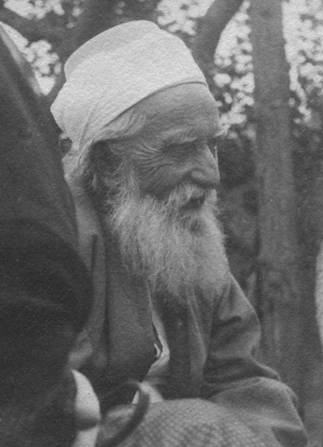
Friday, 19 April 1912, was 'Abdu'l-Bahá's last day in New York before He left for Washington. Mírzá Maḥmúd-i-Zarqání records that from early morning until noon friends and believers came and went at His hotel, as they did every day. In the evening a large meeting had been arranged for Him at Earl Hall, Columbia University. Students and professors came, along with many other interested people and the Bahá'ís.
Maḥmúd describes the talk in a single sentence: it was most penetrating, and dealt with the powers of human nature that lie beyond nature, with what education and knowledge achieve, and with peace. The stenographic notes printed in The Promulgation of Universal Peace give the talk itself.
He began with the kingdoms of creation: the mineral, the vegetable, the animal and the human. What sets the human being apart, He said, is the power of intellectual investigation into the mysteries of the outer world, and the outcome of that power is science. All other created things are captives of nature and subject to its laws. Man alone can rise out of that condition: he sails in ships over the ocean, mounts into the air, sinks to the depths of the sea, and by the power of electricity overcomes the darkness of night. If nature is the whole and man a part of it, He asked, how could a part possess qualities absent in the whole? Therefore, He concluded, man, though in body a part of nature, possesses in spirit a power transcending nature.
He told the audience that He was greatly pleased with His visit to the university, and expressed the hope that spiritual development would keep pace with the material and physical sciences taught there:
The most important principle of divine philosophy is the oneness of the world of humanity, the unity of mankind, the bond conjoining East and West, the tie of love which blends human hearts.
Maḥmúd records what followed. Those who had already met 'Abdu'l-Bahá brought other seekers to meet Him in another room, and these meetings went on so long that the professors had to abandon their plan to give Him a tour of the university. From friends and inquirers alike came the same remark: "Oh, that this meeting would never end, for we do not want to leave Him." As it was His last night in the city, many believers stayed on in His company, and friends continued to arrive until late at night. He bade farewell to all and promised to be back among them when He returned.
A retelling based on Mahmúd's Diary: The Diary of Mírzá Maḥmúd-i-Zarqání (George Ronald, 1998), entry for 19 April 1912, and the talk at Earl Hall as printed in The Promulgation of Universal Peace. For the fuller account, see the original.
Cite this story
Maḥmúd-i-Zarqání, M.. (1998). *Mahmúd's Diary: The Diary of Mírzá Maḥmúd-i-Zarqání*. George Ronald.
Record yourself reading this story
Recording stays on this device only. Nothing is uploaded.
Related stories
'Abdu'l-Bahá at Columbia University
On His last evening in New York, 'Abdu'l-Bahá spoke to students and professors at Columbia University about the powers of the human mind and spirit, and about the love that joins East and West. Afterwards, people did not want to leave Him.
A Great Ship Comes to New York
When 'Abdu'l-Bahá's ship reached New York in April 1912, reporters came on board to ask why He had come. He told them He had come for universal peace and the unity of humankind.
Saying Goodbye on the Celtic
On December 5, 1912, many friends came aboard the ship Celtic in New York to say goodbye to 'Abdu'l-Bahá. In His last words to them He said that the whole earth is one globe and all nations are one family.
A Hall Full of Students
About eighteen hundred students filled a university hall at Stanford to hear 'Abdu'l-Bahá speak about science, peace, and the whole human race as one family.