'Abdu'l-Bahá at Clark University
Mírzá Maḥmúd-i-Zarqání, Mahmúd's Diary: The Diary of Mírzá Maḥmúd-i-Zarqání, (1998), George Ronald
When in Bahá'í history
Worcester (today: Worcester, MA, USA)
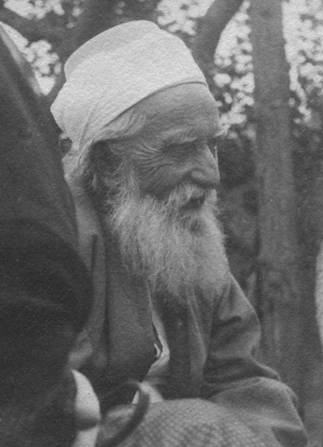
A retelling based on Mahmúd's Diary: The Diary of Mírzá Maḥmúd-i-Zarqání (George Ronald, 1998), entry for 23 May 1912. The narrative is in our own words; the words in quotation marks are as the diary records them.
On 23 May 1912 'Abdu'l-Bahá, who was staying in Boston, went to Worcester, Massachusetts, to visit Clark University. Mahmúd's Diary records that the university's head, whom it calls Professor Hall, had himself invited the Master. This was G. Stanley Hall, the psychologist who was Clark's first president.
The day began in Boston with visitors. At noon 'Abdu'l-Bahá was the guest at lunch of a society that maintained a house for the poor of Syria and Greece. There He spoke about poverty and detachment, and on leaving He gave ten pounds for the poor. Afterwards He sat with visitors at the home of a professor (the diary gives the name as Black, though the editor notes it is unclear), and this professor went with Him to Worcester, about fifty miles away.
On the road, as they passed through green countryside, the Master spoke sorrowfully of Bahá'u'lláh, saying:
Would that the Blessed Beauty could have come to these regions! He loved such scenery very much.
Whenever He saw green and fragrant country He asked the driver to stop. Near the shore of one lake the landscape, the clear water and the pure air pleased Him so much that they stopped there for a while. The whole party stood and waited while He spoke of the Blessed Beauty in mournful terms.
They reached Worcester after two hours. 'Abdu'l-Bahá rested for a while at the professor's home, took tea, and then went to the meeting the university had arranged for His visit. More than a thousand students and faculty had gathered. Professor Hall thanked Him for coming, and the Master spoke on the value and importance of science.
After the address some distinguished guests and seekers were invited to a reception. The president, who had himself invited 'Abdu'l-Bahá, served the Master in person. A number of Japanese, Chinese and Turkish students came to meet Him and were glad to hear His words. When it was time to leave, 'Abdu'l-Bahá took both of the president's hands in His. He told him that He was very pleased with him and delighted to see his university, that he was serving the world of humanity, and that He would pray for him. He ended:
I shall never forget this meeting, and I shall always remember and mention your services.
He returned to Boston in an automobile the university's head had provided for Him.
This account is retold for the Bahá'í Story Library; it is a paraphrase, not the original text. See Mahmúd's Diary (Mírzá Maḥmúd-i-Zarqání, tr. Mohi Sobhani, George Ronald, 1998), entry for 23 May 1912.
Cite this story
Maḥmúd-i-Zarqání, M.. (1998). *Mahmúd's Diary: The Diary of Mírzá Maḥmúd-i-Zarqání*. George Ronald.
This story shares quotes with 1 other story
“Would that the Blessed Beauty could have come to these regions!”
Also in
- A Visit to Clark University— Mírzá Maḥmúd-i-Zarqání, Mahmúd's Diary: The Diary of Mírzá Maḥmúd-i-Zarqání
“I shall never forget this meeting, and I shall always remember”
Also in
- A Visit to Clark University— Mírzá Maḥmúd-i-Zarqání, Mahmúd's Diary: The Diary of Mírzá Maḥmúd-i-Zarqání
Record yourself reading this story
Recording stays on this device only. Nothing is uploaded.
Related stories
A Visit to Clark University
The president of Clark University invited 'Abdu'l-Bahá to visit. He spoke to more than a thousand students and teachers about the value of science, and told the president He would never forget the meeting.
The Answer at Ford Hall
In Boston in 1912, a speaker warned a large audience that a false Christ had come to America. 'Abdu'l-Bahá, speaking next, told them of the truth of all the Prophets of God, and especially of Christ.
'Abdu'l-Bahá at Columbia University
On His last evening in New York, 'Abdu'l-Bahá spoke to students and professors at Columbia University about the powers of the human mind and spirit, and about the love that joins East and West. Afterwards, people did not want to leave Him.
A Question at Temple Emanu-El
In a San Francisco synagogue, 'Abdu'l-Bahá spoke about Moses and then asked His Jewish listeners why they should not also praise Christ and Muḥammad.