On the Lawn at Cambridge: 'Abdu'l-Bahá at Harvard
Mírzá Maḥmúd-i-Zarqání, Mahmúd's Diary: The Diary of Mírzá Maḥmúd-i-Zarqání, (1998), George Ronald
When in Bahá'í history
Cambridge, Massachusetts (today: Cambridge, MA, USA)
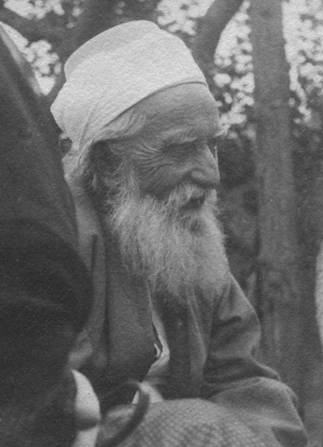
Mahmúd's Diary records that during 'Abdu'l-Bahá's late-May 1912 visit to the Boston area, an invitation arrived from Harvard University in Cambridge for the Master to address an academic audience.
The arrangements had been made for an indoor lecture hall — Sanders Theatre, the largest of the university's auditoria. The diary records that on the appointed afternoon the hall filled to capacity well before the announced hour. Faculty members, students, members of the Cambridge community, and Bahá'ís from across New England crowded the seats and then the aisles. The doors were closed because the building could hold no more.
A still larger crowd, however, had gathered outside on the lawn. The Master, on arriving, was informed of them. Mahmúd records that He paused, looked at the building, looked at the lawn, and proposed a simple solution: the talk would move outside.
The university stewards conducted Him to a position on the steps where He could be heard by both the audience inside — through the open doors — and the larger audience on the lawn. The diary records the unusual arrangement as quickly accepted by all. He spoke standing.
The talk turned on the duties laid upon the educated person in the modern age. Mahmúd records that the Master praised Harvard for its long tradition of free inquiry and addressed its students directly: that the gift of education carried with it the duty to apply the trained mind to the great questions of the human family. He spoke of the imminent danger of war in Europe — a danger of which the diary notes He had been speaking with mounting urgency in the spring of 1912 — and called upon the young men present to give their lives, in whatever profession they should choose, to the work of preventing it.
The talk lasted, the diary records, about an hour. The crowd on the lawn was held in attention. The audience inside, hearing through the open doors, did not stir. When the Master had finished and turned to leave, both audiences came forward to shake His hand. The diary records the line of greetings as having taken nearly as long as the talk itself.
The Master returned to His Boston hotel by carriage. The Cambridge afternoon was one of those moments — repeated in small variations across the tour — when an arranged lecture hall proved too small for the actual reception of His message, and the talk had to move out into the open air.
Paraphrased from Mahmúd's Diary: The Diary of Mírzá Maḥmúd-i-Zarqání (George Ronald, 1998), entries for late May 1912; see original for full text.
Cite this story
Maḥmúd-i-Zarqání, M.. (1998). *Mahmúd's Diary: The Diary of Mírzá Maḥmúd-i-Zarqání*. George Ronald.
Record yourself reading this story
Recording stays on this device only. Nothing is uploaded.
Related stories
The City That Was Ready
When 'Abdu'l-Bahá came to Boston, He found a city whose people had been waiting and getting ready, in their own way, for a very long time.
The Talk That Moved Outside
A famous university built its biggest hall for 'Abdu'l-Bahá's talk — but so many people came that He decided to step outside and speak to everyone at once.
The City of Smoke and the Quiet Parlour
'Abdu'l-Bahá crossed the mountains by train to two new cities — one loud with steel mills, one quiet with friends in their homes — and showed both the same warm welcome.
The Hub Awakens: 'Abdu'l-Bahá in Boston
Mahmúd's Diary records 'Abdu'l-Bahá's days in Boston in late July and August 1912, including His talk at the Free Religious Association and the unusually warm reception of Boston's Unitarian ministers. Boston, the city of Emerson and the Transcendentalists, recognised in the Master a kindred root.