An Hour at the Cincinnati Station
Mírzá Maḥmúd-i-Zarqání, Mahmúd's Diary: The Diary of Mírzá Maḥmúd-i-Zarqání, (1998), George Ronald
When in Bahá'í history
Cincinnati (today: Cincinnati, OH, USA)
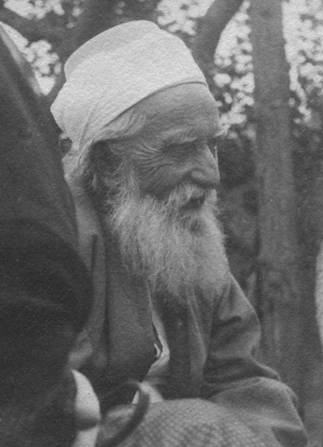
Mahmúd's Diary records the Master's western train journeys in considerable practical detail: the train numbers, the stations, the changes of carriage, the meals taken in the dining car or brought to the compartment. The diary preserves, among these ordinary entries, a quiet vignette from early November 1912.
The train from Chicago to Washington made a long stop at Cincinnati for a change of locomotives. The friends in Cincinnati had been notified by telegraph. Several of them came down to the station for the hour the train was held there.
There was no hall hired. There was no formal talk planned. The Master had been ill in the days before; the household had asked that He rest as much as possible during the long journey east. But when Maḥmúd informed Him that a small group of Bahá'ís had come down to the platform, He rose at once, smoothed His robe, and went out to receive them.
The diary records the meeting in the simplest terms. He shook each of their hands. He asked after their families, their homes, their work. He spoke a few words about the importance of the small communities of the Faith in cities like Cincinnati — how the firmness of the few, in places where the many were not yet aware, was the bedrock on which the future would be built. He blessed them. He returned to His compartment when the conductor signalled the train.
The friends stood on the platform and waved as the train pulled out. Maḥmúd records that one of them, an older woman, was weeping; the others were silent.
The diary makes nothing further of the episode. It records the arrival in Washington in due course. The Cincinnati hour is preserved only because Mahmúd preserved everything; it would otherwise have been entirely forgotten.
It has, in fact, been remembered by the Cincinnati friends and their descendants for a hundred years. The Master did not visit the city for a series of public talks; He stopped, between trains, for an hour, and the small community of the city took the hour as a benediction. An hour at the station was an hour the friends would remember for the rest of their lives.
Many of the smaller midwestern Bahá'í communities of the early twentieth century have similar stories — a station, a parlour, a brief stop, a conversation that fed a generation.
Paraphrased from Mahmúd's Diary: The Diary of Mírzá Maḥmúd-i-Zarqání (George Ronald, 1998), entries for early November 1912; see original for full text.
Cite this story
Maḥmúd-i-Zarqání, M.. (1998). *Mahmúd's Diary: The Diary of Mírzá Maḥmúd-i-Zarqání*. George Ronald.
Record yourself reading this story
Recording stays on this device only. Nothing is uploaded.
Related stories
An Hour at the Train Station
A train stopped for just one hour in a city called Cincinnati — and 'Abdu'l-Bahá used that hour to step outside and greet the friends who came to meet Him.
An Evening with the Syrians: 'Abdu'l-Bahá in Lower Manhattan
Mahmúd's Diary records that during the New York stays of 1912, 'Abdu'l-Bahá would occasionally direct His carriage to the small Syrian-Lebanese quarter of Lower Manhattan, where He would dine in modest immigrant restaurants and speak Arabic with the proprietors and patrons.
At the Master's Table: Domestic Hours of the American Tour
Mahmúd's Diary preserves, alongside the public talks, the ordinary domestic hours of 'Abdu'l-Bahá's American journey: the meals He ate, the way He served the friends with His own hand, the laughter He brought to a tired room, the way He cleared the table afterwards.
The City That Was Ready
When 'Abdu'l-Bahá came to Boston, He found a city whose people had been waiting and getting ready, in their own way, for a very long time.