The Master Who Served at Table
Mírzá Maḥmúd-i-Zarqání, Mahmúd's Diary: The Diary of Mírzá Maḥmúd-i-Zarqání, (1998), George Ronald
When in Bahá'í history
New York (today: New York, NY, USA)
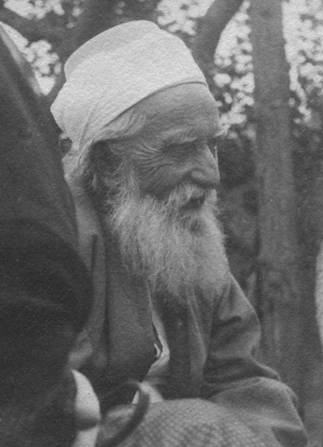
Mahmúd's Diary records the public talks of 'Abdu'l-Bahá's 1912 journey through America. Among those entries are smaller scenes at table, and in many of them the Master is the one serving.
In Washington, on the evening of 22 April, Agnes Parsons gave a dinner in His honor at her home. At the table He said:
Consider the confirmations of the Blessed Beauty, what He has done, how He has brought us to the house of such a personage, who in the utmost love has prepared such a feast in our honor.
Mrs Parsons' own diary, quoted in the notes to Mahmúd's Diary, records that 'Abdu'l-Bahá served the Persian dinner and "served and talked while the others ate."
In New York, in June, Mírzá Maḥmúd writes that the Master called His attendants into His presence and served them tea with His own hand. In San Francisco, where some of the friends had the honor of dining at His table, he notes that at each dawn, after His prayers, the Master called His servants and served them tea Himself.
At Montclair, New Jersey, on 23 June, the Master went to the market with His companions to buy food, and Himself supervised the kitchen. Mírzá Maḥmúd adds that during the journey He often cooked and prepared the meals, especially when there were special guests, and that when there were none He was content with bread and cheese. In Montreal, on 2 September, He invited a number of people to lunch and remarked on eating Persian rice, cooked by one of His companions, in a home in Canada.
In Washington, on 9 November, at a dinner of the friends, He offered a prayer over the food and then invited everyone to begin, saying, "Tonight I myself wish to serve the friends of God." He went round the tables several times, giving out sweets and flowers and anointing each guest with attar of rose.
In New York on 1 December, a few days before He sailed, the diary notes that, as He had at other times, the Master invited some of the friends to His table to enjoy Persian dishes, and that they were overjoyed to see His smile and to hear His stories.
A retelling based on Mahmúd's Diary: The Diary of Mírzá Maḥmúd-i-Zarqání (entries for 22 April, 14, 23 and 30 June, 2 September, 1 October, 9 November and 1 December 1912, with the editors' notes). For the fuller account, see the original.
Cite this story
Maḥmúd-i-Zarqání, M.. (1998). *Mahmúd's Diary: The Diary of Mírzá Maḥmúd-i-Zarqání*. George Ronald.
Record yourself reading this story
Recording stays on this device only. Nothing is uploaded.
Related stories
The Master Serves His Guests
On His journey through America in 1912, 'Abdu'l-Bahá often served tea and food to His companions and guests with His own hands.
The Answer at Ford Hall
In Boston in 1912, a speaker warned a large audience that a false Christ had come to America. 'Abdu'l-Bahá, speaking next, told them of the truth of all the Prophets of God, and especially of Christ.
Summer Days in the Hills
When 'Abdu'l-Bahá went to stay in the green hills of New Hampshire, His hostess hoped He could rest. But He said He had come to work and to serve, and He welcomed the many people who came to see Him.
The Master at Niagara Falls
At the edge of Niagara Falls, 'Abdu'l-Bahá remembered the waterfalls Bahá'u'lláh had loved, and told His companions why He could not stay even half a day.