An Evening with the Syrians: 'Abdu'l-Bahá in Lower Manhattan
Mírzá Maḥmúd-i-Zarqání, Mahmúd's Diary: The Diary of Mírzá Maḥmúd-i-Zarqání, (1998), George Ronald
When in Bahá'í history
Lower Manhattan (today: Manhattan, NY, USA)
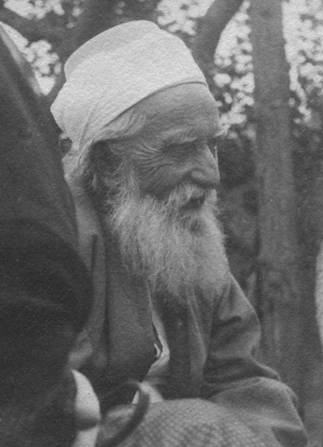
Mahmúd's Diary preserves, among the recorded political and ecclesiastical engagements of the 1912 American tour, several small entries about the Master's evenings in the Syrian-Lebanese immigrant quarter of Lower Manhattan.
New York in 1912 had an Arab quarter centered on Washington Street between Battery Park and the southern end of the Hudson piers. The community was largely Christian — Maronite, Melkite, Greek Orthodox — and ran small shops, presses for the Arab- language newspapers, and a number of restaurants. Many of the shopkeepers had emigrated from the Ottoman provinces of what are now Syria and Lebanon.
The Master spoke fluent Arabic. He had spent the years of His ministry up to 1908 in the Arabic-speaking city of 'Akká. The diary records that He occasionally directed His carriage south from the Ansonia Hotel on Broadway and 73rd to the Syrian quarter near the Battery, simply for an evening among Arabic-speaking people.
He would eat in modest restaurants. He would order in Arabic. The proprietors and waiters, struck by the cultivated speech of an old gentleman in Eastern dress, would gather to converse with Him. Mahmúd records that the Master would speak with each of them in turn — asking after their families, their villages of origin, the work of their shops — with the same warmth He had shown the New York dignitaries earlier in the day.
He did not, the diary records, identify Himself as the Bahá'í Master to the proprietors. He told them only that He was a Persian visitor, lately arrived in America, who was glad to hear the Arabic of his old neighbours of 'Akká. The proprietors knew only that an unusually courteous old gentleman had come to dine and had paid generously and had left them a blessing as He went out.
In later years, after the Master's passing, several of the Syrian immigrants of New York would learn — to their astonishment — that they had once dined Him without knowing who He was. The story passed through the New York Bahá'í community as one of the small graces of the tour: that the Master, in the city of millions, had sought out the few square blocks where He could sit among Arabic-speakers and be, for a few hours, simply a visitor among His own.
The diary records the visits without commentary. Mahmúd preserves them because they happened, not because they were unusual. They were entirely characteristic.
Paraphrased from Mahmúd's Diary: The Diary of Mírzá Maḥmúd-i-Zarqání (George Ronald, 1998), recurring entries during the New York stays, April-July and September-December 1912; see original for full text.
Cite this story
Maḥmúd-i-Zarqání, M.. (1998). *Mahmúd's Diary: The Diary of Mírzá Maḥmúd-i-Zarqání*. George Ronald.
Record yourself reading this story
Recording stays on this device only. Nothing is uploaded.
Related stories
An Hour at the Train Station
A train stopped for just one hour in a city called Cincinnati — and 'Abdu'l-Bahá used that hour to step outside and greet the friends who came to meet Him.
The Visitor Who Spoke Their Language
In a huge, busy city, 'Abdu'l-Bahá went looking for a little corner where He could sit, eat, and talk with people in the language of His old home.
An Hour at the Cincinnati Station
Mahmúd's Diary records that on the journey from Chicago to Washington in early November 1912, the Master's train made a long change of cars at Cincinnati. Word had been telegraphed ahead. A small group of Ohio believers came to the station for the hour the train was held there.
At the Master's Table: Domestic Hours of the American Tour
Mahmúd's Diary preserves, alongside the public talks, the ordinary domestic hours of 'Abdu'l-Bahá's American journey: the meals He ate, the way He served the friends with His own hand, the laughter He brought to a tired room, the way He cleared the table afterwards.