Across the Alleghenies: 'Abdu'l-Bahá in Cleveland and Pittsburgh
Mírzá Maḥmúd-i-Zarqání, Mahmúd's Diary: The Diary of Mírzá Maḥmúd-i-Zarqání, (1998), George Ronald
When in Bahá'í history
Pittsburgh (today: Pittsburgh, PA, USA)
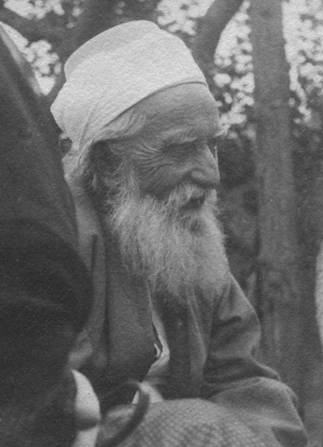
Mahmúd's Diary records that in early May 1912, after the long stay in Washington and Philadelphia, 'Abdu'l-Bahá and His small party set out west by train. The destination was Chicago, where He would lay the cornerstone of the future House of Worship at Wilmette; but two intermediate stops marked His passage across the Alleghenies — Pittsburgh on May 7 and Cleveland in the days that followed.
Pittsburgh in 1912 was the great steel city of the United States. The mills along the Monongahela burned around the clock. Mahmúd records, with the faint surprise of a Persian visitor, the heavy haze that hung over the river valleys and the soot that settled on the white cuffs of his shirt within an hour of his arrival. The believers of the city had hired a hall in the Schenley Hotel for the Master's talk. The audience that gathered, the diary notes, included steel workers in their working clothes alongside Pittsburgh's merchants and clergy.
The Master spoke that evening on a single theme: the dignity of the labourer. He praised the workmen who, by the strength of their hands, fed the body of the world. He warned the men of means against contempt for those whose hands worked the metal. He spoke of the future ordering of human affairs in which the gulf between the rich and the poor must close — not by violence, but by the recognition that all are children of one Father.
The talk, Mahmúd records, was received with attention by every section of the audience. Several of the workmen waited at the back of the hall to greet the Master afterward; He received them, the diary notes, with the same warmth He had shown the city's notables on the front benches.
Cleveland followed within the next few days. There the friends were fewer than in Pittsburgh; the meetings were held in private homes. Maḥmúd records the gatherings as quieter and more intimate. Several Cleveland believers had travelled from Akron and Toledo to be present. They sat in the parlour of the home where the Master was staying and asked, in turn, the questions they had carried with them. He answered each of them.
The diary preserves no famous speech from Cleveland. What it preserves is something smaller — a Persian guest in an Ohio parlour answering, one by one, the questions of a small midwestern community.
The party then continued by train to Chicago. The Alleghenies had been crossed, and the western half of the American journey had begun.
Paraphrased from Mahmúd's Diary: The Diary of Mírzá Maḥmúd-i-Zarqání (George Ronald, 1998), entries for May 6-9, 1912; see original for full text.
Cite this story
Maḥmúd-i-Zarqání, M.. (1998). *Mahmúd's Diary: The Diary of Mírzá Maḥmúd-i-Zarqání*. George Ronald.
Record yourself reading this story
Recording stays on this device only. Nothing is uploaded.
Related stories
The City That Was Ready
When 'Abdu'l-Bahá came to Boston, He found a city whose people had been waiting and getting ready, in their own way, for a very long time.
The Talk That Moved Outside
A famous university built its biggest hall for 'Abdu'l-Bahá's talk — but so many people came that He decided to step outside and speak to everyone at once.
The City of Smoke and the Quiet Parlour
'Abdu'l-Bahá crossed the mountains by train to two new cities — one loud with steel mills, one quiet with friends in their homes — and showed both the same warm welcome.
The Hub Awakens: 'Abdu'l-Bahá in Boston
Mahmúd's Diary records 'Abdu'l-Bahá's days in Boston in late July and August 1912, including His talk at the Free Religious Association and the unusually warm reception of Boston's Unitarian ministers. Boston, the city of Emerson and the Transcendentalists, recognised in the Master a kindred root.