'Abdu'l-Bahá at Columbia University
Mírzá Maḥmúd-i-Zarqání, Mahmúd's Diary: The Diary of Mírzá Maḥmúd-i-Zarqání, (1998), George Ronald
When in Bahá'í history
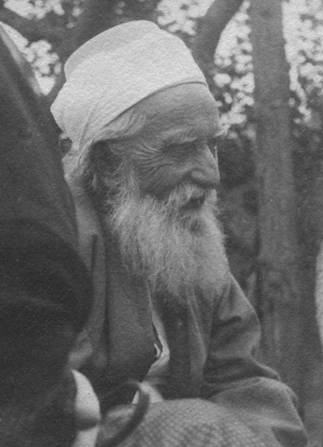
A retelling for children, based on Mahmúd's Diary (entry of 19 April 1912) and the talk as printed in The Promulgation of Universal Peace.
It was the last day 'Abdu'l-Bahá would spend in New York before traveling on to Washington. All morning, friends and visitors came and went at His hotel. In the evening He went to a big meeting at Earl Hall, a building of Columbia University. Students were there, and professors, and many other interested people, and Bahá'ís too.
He began His talk with the world around us. There are minerals, He said. There are plants, which can grow. There are animals, which can feel and sense the world. And there are human beings, who have a gift that minerals, plants and animals do not have: the power to investigate and discover the hidden secrets of the world. That gift, He said, is what gives us science.
Everything else in nature has to obey nature's laws, He explained. But people use their minds to do amazing things. By nature we live on the surface of the earth, yet we sail across oceans, fly in the air and travel under the sea. Night is dark, yet we have learned to use electricity to light up the darkness. So, He said, although our bodies are part of nature, the human spirit has a power that goes beyond nature.
'Abdu'l-Bahá told His listeners that He was very pleased to visit their university. He hoped that, as they learned more about the world, their spiritual lives would grow as well. And He told them what the most important principle is: that all people are one, joined by love, from the East to the West.
When the talk was over, people who already knew 'Abdu'l-Bahá brought their friends to meet Him in another room. They stayed so long that the professors never got to take Him on the tour of the university they had planned. Mírzá Maḥmúd, who wrote all this down in his diary, says that people kept saying they wished the meeting would never end, because they did not want to leave Him.
Since it was His last night in the city, many friends stayed with Him until late. At last He said goodbye to everyone, and promised that He would be back among them when He returned.
This is a retelling for children. For the fuller account, see "An Evening at Columbia University".
Cite this story
Maḥmúd-i-Zarqání, M.. (1998). *Mahmúd's Diary: The Diary of Mírzá Maḥmúd-i-Zarqání*. George Ronald.
Record yourself reading this story
Recording stays on this device only. Nothing is uploaded.
Related stories
An Evening at Columbia University
On 19 April 1912, His last evening in New York, 'Abdu'l-Bahá spoke at Earl Hall, Columbia University, on science, the power of the human spirit and the oneness of humanity. Afterwards so many came to meet Him that a planned tour of the university was given up.
A Hall Full of Students
About eighteen hundred students filled a university hall at Stanford to hear 'Abdu'l-Bahá speak about science, peace, and the whole human race as one family.
A Visit to Clark University
The president of Clark University invited 'Abdu'l-Bahá to visit. He spoke to more than a thousand students and teachers about the value of science, and told the president He would never forget the meeting.
'Abdu'l-Bahá at Stanford University
On October 8, 1912, at the invitation of its president, David Starr Jordan, 'Abdu'l-Bahá spoke to some 1,800 students and 180 professors at Leland Stanford Junior University in Palo Alto.