A Hall Full of Students
Mírzá Maḥmúd-i-Zarqání, Mahmúd's Diary: The Diary of Mírzá Maḥmúd-i-Zarqání, (1998), George Ronald
When in Bahá'í history
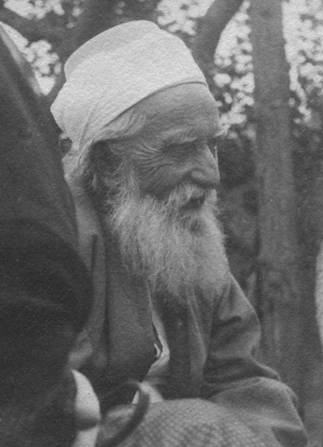
A retelling for children, based on Mahmúd's Diary (entries of 2 and 8 October 1912).
In October 1912, 'Abdu'l-Bahá was staying in San Francisco. One of His visitors was Dr David Starr Jordan, the president of Stanford University. He liked the Bahá'í teachings so much that he begged 'Abdu'l-Bahá to come and speak at his university.
So on the 8th of October, 1912, 'Abdu'l-Bahá went to Stanford, in the town of Palo Alto. Mírzá Maḥmúd, who travelled with Him and kept a diary of the journey, wrote down what happened.
The big auditorium was full. Mírzá Maḥmúd wrote that about eighteen hundred students were there, and one hundred and eighty professors, and many important people from the area besides. The rooms at the side and the hallways were full too, and people were standing outside the door.
Dr Jordan stood up to introduce the guest. He told the audience that 'Abdu'l-Bahá was one of the great religious teachers of the world, and that what He taught was not exactly a new religion:
The religion of brotherhood, of good will, of friendship between men and nations is as old as good thinking and good living may be.
Then 'Abdu'l-Bahá spoke. He began by praising science, which finds out the truth about how things really are, and said He was glad to be in "the home of science." He talked about peace among the nations. He said that soldiers had died in wars over ideas like "we are Germans" and "our enemies are French," when really all people belong to one human family.
When He finished, the applause was so loud that Mírzá Maḥmúd said it shook the building. Dr Jordan stood up again and thanked 'Abdu'l-Bahá for His talk about the brotherhood of man and the value of peace between nations. He asked everyone to show their thanks by standing up, and the whole audience rose at once, clapping and stamping their feet.
Afterwards, 'Abdu'l-Bahá had lunch at Dr Jordan's home.
This is a retelling for children. For the fuller account, see "'Abdu'l-Bahá at Stanford University".
Cite this story
Maḥmúd-i-Zarqání, M.. (1998). *Mahmúd's Diary: The Diary of Mírzá Maḥmúd-i-Zarqání*. George Ronald.
Record yourself reading this story
Recording stays on this device only. Nothing is uploaded.
Related stories
'Abdu'l-Bahá at Stanford University
On October 8, 1912, at the invitation of its president, David Starr Jordan, 'Abdu'l-Bahá spoke to some 1,800 students and 180 professors at Leland Stanford Junior University in Palo Alto.
'Abdu'l-Bahá at Columbia University
On His last evening in New York, 'Abdu'l-Bahá spoke to students and professors at Columbia University about the powers of the human mind and spirit, and about the love that joins East and West. Afterwards, people did not want to leave Him.
The Master Arrives in New York
When the Cedric reached New York on 11 April 1912, reporters came aboard to ask 'Abdu'l-Bahá why He had come. He told them His object was universal peace and the unity of humankind.
Farewell Aboard the Celtic
On December 5, 1912, Mahmúd's Diary records, a great crowd of believers from New York and other cities filled the lounge of the SS *Celtic* to bid 'Abdu'l-Bahá farewell. In His parting address He summed up the teaching of His American journey: the whole earth is one globe, and all nations one family.