The Light in Every Lamp
Mírzá Maḥmúd-i-Zarqání, Mahmúd's Diary: The Diary of Mírzá Maḥmúd-i-Zarqání, (1998), George Ronald
When in Bahá'í history
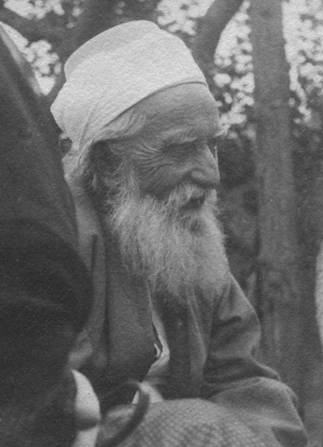
A retelling for children, based on Mahmúd's Diary, from the entry for the visit to Seattle in October 1912.
One autumn day, a train carried 'Abdu'l-Bahá into the young city of Seattle, near the western edge of America. He would only stay a short while — just one afternoon and evening — before the train carried Him south again the very next morning. But even in that short visit, something happened that people would remember for years.
That evening, 'Abdu'l-Bahá was invited to speak in the ballroom of a big hotel right downtown. Now here is something surprising. In all of Seattle, there were only about a dozen Bahá'ís at that time — just a tiny handful. They did not have a hall large enough for a big meeting. So the invitation came instead from another group in the city, a group called the Theosophists. They had read about 'Abdu'l-Bahá's travels in the newspapers, and they were eager to hear Him. He gladly said yes.
When the evening came, the ballroom filled up — about two hundred people in all. What a mix they were! There were the few Bahá'ís, and the many Theosophists who had invited Him. There were busy people who worked downtown and were simply curious. And there were even some Christian ministers, who had come to listen carefully and decide for themselves what they thought of this visitor from far-off Persia.
'Abdu'l-Bahá stood before them all and spoke for about an hour. He talked about something He wanted every single person in that room to understand — that the truth in all the great religions is really one truth. He compared it to light. And He said a sentence so simple and so wise that it is still remembered today:
"Light is good in whatsoever lamp it is burning."
Think about that for a moment. A lamp can be made of gold or of clay. It can be old or new, plain or fancy. But the light that shines out of it is still good light — warm and bright, no matter what the lamp looks like. 'Abdu'l-Bahá was saying that goodness and truth are like that light. They shine in many different places, and we should love the light wherever we find it.
And the wonderful thing was, almost everyone in that mixed room could agree. The Theosophists heard their own belief in it. The Bahá'ís heard the heart of their own Faith. And even the Christian ministers, who had come ready to argue, found it hard to disagree with something so true and so kind.
When 'Abdu'l-Bahá finished, people raised their hands to ask questions. One man asked about Jesus Christ — what did the Bahá'ís believe about Him? 'Abdu'l-Bahá answered that Christ was the Word of God, and that the Bahá'ís honored Him deeply. The man who had asked was satisfied, and he asked no more.
Afterward, in a quiet little room beside the ballroom, 'Abdu'l-Bahá spoke with people one at a time, looking into each face and listening. Two of the people He spoke with that night would, years later, become Bahá'ís themselves.
Then it was very late, and the visit was over. The next morning the train carried Him away to the south. But the seed He had planted in that ballroom kept growing. In the years that followed, Seattle grew one of the strongest Bahá'í communities in all the Pacific Northwest — and it began, in part, with one evening, two hundred listeners, and a single beautiful idea about light.
That is the gift 'Abdu'l-Bahá gave Seattle: He helped people see that goodness is precious wherever it shines, and that the light in someone else's lamp is still light worth loving.
This is a retelling for children. For the fuller account, see "Seattle: A Public Address in the Hotel Ballroom".
Cite this story
Maḥmúd-i-Zarqání, M.. (1998). *Mahmúd's Diary: The Diary of Mírzá Maḥmúd-i-Zarqání*. George Ronald.
Record yourself reading this story
Recording stays on this device only. Nothing is uploaded.
Related stories
Seattle: A Public Address in the Hotel Ballroom
Mahmúd's Diary records 'Abdu'l-Bahá's brief stop in Seattle during the western leg of October 1912 — a public address in a downtown hotel ballroom, attended by some two hundred guests arranged through the local theosophical society.
Eighteen Hundred Students: 'Abdu'l-Bahá at Stanford
On October 8, 1912, Mírzá Maḥmúd records, 'Abdu'l-Bahá addressed an audience of approximately 1,800 students and 180 professors at Leland Stanford Junior University in Palo Alto — the largest single audience of His American journey, gathered in the university chapel to hear a Persian teacher speak on universal peace.
The City That Was Ready
When 'Abdu'l-Bahá came to Boston, He found a city whose people had been waiting and getting ready, in their own way, for a very long time.
The Talk That Moved Outside
A famous university built its biggest hall for 'Abdu'l-Bahá's talk — but so many people came that He decided to step outside and speak to everyone at once.