Seattle: A Public Address in the Hotel Ballroom
Mírzá Maḥmúd-i-Zarqání, Mahmúd's Diary: The Diary of Mírzá Maḥmúd-i-Zarqání, (1998), George Ronald
When in Bahá'í history
Seattle (today: Seattle, Washington, USA)
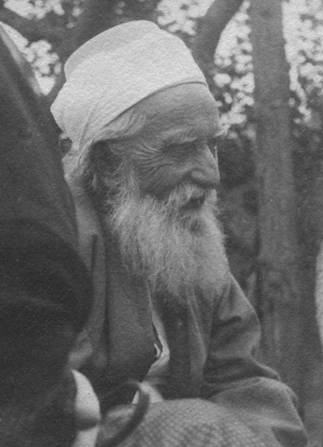
Mahmúd's Diary records the Pacific-coast leg of the autumn 1912 tour and devotes a section to the Seattle visit. The visit was brief — a single afternoon and evening, with departure the following morning by the southbound train toward Portland and California.
The principal public engagement was an evening address in the ballroom of a downtown Seattle hotel. The arrangement had been made not by the small Bahá'í community of Seattle, which in 1912 numbered perhaps a dozen souls, but through the local chapter of the Theosophical Society, which had a larger membership and a hall more accustomed to hosting visiting speakers. The Theosophists had read of the Master's travels in the eastern press and had extended an invitation, which the Master accepted.
Approximately two hundred attended. The audience was mixed — the small core of Bahá'ís, the larger Theosophical membership, a number of curious downtown professionals, a handful of Christian clergy who had come to evaluate the Persian visitor.
The Master spoke for approximately one hour. The talk turned on the question of the unity of religious truth. He named the truth, in His characteristic phrase, as light — and observed that light is good in whatsoever lamp it is burning. The audience, drawn from several distinct religious quarters, received the framing well. The Theosophists could see in it their own commitment to the underlying unity of the great spiritual traditions. The Bahá'ís could see in it the foundation of their own teaching. The Christians, while not all persuaded, could not easily disagree with the proposition as stated.
Mahmúd records, with his usual care, the questions that followed the talk. One questioner pressed the Master on the specific status of Christ in the Bahá'í teaching. The Master answered that Christ was the Word of God, that His position was the same as the position of all the Manifestations, and that the Bahá'í Faith venerated Him exactly as it venerated Bahá'u'lláh. The Christian questioner accepted the answer without further pressing.
The evening concluded with brief private conversations in the ballroom anteroom. The Master spoke individually with several attendees, including two who would in subsequent years become declared Bahá'ís. The party retired late.
The next morning the train south departed. Seattle would, within the next two decades, develop one of the more vigorous Pacific Northwest Bahá'í communities — its growth seeded, in part, by the evening address in the downtown hotel ballroom of October 1912.
Paraphrased from Mahmúd's Diary: The Diary of Mírzá Maḥmúd-i-Zarqání (George Ronald, 1998), entry for the Seattle stop, October 1912; see original for full text.
Cite this story
Maḥmúd-i-Zarqání, M.. (1998). *Mahmúd's Diary: The Diary of Mírzá Maḥmúd-i-Zarqání*. George Ronald.
Record yourself reading this story
Recording stays on this device only. Nothing is uploaded.
Related stories
The Light in Every Lamp
In a busy hotel ballroom in Seattle, 'Abdu'l-Bahá told two hundred people of many different faiths one simple, beautiful idea — that goodness shines like light, no matter which lamp it burns in.
Eighteen Hundred Students: 'Abdu'l-Bahá at Stanford
On October 8, 1912, Mírzá Maḥmúd records, 'Abdu'l-Bahá addressed an audience of approximately 1,800 students and 180 professors at Leland Stanford Junior University in Palo Alto — the largest single audience of His American journey, gathered in the university chapel to hear a Persian teacher speak on universal peace.
The City That Was Ready
When 'Abdu'l-Bahá came to Boston, He found a city whose people had been waiting and getting ready, in their own way, for a very long time.
The Talk That Moved Outside
A famous university built its biggest hall for 'Abdu'l-Bahá's talk — but so many people came that He decided to step outside and speak to everyone at once.