The Master Arrives in New York
Mírzá Maḥmúd-i-Zarqání, Mahmúd's Diary: The Diary of Mírzá Maḥmúd-i-Zarqání, (1998), George Ronald
When in Bahá'í history
New York (today: New York, NY, USA)
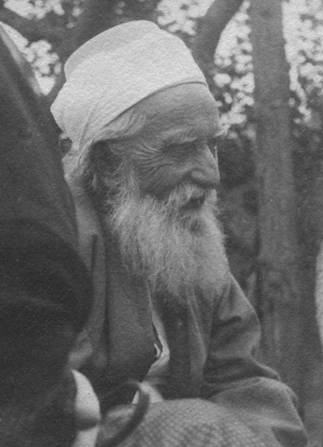
A retelling based on Mahmúd's Diary: The Diary of Mírzá Maḥmúd-i-Zarqání (entries for April 11, 14 and 15, 1912). The narrative is retold in our own words; the lines in quotation marks are from the Diary.
On the morning of April 11, 1912, the SS Cedric came into New York harbour with 'Abdu'l-Bahá aboard. Mírzá Maḥmúd-i-Zarqání, who travelled with Him and kept the diary that bears his name, records that the Master had telegrams sent to the Bahá'ís in the East and the West to announce His safe arrival, and that telegrams of welcome from the American Bahá'ís poured in while He was at breakfast.
Many Bahá'ís from New York and the surrounding area were waiting in line on the pier, waving their hats and handkerchiefs. The Master did not come out of His cabin. When the ship anchored, newspaper reporters came on board to ask Him the purpose of His journey. He replied:
Our object is universal peace and the unity of humankind. I have traveled to Paris and London and now I have come to America to meet with those who seek universal peace and I hope that the peace societies of America will take the lead in promoting this end.
He told them that universal peace was the remedy for the ills of human life. When they asked what those ills were, He answered:
One of these ills is the people's restlessness and discontent under the yoke of the war expenditures of the world's governments.
The questions went on, and He answered each one fully. Then the reporters asked to photograph Him, and He agreed. He asked the friends waiting on the pier to go to the home of Edward Kinney, where He would see them that afternoon. After giving gifts to the ship's crew, He went ashore.
Three days later, on Sunday, April 14, He went to the Church of the Ascension, the first church in America He visited. Its minister, Dr Percy Stickney Grant, spoke about the history and teachings of the Faith and introduced the Master with great courtesy and respect. The Master then spoke on divine civilization, the Revelation of Bahá'u'lláh and the unity of humankind, and at the end He chanted a prayer. Maḥmúd writes that the audience sat spellbound. As He left the church, group after group of people pressed towards Him. One woman, in tears, held fast to the hem of His robe and was too overcome to speak, and the Master calmed her with loving words.
A retelling based on Mahmúd's Diary: The Diary of Mírzá Maḥmúd-i-Zarqání (entries for April 11, 14 and 15, 1912). For the fuller account, see the original.
Cite this story
Maḥmúd-i-Zarqání, M.. (1998). *Mahmúd's Diary: The Diary of Mírzá Maḥmúd-i-Zarqání*. George Ronald.
Record yourself reading this story
Recording stays on this device only. Nothing is uploaded.
Related stories
A Great Ship Comes to New York
When 'Abdu'l-Bahá's ship reached New York in April 1912, reporters came on board to ask why He had come. He told them He had come for universal peace and the unity of humankind.
Farewell Aboard the Celtic
On December 5, 1912, Mahmúd's Diary records, a great crowd of believers from New York and other cities filled the lounge of the SS *Celtic* to bid 'Abdu'l-Bahá farewell. In His parting address He summed up the teaching of His American journey: the whole earth is one globe, and all nations one family.
Saying Goodbye on the Celtic
On December 5, 1912, many friends came aboard the ship Celtic in New York to say goodbye to 'Abdu'l-Bahá. In His last words to them He said that the whole earth is one globe and all nations are one family.
A Hall Full of Students
About eighteen hundred students filled a university hall at Stanford to hear 'Abdu'l-Bahá speak about science, peace, and the whole human race as one family.