'Abdu'l-Bahá at Stanford University
Mírzá Maḥmúd-i-Zarqání, Mahmúd's Diary: The Diary of Mírzá Maḥmúd-i-Zarqání, (1998), George Ronald
When in Bahá'í history
Palo Alto (today: Palo Alto, California, USA)
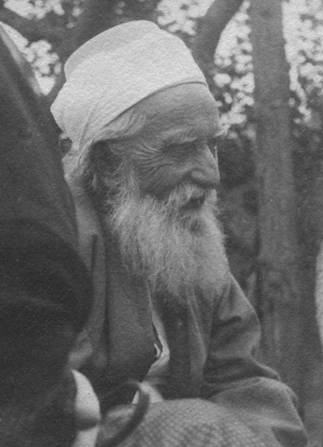
On October 2, 1912, one of the visitors who called on ‘Abdu’l-Bahá in San Francisco was Dr David Starr Jordan, president of Leland Stanford Junior University. Mírzá Maḥmúd-i-Zarqání records that Jordan was so attracted to the teachings that he begged the Master to come and speak at his university.
The visit took place on October 8. Mahmúd called it one of the most significant days of the journey. Apart from some 1,800 students and 180 professors of the university, many civic leaders and prominent people of the area had gathered in the auditorium. Its side rooms and hallways were full, and many people were standing outside the entrance.
Dr Jordan introduced the guest. Mahmúd includes part of his remarks, which the English edition gives as printed in the local newspaper, The Palo Altan. Jordan called ‘Abdu’l-Bahá “one of the great religious teachers of the world, one of the natural successors of the old Hebrew prophets,” and said that what He taught was not exactly a new religion:
The religion of brotherhood, of good will, of friendship between men and nations is as old as good thinking and good living may be.
The Master’s talk is recorded in The Promulgation of Universal Peace. He began by saying that the greatest attainment in the world of humanity has always been scientific, the discovery of the realities of things, and that He felt a keen sense of joy to find Himself “in the home of science.” He went on:
The highest praise is due to men who devote their energies to science, and the noblest center is a center wherein the sciences and arts are taught and studied. Science ever tends to the illumination of the world of humanity.
Mahmúd sums up the rest of the talk: the unity of all phenomena, man’s predominance over nature, universal peace and divine civilization. Speaking of war, the Master said that soldiers, civilians and tillers of the soil had fought and died at the command of their rulers, shedding their innocent blood “for a delusion such as ‘we are Germans,’ ‘our enemies are French,’ etc., when, in reality, all are humankind, all belong to the one family and posterity of Adam, the original father.” Mahmúd writes that the applause shook the building to its very foundation.
Dr Jordan then closed the meeting:
We are all under very great obligation to ‘Abdu’l-Bahá for this illuminating expression of the brotherhood of man and the value of international peace. I think we can best show our appreciation by simply a rising vote of thanks.
The audience rose at once and showed their respect by clapping and stamping their feet. The Master had lunch with Dr Jordan at his home. That evening He spoke at the Unitarian Church of Palo Alto on the reality of divinity, and afterwards dined at the home of Mrs Isabel Merriman.
A retelling based on Mahmúd's Diary: The Diary of Mírzá Maḥmúd-i-Zarqání (George Ronald, 1998), entries for October 2 and 8, 1912, with the talk as recorded in The Promulgation of Universal Peace. Words in quotation marks are from those sources. For the fuller account, see the original.
Cite this story
Maḥmúd-i-Zarqání, M.. (1998). *Mahmúd's Diary: The Diary of Mírzá Maḥmúd-i-Zarqání*. George Ronald.
Record yourself reading this story
Recording stays on this device only. Nothing is uploaded.
Related stories
A Hall Full of Students
About eighteen hundred students filled a university hall at Stanford to hear 'Abdu'l-Bahá speak about science, peace, and the whole human race as one family.
The Answer at Ford Hall
In Boston in 1912, a speaker warned a large audience that a false Christ had come to America. 'Abdu'l-Bahá, speaking next, told them of the truth of all the Prophets of God, and especially of Christ.
'Abdu'l-Bahá at Columbia University
On His last evening in New York, 'Abdu'l-Bahá spoke to students and professors at Columbia University about the powers of the human mind and spirit, and about the love that joins East and West. Afterwards, people did not want to leave Him.
A Question at Temple Emanu-El
In a San Francisco synagogue, 'Abdu'l-Bahá spoke about Moses and then asked His Jewish listeners why they should not also praise Christ and Muḥammad.