Two Pathways
Mírzá Maḥmúd-i-Zarqání, Mahmúd's Diary: The Diary of Mírzá Maḥmúd-i-Zarqání, (1998), George Ronald
When in Bahá'í history
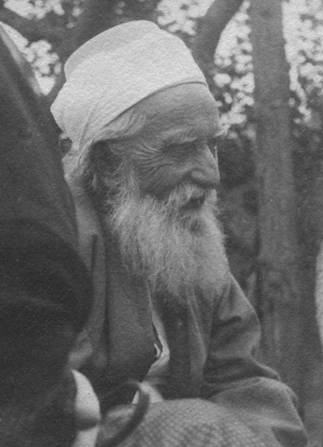
A retelling for children, based on Mahmúd's Diary and the talks in The Promulgation of Universal Peace (9 June 1912).
In June 1912, 'Abdu'l-Bahá went from New York to the city of Philadelphia. Two ministers had invited Him to speak in their churches. He was very tired, so tired that He could not go to every meeting that had been planned for Him.
On Sunday morning He spoke in one church. That evening He spoke in another, a very large church on Broad Street called the Baptist Temple. Its pastor had told people ahead of time that 'Abdu'l-Bahá was coming, and had even invited important people from Washington to come and listen.
'Abdu'l-Bahá began by saying how pleased He was to be there. "Truly this is a spiritual gathering," He said. Then He told them about two pathways.
The first pathway, He explained, is the way of nature. Animals follow it. An animal knows only what its eyes see, its ears hear and its nose smells. It knows nothing about God or the spiritual world. It follows its instincts.
People are different. Everything else in nature (the sun, the stars, the mountains) has to obey nature's laws. Only human beings can do more. People fly over mountains in airplanes and travel under the sea in submarines. They catch electricity and put it inside a small lamp. God has given human beings a power that goes beyond nature. So it is strange, He said, when a person with such a gift believes in nothing but what the senses can show. The second pathway is the way of religion, the road to the Kingdom of God.
Then He shared the teachings of Bahá'u'lláh: that all people are one family; that women and men are equal; that everyone should be educated; that science and religion agree; that prejudice must be given up. About religion He said: "The third teaching of Bahá'u'lláh is that religion must be the source of fellowship, the cause of unity and the nearness of God to man." If religion ever makes people hate each other, it would be better to have no religion at all.
Mahmúd, who traveled with 'Abdu'l-Bahá and kept a diary, wrote that His words made a great impression, and that the people listening seemed very happy and honored to be with Him. 'Abdu'l-Bahá was so happy with His visit to Philadelphia that He often spoke of it afterwards.
This is a retelling for children. For the fuller account, see "'Abdu'l-Bahá in Philadelphia".
Cite this story
Maḥmúd-i-Zarqání, M.. (1998). *Mahmúd's Diary: The Diary of Mírzá Maḥmúd-i-Zarqání*. George Ronald.
This story shares quotes with 1 other story
“The third teaching of Bahá'u'lláh is that religion must be the source of fellowship, the cause of unity and the nearness of God to man.”
Also in
- 'Abdu'l-Bahá in Philadelphia— Mírzá Maḥmúd-i-Zarqání, Mahmúd's Diary: The Diary of Mírzá Maḥmúd-i-Zarqání
Record yourself reading this story
Recording stays on this device only. Nothing is uploaded.
Related stories
'Abdu'l-Bahá in Boston
'Abdu'l-Bahá visited Boston three times in 1912. He addressed the Unitarian conference at Tremont Temple and the Free Religious Association at Ford Hall, spoke to journalists about peace, and later stayed a week at Malden.
'Abdu'l-Bahá in Philadelphia
In June 1912 'Abdu'l-Bahá spoke at two churches in Philadelphia. At the Baptist Temple He described the pathway of nature and the pathway of religion, and set out the teachings of Bahá'u'lláh.
The Answer at Ford Hall
In Boston in 1912, a speaker warned a large audience that a false Christ had come to America. 'Abdu'l-Bahá, speaking next, told them of the truth of all the Prophets of God, and especially of Christ.
A Question at Temple Emanu-El
In a San Francisco synagogue, 'Abdu'l-Bahá spoke about Moses and then asked His Jewish listeners why they should not also praise Christ and Muḥammad.