The Big Ship and the Last Goodbye
Mírzá Maḥmúd-i-Zarqání, Mahmúd's Diary, (1998), George Ronald · Read original
When in Bahá'í history
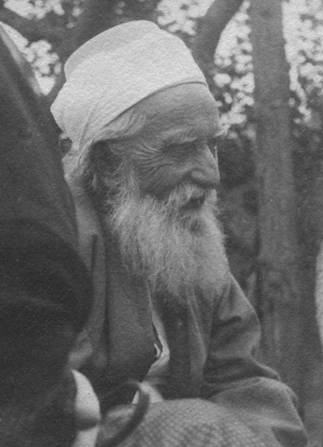
A retelling for children, based on Mahmúd's Diary (entry of 5 December 1912).
It was the 5th of December, 1912, in the harbor of New York. A big steamship called the Celtic was ready to sail across the ocean, and 'Abdu'l-Bahá was going to sail on it. He had spent eight months travelling in America, and now it was time for Him to leave.
A great many friends came from New York and from other cities to say goodbye. They filled the ship's big lounge, and there was not room for everyone. Some sat down, and others had to stand outside. Many of them were crying, both young and old.
'Abdu'l-Bahá walked among them, comforting them. Then He gave His last talk. He reminded them that all people are one family, and He asked them to be friends to everyone, even to people who were unkind to them. Near the end He said:
I hope that each one of you will be assisted to act according to these teachings so that, like a brilliant star, you may give light to humanity and like a spirit move the body of the contingent world.
Mírzá Maḥmúd, who travelled with 'Abdu'l-Bahá and kept a diary, wrote that the passengers and the ship's officers were amazed. They asked themselves who this could be, whom the Americans honored with such love and respect.
Then the friends came up to 'Abdu'l-Bahá one by one to shake His hand. Very sadly, they left the ship and stood on the dock. They lifted their hands toward heaven and prayed. As the ship moved out to sea, the crowd of friends, stretching as far as the eye could see, waved goodbye to the Master.
This is a retelling for children. For the fuller account, see "The Farewell Aboard the Celtic".
Cite this story
Maḥmúd-i-Zarqání, M.. (1998). *Mahmúd's Diary*. George Ronald. https://bahai-library.com/zarqani_mahmuds_diary
Record yourself reading this story
Recording stays on this device only. Nothing is uploaded.
Related stories
'Abdu'l-Bahá's Western Tours
After His release, ‘Abdu’l-Bahá continued the same holy life of ceaseless activity in teaching, correspondence, ministering to the poor and the sick, with merely the change from Akká to Haifa and from Haifa to Alexandria …
The Golden Trowel
On a field beside a great lake, 'Abdu'l-Bahá dug the earth for the first stone of a House of Worship that still stands today, and friends from many lands took turns digging after Him.
The Farewell Aboard the Celtic
On December 5, 1912, believers crowded aboard the Celtic in New York to bid 'Abdu'l-Bahá farewell. He gave them His parting words, and as the ship sailed, a throng stretching as far as the eye could see waved goodbye.
The Golden Trowel
On May 1, 1912, at the site of the future House of Worship in Wilmette, 'Abdu'l-Bahá dug the ground for the foundation stone with a golden trowel. Believers of many backgrounds followed, and He set the stone in place.