A Walk in the Night: Juliet Beside the Master
Juliet Thompson, The Diary of Juliet Thompson, (1947), Kalimát Press
When in Bahá'í history
New York (today: New York, NY, USA)
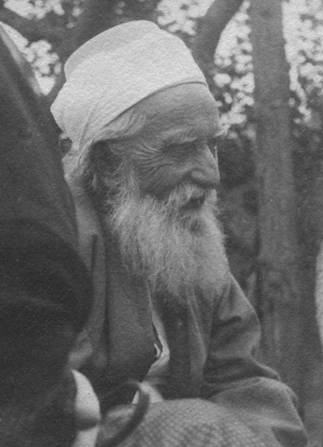
In The Diary of Juliet Thompson the painter records an evening in the summer of 1912 in New York. The Master had been speaking, that afternoon, to a great gathering at one of the larger halls of the city. The talk had run long; the queue of those who had come forward to greet Him afterwards had run longer. By the time the room had cleared the streets of the city were already dark.
Juliet was preparing, with several of the other American believers, to walk Him back to His residence. She herself was tired; she had been on her feet most of the day; she had not expected to be among the small group that walked. The Master, on the way out of the hall, looked at her, and indicated that she should walk beside Him.
She fell in. The small party — perhaps four people, including the Master’s interpreter — moved at His pace through the streets. New York at that hour had thinned; the buses had slackened; the air had cooled.
The Master did not speak. The interpreter, perhaps sensing the quality of the walk, did not initiate any conversation. Juliet, beside Him, did not feel that she should fill the silence. She walked. He walked.
We walked in silence, and the silence was full.
The walk took perhaps twenty minutes. They reached the residence; the Master ascended the stair; He turned at the door and gave the small party His blessing. Juliet stood for a long moment in the street after He had gone in. Then she turned and walked, alone, through the streets back to her own studio.
She writes in the diary, that evening, only one paragraph about the walk. She did not, she says, know what to say. The walk had not contained a teaching that could be reproduced; it had not contained a word that could be quoted; it had contained only the steady step of a man whose presence she had been beside for twenty minutes in the night air of New York. But she had arrived at her studio, she writes, full of something I cannot name and cannot lose.
The diary leaves the small entry as it found it. The walk in the night passed into the long fidelity of her life as one of the moments she would in old age return to. There had been no sermon. There had been the unbroken quiet of a man walking, in the dark city, beside the woman He had asked to walk with Him.
Paraphrased from The Diary of Juliet Thompson (Kalimát Press, 1947); see original for full text.
Cite this story
Thompson, J.. (1947). *The Diary of Juliet Thompson*. Kalimát Press.
Record yourself reading this story
Recording stays on this device only. Nothing is uploaded.
Related stories
At the Bedside of Marjorie Morten: Juliet Records a Healing
In *The Diary of Juliet Thompson* the painter records the evening in 1912 when 'Abdu'l-Bahá visited her dying friend Marjorie Morten in her sickroom — and the strange peace that, by the next morning, had taken the place of the household's prepared grief.
God Never Forgets You
Juliet Thompson's mother carried a grief — and a quiet resentment of her daughter's new Faith. Then she knelt at 'Abdu'l-Bahá's bedside, and a few gentle words changed everything. A retelling from the Diary of Juliet Thompson.
Not Even a Salad
At a glittering embassy dinner in Washington, a skeptical diplomat sat across from 'Abdu'l-Bahá with tears in his eyes. A solemn question about spiritual power drew from the Master a reply that made the whole table smile. A retelling from the Diary of Juliet Thompson.
Paint My Servitude to God: Juliet Thompson and the Portrait
In June 1912 in New York, the painter Juliet Thompson was given an unprecedented privilege: 'Abdu'l-Bahá agreed to sit for her. The Diary preserves the moment He stopped her on the street, took her hand, and said *come tomorrow and paint;* and the cramped basement studio where He asked her to paint not the man but the *Servitude.*