A Dinner That Began a Friendship
Mírzá Maḥmúd-i-Zarqání, Mahmúd's Diary: The Diary of Mírzá Maḥmúd-i-Zarqání, (1998), George Ronald
When in Bahá'í history
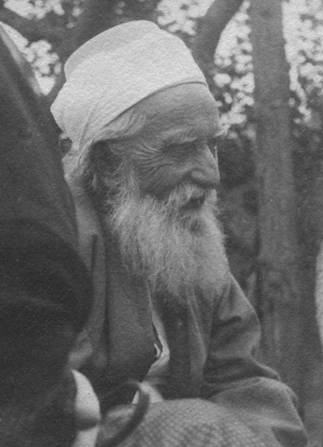
A retelling for children, based on Mahmúd's Diary (entry of 23 April 1912).
On a spring evening in the city of Washington, in a grand house called the Persian Legation, the tables were being set in a way most American guests had never seen before. The tables were low to the floor, and on them sat long platters piled with the foods of Persia — a faraway land on the other side of the world. Something important was about to happen here, and the host had thought carefully about every single detail.
The host was a man named Ali-Kuli Khan, and his wife was Florence Khan. When Khan was young, he had served 'Abdu'l-Bahá in the prison-city of 'Akká. Later, 'Abdu'l-Bahá Himself had asked Khan to take an important job far away: to be Persia's representative in America, speaking for his country in the great halls of government. And tonight, Khan was hosting a dinner in honor of the most special guest he could imagine — 'Abdu'l-Bahá.
It was not an ordinary dinner party. The guests who came that evening were some of the most powerful people in the whole country. The man in charge of America's dealings with other nations came. Senators came, and members of Congress. So did ambassadors who spoke for several different countries — and here is the surprising part: many of those countries did not get along with each other. The head of a great university came too, and the people who ran the most important newspapers in the city.
Now Khan had to decide where everyone would sit, and he made a very wise choice. Instead of letting each country's people sit together in their own little group, he mixed everyone up. People who came from rival nations found themselves sitting side by side, sharing the same platters of food. No one sat alone, and no group could keep to itself.
Then 'Abdu'l-Bahá entered the room. Every important person there rose to their feet to greet Him. And as Khan introduced each guest, one after another, 'Abdu'l-Bahá greeted them — often in their very own language. To one He spoke French; to another, English; to others, German, or Arabic, or Persian. Then He took His place at the head of the great table.
As the evening went on, the guests talked about the hardest, most worrying problems in the world at that time — troubles brewing between nations, unrest far away, and the fear that some countries might one day go to war. These were the same difficult subjects these powerful people argued about in their offices every day. 'Abdu'l-Bahá spoke a little about each one. But whatever the question was, He did something gentle and surprising with it. He kept turning every problem back into the same idea: that all the people of the earth are one single human family.
Near the end of the evening, as dessert was being served, 'Abdu'l-Bahá offered a few quiet words to everyone at the table. He had noticed something, He said. All evening long, these guests — even ones whose countries were not friends — had been talking warmly and kindly together over dinner. Whatever their nations might do in the months ahead, it would not erase the friendliness they had shared this night. And so He said:
The friendship between the nations begins at the table.
Think of it, He told them. If friendship between rivals could happen so easily at one dinner table, then perhaps, in time, that same friendship could spread to the grand meeting-rooms where countries make their biggest decisions. What had begun in this house, in small, might one day grow large enough to reach the whole world.
The powerful guests clapped. Then 'Abdu'l-Bahá rose, and the Khans walked Him to the door, and His carriage carried Him back to the home where He was staying. The dinner had done exactly what Khan had hoped: the most important people in Washington had met 'Abdu'l-Bahá, and they had heard His teaching treated as something that truly mattered.
It is easy to think that peace between whole countries is far too big a thing for any of us to begin. But that night taught something different. Big things can start in small, ordinary places — even at a dinner table, when people who are supposed to be enemies choose, for one evening, to sit together and be kind. The way we treat the person right beside us is where the friendship of the whole world begins.
This is a retelling for children. For the fuller account, see "Washington Reception at the Persian Legation".
Cite this story
Maḥmúd-i-Zarqání, M.. (1998). *Mahmúd's Diary: The Diary of Mírzá Maḥmúd-i-Zarqání*. George Ronald.
This story shares quotes with 1 other story
“The friendship between the nations begins at the table.”
Also in
- Washington Reception at the Persian Legation— Mírzá Maḥmúd-i-Zarqání, Mahmúd's Diary: The Diary of Mírzá Maḥmúd-i-Zarqání
Record yourself reading this story
Recording stays on this device only. Nothing is uploaded.
Related stories
Washington Reception at the Persian Legation
Mahmúd's Diary records the formal reception in honor of 'Abdu'l-Bahá given at the Persian Legation in Washington on April 23, 1912 — the small diplomatic occasion at which the Master, the guest of the Iranian state He had Himself never been allowed to visit freely, met the Washington diplomatic corps under the patronage of the ambassador Ali-Kuli Khan.
The Place of Honor: Louis Gregory at the Persian Legation Luncheon
On April 23, 1912, after speaking at Howard University in the morning, 'Abdu'l-Bahá was the principal guest at a diplomatic luncheon at the home of Persian chargé d'affaires Ali-Kuli Khan. One hour before the hour, the Master sent for Louis Gregory — the African-American Bahá'í who had not been invited — and seated him in the place of honor.
The First English Iqán: Ali-Kuli Khan's Translation
In 1916 the Star of the West reported on the publication of Ali-Kuli Khan's translation of the Kitáb-i-Íqán — the first complete rendering into English of Bahá'u'lláh's principal doctrinal work, made available to the American friends after fifteen years of patient labour.
At the Bedside of Marjorie Morten: Juliet Records a Healing
In *The Diary of Juliet Thompson* the painter records the evening in 1912 when 'Abdu'l-Bahá visited her dying friend Marjorie Morten in her sickroom — and the strange peace that, by the next morning, had taken the place of the household's prepared grief.