The First English Iqán: Ali-Kuli Khan's Translation
Star of the West Editors, Star of the West, (1916), Bahai News Service · Read original
When in Bahá'í history
Washington, D.C. (today: Washington, D.C., USA)
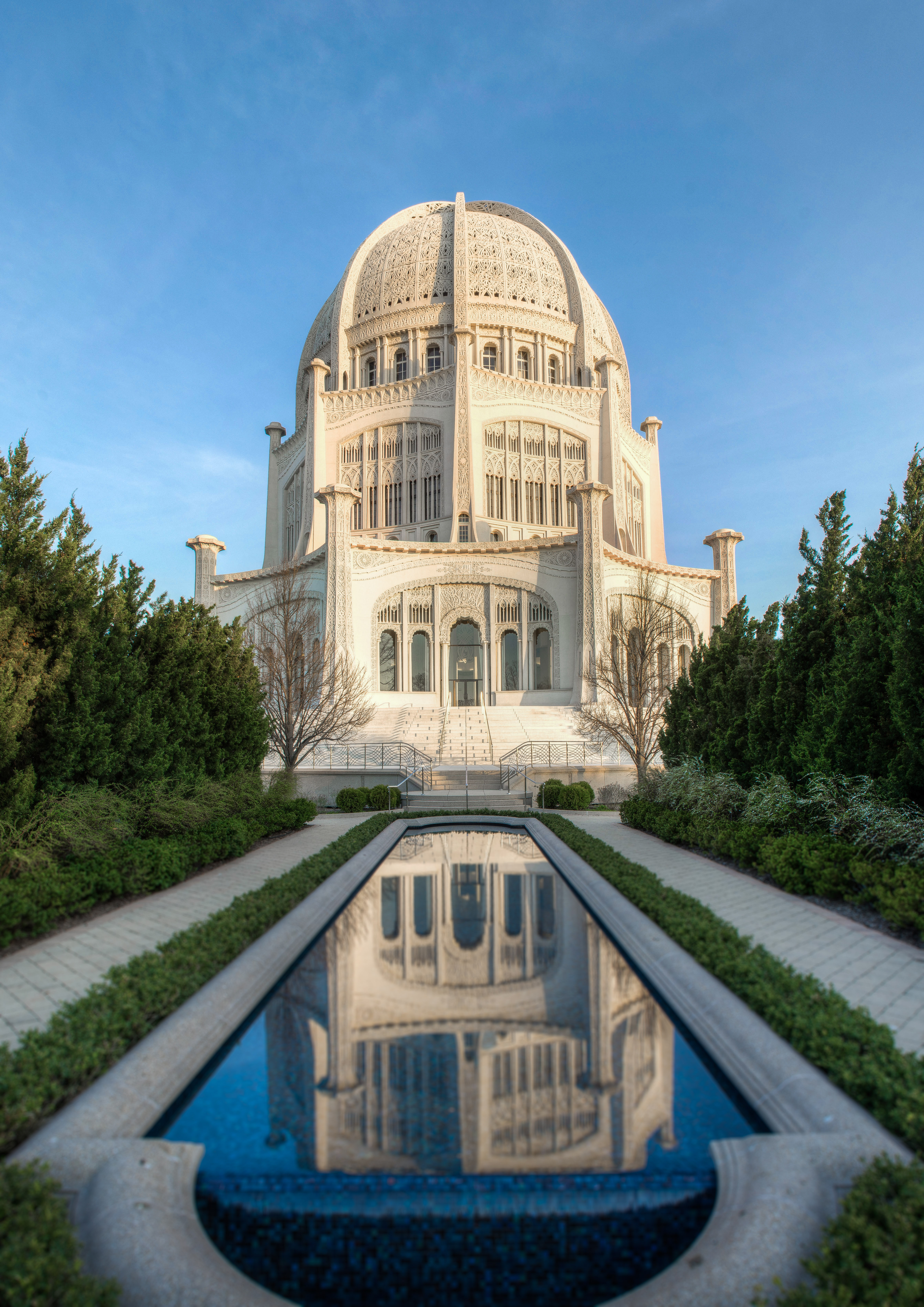
In its issue dated the seventeenth of August 1916 the Star of the West announced the publication, by the Bahai Publishing Society of Chicago, of the first complete English translation of The Book of Assurance — the Persian text known to the Bahá'í community as the Kitáb-i-Íqán, the principal doctrinal work revealed by Bahá'u'lláh in Baghdád in 1862. The translator was Ali-Kuli Khan, the Iranian diplomat who had served at the Master's elbow in 'Akká as a young man and had then, by the Master's direction, accepted appointment as chargé d'affaires of the Iranian Legation in Washington.
The translation had occupied Khan, at intervals, for nearly fifteen years. He had begun on the work in 'Akká, under the Master's daily oversight. He had brought the unfinished manuscript with him to America in 1901. He had continued working on it through his diplomatic career, often through the long evenings after the consular day was done. His wife, Florence Breed Khan — the daughter of a Boston Brahmin family, herself a believer, and a careful editor — had worked alongside him on the polishing of the English prose.
This Book is the foundation of the doctrine of our Faith.
The phrase, lifted by the Star's editors from one of the Master's Tablets to Khan, set the proper measure of the work's importance. The Iqán was the book Bahá'u'lláh had specifically named as the principal proof, by argument, of the truth of His own claim and of the unity of the prophetic dispensations. Without it, the doctrinal foundation of the Faith could not be presented to a Western audience. With it — and now in English — that foundation could be put into every American believer's hand.
The Khan-Breed translation would serve the American Bahá'í community for the next half century. It would be revised more than once and would in time be superseded, in the 1930s, by Shoghi Effendi's own definitive English translation. But for fifteen years — through the decisive period in which the American Bahá'í community moved from a small inquiring circle into an established religious body — the Iqán in English was the Khan translation. Many of the careful early American teachers learned the doctrine of the Faith from the sentences Ali-Kuli and Florence had laboured over.
The Star of the West's notice in August 1916 closed with a thanks to the translators and a recommendation that every believer order a copy. The price was modest. The book had been long awaited. The American Bahá'í community had now been given, in its own language, the central doctrinal proof of the Cause it had been gathering around.
Source: Star of the West, Volume 7, Issue 9 (August 17, 1916), notice on the publication of the English Kitáb-i-Íqán translated by Ali-Kuli Khan. Public domain text from bahai-library.com.
Cite this story
Editors, S. O. T. W.. (1916). *Star of the West*. Bahai News Service. https://bahai-library.com/star_of_the_west_volume_7
Record yourself reading this story
Recording stays on this device only. Nothing is uploaded.
Related stories
A Dinner That Began a Friendship
Powerful people from many rival countries sat down to dinner together, and 'Abdu'l-Bahá showed them that the friendship of the whole world can begin at one quiet table.
Washington Reception at the Persian Legation
Mahmúd's Diary records the formal reception in honor of 'Abdu'l-Bahá given at the Persian Legation in Washington on April 23, 1912 — the small diplomatic occasion at which the Master, the guest of the Iranian state He had Himself never been allowed to visit freely, met the Washington diplomatic corps under the patronage of the ambassador Ali-Kuli Khan.
Thornton Chase: The First Westerner to Embrace the Faith
Shoghi Effendi's account, in *God Passes By*, of Thornton Chase — the Chicago insurance executive who in June 1894 became the first American and the first Westerner formally to embrace the Bahá'í Faith, and who would later be honoured by 'Abdu'l-Bahá as *the first Bahá'í of the United States.*
The Laying of the Wilmette Temple Cornerstone
Shoghi Effendi's narration, in *God Passes By*, of the Master's laying of the cornerstone of the Mashriqu'l-Adhkár at Wilmette in May 1912 — a moment the Guardian describes as the inauguration of the construction of the first House of Worship of the Bahá'í Dispensation in the Western world.