Washington Reception at the Persian Legation
Mírzá Maḥmúd-i-Zarqání, Mahmúd's Diary: The Diary of Mírzá Maḥmúd-i-Zarqání, (1998), George Ronald
When in Bahá'í history
Washington, D.C. (today: Washington, D.C., USA)
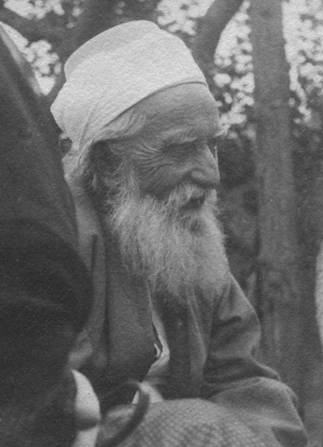
On the evening of the 23rd of April, 1912, 'Abdu'l-Bahá was the guest of honour at a formal reception held at the Persian Legation in Washington — the diplomatic residence of Ali-Kuli Khan, then chargé d'affaires of the Iranian state in the United States. Khan had served the Master in 'Akká as a young man before being appointed, by the Master's specific direction, to the diplomatic post in Washington. His American wife, Florence Breed Khan, was herself a Bahá'í of long standing.
The reception was, in the careful diplomatic protocol of the day, a major occasion. The guest list, as Mahmúd records, included the Secretary of State; several Senators and members of Congress; the ambassadors of several other powers; the president of George Washington University; and the editors of the principal Washington newspapers. The Khan household had prepared the formal dining room of the Legation in the Persian style, with low tables and long platters of Iranian food. The guests were seated, by Khan's careful arrangement, in mixed groups so that no national delegation sat alone.
The Master entered. The assembled diplomatic corps rose. He greeted each guest in turn, often in their own language — French, English, German, Arabic, Persian — as Khan introduced them. He took His place at the head of the great table.
The conversation, conducted partly in English by Khan as translator and partly in French, ranged across the great diplomatic questions of the day: the Balkan crisis then deepening; the persistent unrest in Persia; the rise of Japan; the still-distant question of European war. The Master spoke briefly on each topic. His characteristic contribution, throughout the evening, was the gentle reframing of every diplomatic question into the language of the human family.
The friendship between the nations begins at the table.
The phrase, set down by Mahmúd from the Master's remarks toward the end of the evening, was a small toast offered informally as the desserts were being served. The Master had observed, He said, that the diplomats present had spent the evening in friendly conversation with their official opponents at the table; that the wars they would or would not declare in the months ahead would not change the personal warmth of their conversation that night; and that the Bahá'í teaching of the unity of the human family had been demonstrated, this evening at the Khan household, in small. He proposed that what had been so easily achieved at one dinner table might in time be extended to the diplomatic chambers themselves.
The diplomatic corps applauded. The Master rose. The Khans walked Him to the door. The carriage took Him back to the Parsons home where He was staying. The reception had served exactly the purpose Khan had hoped: it had introduced the Master to the Washington political class as a serious international figure whose teaching belonged in the conversation of the highest diplomatic circles.
Paraphrased from Mahmúd's Diary: The Diary of Mírzá Maḥmúd-i-Zarqání (George Ronald, 1998), entry for April 23, 1912; see original for full text.
Cite this story
Maḥmúd-i-Zarqání, M.. (1998). *Mahmúd's Diary: The Diary of Mírzá Maḥmúd-i-Zarqání*. George Ronald.
This story shares quotes with 1 other story
“The friendship between the nations begins at the table.”
Also in
- A Dinner That Began a Friendship— Mírzá Maḥmúd-i-Zarqání, Mahmúd's Diary: The Diary of Mírzá Maḥmúd-i-Zarqání
Record yourself reading this story
Recording stays on this device only. Nothing is uploaded.
Related stories
A Dinner That Began a Friendship
Powerful people from many rival countries sat down to dinner together, and 'Abdu'l-Bahá showed them that the friendship of the whole world can begin at one quiet table.
The Place of Honor: Louis Gregory at the Persian Legation Luncheon
On April 23, 1912, after speaking at Howard University in the morning, 'Abdu'l-Bahá was the principal guest at a diplomatic luncheon at the home of Persian chargé d'affaires Ali-Kuli Khan. One hour before the hour, the Master sent for Louis Gregory — the African-American Bahá'í who had not been invited — and seated him in the place of honor.
The First English Iqán: Ali-Kuli Khan's Translation
In 1916 the Star of the West reported on the publication of Ali-Kuli Khan's translation of the Kitáb-i-Íqán — the first complete rendering into English of Bahá'u'lláh's principal doctrinal work, made available to the American friends after fifteen years of patient labour.
At the Bedside of Marjorie Morten: Juliet Records a Healing
In *The Diary of Juliet Thompson* the painter records the evening in 1912 when 'Abdu'l-Bahá visited her dying friend Marjorie Morten in her sickroom — and the strange peace that, by the next morning, had taken the place of the household's prepared grief.