Thornton Chase, the First American Believer
Shoghi Effendi, God Passes By, (1944), Bahá'í Publishing Trust · Read original
When in Bahá'í history
Chicago (today: Chicago, Illinois, USA)
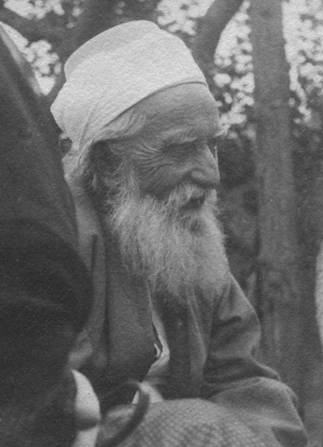
A retelling based on God Passes By by Shoghi Effendi, with details of 'Abdu'l-Bahá's visit to the grave from Mahmúd's Diary by Mírzá Maḥmúd-i-Zarqání.
In God Passes By Shoghi Effendi records how the Faith of Bahá'u'lláh was first taught in North America. In February 1894 a Syrian doctor who had become a believer in Cairo settled in Chicago and began to teach the Faith actively and systematically. By 1896, it was reported, the believers in Chicago and nearby Kenosha were counted by hundreds.
Thornton Chase, a Chicago businessman in the insurance trade, accepted the Faith in 1894. Shoghi Effendi names him first among those "whose names will ever remain associated with the first stirrings of the Faith of Bahá'u'lláh in the North American continent":
The stout-hearted Thornton Chase, surnamed Thábit (Steadfast) by 'Abdu'l-Bahá and designated by Him "the first American believer," who became a convert to the Faith in 1894 ...
Elsewhere in the same book the Guardian calls him "indeed the first to embrace the Cause of Bahá'u'lláh in the Western world."
Chase later moved to Los Angeles, and he died there on 30 September 1912, while 'Abdu'l-Bahá was travelling across America. Mahmúd's Diary records that on 27 September, in Colorado, a telegram told the Master that Chase was seriously ill in a Los Angeles hospital, and that He spoke again and again of his faithfulness. Nearly three weeks later, on the way to Oakland, He said: "I would not visit Los Angeles were it not for the purpose of visiting the tomb of Mr Chase."
On 19 October 1912 'Abdu'l-Bahá went with several of the friends to the grave in Inglewood Cemetery. According to Mahmúd, He spread flowers over the grave, and, facing the Holy Land, chanted Bahá'u'lláh's Tablet of Visitation and then a prayer for the departed. He spoke briefly of Chase's services, steadfastness and forbearance. Shoghi Effendi describes how He "stooped low to the grave of His beloved disciple, Thornton Chase, in Inglewood Cemetery, and kissed his tombstone, an example which all those present hastened to follow." He counts "the moving ceremony in Inglewood" among the acts that showed the importance the Master attached to His visit to America.
Before leaving Los Angeles two days later, 'Abdu'l-Bahá told the friends there: "Go every year to visit the grave of Mr Chase on my behalf, for he was a sanctified soul; his station will be known later."
A retelling based on God Passes By by Shoghi Effendi and Mahmúd's Diary. For the fuller account, see the originals.
Cite this story
Effendi, S.. (1944). *God Passes By*. Bahá'í Publishing Trust. https://www.bahai.org/library/authoritative-texts/shoghi-effendi/god-passes-by/
Record yourself reading this story
Recording stays on this device only. Nothing is uploaded.
Related stories
The First American Bahá'í
Thornton Chase of Chicago became the first American Bahá'í in 1894. 'Abdu'l-Bahá called him Thábit, the Steadfast, and in 1912 visited his grave in California.
Thornton Chase, the Steadfast
Thornton Chase, the first American believer, served the young Chicago community for years through its House of Spirituality and its publishing work. When he died in 1912, 'Abdu'l-Bahá travelled to Los Angeles to visit his grave.
The Passing of Thornton Chase
Thornton Chase, the first American believer, died in Los Angeles on September 30, 1912, while 'Abdu'l-Bahá was travelling west to California. The Star of the West told of his last days, and less than three weeks later the Master visited his grave.
Thornton Chase, the First American Believer
The life of Thornton Chase, whom ‘Abdu’l-Bahá called “the first American believer,” from his long spiritual search to his service in Chicago, and the Master’s visit to his grave in 1912.