May Maxwell: A Mother of the Western Bahá'í Community
Bahá'í Chronicles editors, Bahá'í Chronicles · Read original
When in Bahá'í history
Montreal (today: Montreal, Canada)
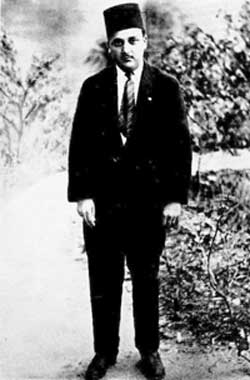
May Ellis Bolles was born in 1870 in Englewood, New Jersey, into a cultivated American family of considerable means. She was educated at home and in Europe. She first heard of the Bahá'í Faith in Paris in 1898, through Mrs. Phoebe Hearst, who had gathered around her a small circle of Western seekers preparing for what would become, that winter, the first Western pilgrimage to the Master in ‘Akká.
May was among the small group of fifteen who travelled to ‘Akká in February 1899. The pilgrimage, the chronicle records, marked her permanently. She returned to Paris a Bahá'í; she set herself, on the Master’s instruction, to establish the Cause in that city; she became, across the next several years, the spiritual mother of the Paris community.
In 1902 she married the Canadian architect William Sutherland Maxwell. The marriage took her to Montreal. There she established, with the same quiet patience, the Bahá'í community of Canada. The Maxwell house at 716 Avenue des Pins became, for forty years, the centre of the Cause in Canada.
In 1912 the Master Himself spent ten days under the Maxwell roof during His North American tour. The chronicle preserves the household recollection of those days; the Master wrote later, in Tablets to May Maxwell, that the Maxwell home would be made blessed throughout all time by His residence in it.
Her daughter Mary, born in 1910, was raised in the household the Master had blessed. Mary would in 1937 marry Shoghi Effendi and become Rúḥíyyih Khánum. May herself remained, across the years of her daughter's youth, an active travel-teacher — to Quebec, to French Canada, to the United States.
In the late 1930s, in failing health, she set out on what would prove her last journey: a teaching trip to South America, to help establish the Cause in countries that had no resident Bahá'ís. She travelled by train and by boat. She arrived in Buenos Aires in February 1940. She was, by then, gravely ill; she addressed a meeting of inquirers there; she died, in her hotel room, on the third of March 1940.
Shoghi Effendi cabled the Bahá'í world. He instructed that her grave in Buenos Aires be considered a sacred station of pilgrimage for the future Bahá'ís of Latin America. He named her, in the cable, a martyr of the Faith. The naming, the chronicle observes, was rare and deliberate; few Western Bahá'ís of her generation had been so named. She had earned it, the chronicle concludes, by giving the last week of her life to a teaching trip on a continent she had never previously seen, in the service of communities that had not yet been born.
Source: Bahá'í Chronicles (https://bahaichronicles.org/may-maxwell/).
Cite this story
editors, B. C.. *Bahá'í Chronicles*. https://bahaichronicles.org/may-maxwell/
Record yourself reading this story
Recording stays on this device only. Nothing is uploaded.
Related stories
May Maxwell and the House That Was Blessed
A young woman from America heard of a new Faith in Paris, journeyed across the sea to meet the Master, and spent the rest of her long life helping others find Him too.
Amatu’l-Bahá Ruhiyyih Khanum
Over his mother's signature, but drafted by the Guardian, the following cable was sent to America: “Announce Assemblies celebration marriage beloved Guardian. Inestimable honour conferred upon handmaid of Baha'u'llah Ruhiyyih Khanum Miss…
William Sutherland Maxwell
He was made a Fellow of the Royal Institute of British Architects. ** William Sutherland…
The Girl Who Loved to Learn
A curious girl from Canada who could not stop reading and learning grew up to do something nobody expected — and to serve the whole world.