Flowers and Sweets for the Children
Mírzá Maḥmúd-i-Zarqání, Mahmúd's Diary: The Diary of Mírzá Maḥmúd-i-Zarqání, (1998), George Ronald
When in Bahá'í history
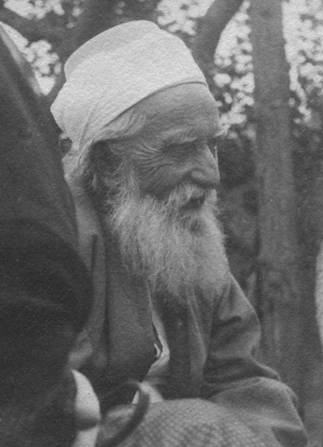
A retelling for children, based on Mahmúd's Diary, from the many entries written during 'Abdu'l-Bahá's journey across America in 1912.
In 1912 'Abdu'l-Bahá traveled across America. Every day was full of talks, visitors and newspaper reporters. A man named Mahmúd traveled with Him and wrote down what happened each day. Again and again, his diary tells about the Master and the children.
In Washington, 'Abdu'l-Bahá went to a gathering of children. When He walked in, they sang to Him. He looked at them and said:
"Praise be to God. These children, like flowers, are in a state of utmost purity, freshness and delicacy!"
He prayed for them. Then He hugged and kissed each child and gave them sweets.
In Chicago, families brought their children to His hotel. He hugged and kissed each one and gave them flowers and sweets. He told them that Bahá'u'lláh called them the candles of the world, because their hearts were pure.
In the town of Kenosha, the parents brought their children to be blessed. 'Abdu'l-Bahá took them onto His lap, one after another, and gave them flowers, fruit and sweets.
In St. Paul, Minnesota, He was walking in a garden when some children came up and politely asked Him where He came from and why He had come. He talked with them kindly. They followed Him to the house and asked if they could come in, and He gave each of them a few coins. Then one tiny child slipped down from his father's lap, ran to 'Abdu'l-Bahá, and said, "I love you first and then my father."
In San Francisco, at a meeting just for children, He said, "Praise be to God! What radiant children they are!" He kissed them one by one, greeted each child with a few words of English, and gave every one of them flowers and sweets.
In New York, some children who had seen Him on their way from school asked if they could visit Him. He welcomed them, asked how they were, gave each one candies and flowers, and sprinkled them with rose perfume. He told them to learn all they could and to be good and sincere.
This is a retelling for children. For the fuller account, see "The Master Among the Children".
Cite this story
Maḥmúd-i-Zarqání, M.. (1998). *Mahmúd's Diary: The Diary of Mírzá Maḥmúd-i-Zarqání*. George Ronald.
Record yourself reading this story
Recording stays on this device only. Nothing is uploaded.
Related stories
The Master Among the Children
In Washington, Chicago, Kenosha, St. Paul, San Francisco and New York, Mahmúd's Diary records 'Abdu'l-Bahá meeting children during His 1912 journey: embracing and kissing them, taking them on His lap, and giving them flowers and sweets.
Half an Hour with Jeffrey Parsons
On His first morning in Washington, amid many interviews, ‘Abdu’l-Bahá spent half an hour with Agnes Parsons’ young son Jeffrey, looking at his toys, books and pictures before they went up to the roof to see the view.
The Chronicler of the Master’s Journey
Mírzá Maḥmúd-i-Zarqání completed the first volume of his chronicle of ‘Abdu’l-Bahá’s 1912 journey in America at the end of 1913; at his sudden death the Guardian cabled that his outstanding services would shine evermore.
A Great Ship Comes to New York
When 'Abdu'l-Bahá's ship reached New York in April 1912, reporters came on board to ask why He had come. He told them He had come for universal peace and the unity of humankind.