The Master Among the Children
Mírzá Maḥmúd-i-Zarqání, Mahmúd's Diary: The Diary of Mírzá Maḥmúd-i-Zarqání, (1998), George Ronald
When in Bahá'í history
New York (today: New York, NY, USA)
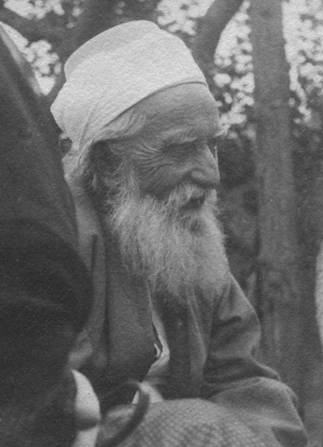
A retelling based on Mahmúd's Diary: The Diary of Mírzá Maḥmúd-i-Zarqání.
Mírzá Maḥmúd-i-Zarqání kept a daily record of 'Abdu'l-Bahá's journey through America in 1912. Among the talks, interviews and receptions, his diary returns again and again to the Master's meetings with children.
In Washington, on the morning of 24 April, 'Abdu'l-Bahá went to a Bahá'í children's gathering. As He entered, the children sang to Him. Seeing them, He said, "Praise be to God. These children, like flowers, are in a state of utmost purity, freshness and delicacy!" He spoke, recited prayers for them, and then kissed and embraced each child and gave them some sweets. Mahmúd adds that the immensity of His love and affection for the children was clearly obvious.
In Chicago, on 5 May, many Bahá'ís brought their children to the salon of His hotel. He embraced and kissed each child and gave them flowers and sweets. He told them, "According to Christ you are the children of the Kingdom and according to Bahá'u'lláh, the candles of the world of man, for your hearts are in the utmost purity and your spirits are sanctified."
In Kenosha, Wisconsin, on 15 September, during a lunch the friends held for Him in their hall, the parents brought their children to be blessed. He took them onto His lap one by one and gave them flowers, fruit and sweets.
On 19 September, at the home of Dr Clement Woolson in St. Paul, Minnesota, the Master walked in the garden. Several children came up and politely asked Him about His country and the purpose of His visit. He spoke with them kindly. They followed Him, and when He reached the house they asked permission to come in. He gave each of them some coins. One tiny child, Mahmúd records, slipped off his father's lap, ran to the Master and said, "I love you first and then my father."
In San Francisco, on 11 October, at a children's meeting in the home of Mrs Goodall and Mrs Cooper, He said, "Praise be to God! What radiant children they are!" He praised their courtesy and upbringing, kissed them one by one, greeted each child in short English sentences, and gave each one flowers and sweets.
In New York, on 24 November, a group of children who had seen Him on their way from school, and had asked to meet Him, came to visit. He asked about their health and welfare, gave each of them candies and flowers, and sprinkled them with attar of rose. He encouraged them to acquire knowledge, good morals and sincerity, and told them, "Truly, the hearts of the children are very pure."
A retelling based on Mahmúd's Diary: The Diary of Mírzá Maḥmúd-i-Zarqání (entries for 24 April, 5 May, 15 and 19 September, 11 October and 24 November 1912). For the fuller account, see the original.
Cite this story
Maḥmúd-i-Zarqání, M.. (1998). *Mahmúd's Diary: The Diary of Mírzá Maḥmúd-i-Zarqání*. George Ronald.
Record yourself reading this story
Recording stays on this device only. Nothing is uploaded.
Related stories
Flowers and Sweets for the Children
In city after city on His journey across America, 'Abdu'l-Bahá met the children, hugged and blessed them, and gave them flowers and sweets.
The Answer at Ford Hall
In Boston in 1912, a speaker warned a large audience that a false Christ had come to America. 'Abdu'l-Bahá, speaking next, told them of the truth of all the Prophets of God, and especially of Christ.
Summer Days in the Hills
When 'Abdu'l-Bahá went to stay in the green hills of New Hampshire, His hostess hoped He could rest. But He said He had come to work and to serve, and He welcomed the many people who came to see Him.
The Master at Niagara Falls
At the edge of Niagara Falls, 'Abdu'l-Bahá remembered the waterfalls Bahá'u'lláh had loved, and told His companions why He could not stay even half a day.