Unity of Nations: 'Abdu'l-Bahá at Handel Hall
'Abdu'l-Bahá, The Promulgation of Universal Peace, (1922), Bahá'í Publishing Trust · Read original
When in Bahá'í history
Chicago (today: Chicago, Illinois, USA)
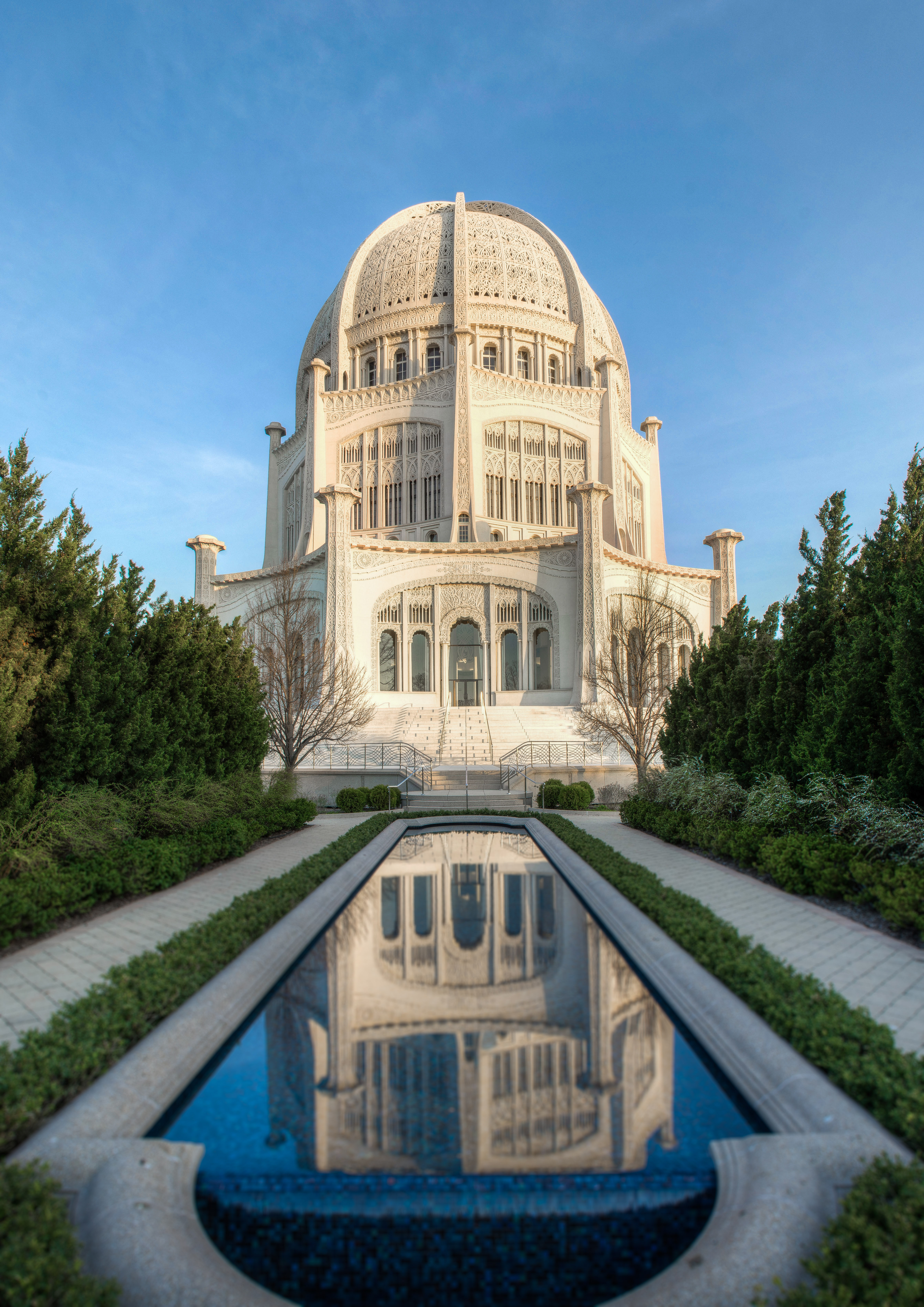
On the evening of the 1st of May, 1912, 'Abdu'l-Bahá addressed a public gathering at Handel Hall on East Randolph Street in the heart of downtown Chicago. The hall, then a frequently used venue for civic and musical events, had been engaged by the Chicago Bahá'í community for the occasion. The audience — several hundred — included Bahá'ís, inquirers, and a number of Chicago citizens curious to see the Persian sage whose presence in the city had filled the newspaper columns of the preceding days.
The Master rose and chose, as His subject for the evening, the great theme of national prejudice and its overcoming. He named, in His characteristic plain manner, the three inheritances that each generation receives from its predecessors: the prejudice of nation; the prejudice of race; the prejudice of religion. Each of these inheritances, He said, is taught in the home, reinforced in the school, celebrated in the public ceremony, and confirmed in the ordinary unconscious habits of the inheriting child. Each is extremely difficult to outgrow. Each, until outgrown, is a brake on the development of any human community capable of genuine peace.
The cure, He proposed, was not the suppression of love for one's own people. He named that love as natural, healthy, and necessary. The cure was the enlargement of love beyond its initial boundaries.
Love for your country must be enlarged into love for the human family.
The phrase, taken from the published version of the talk in The Promulgation of Universal Peace, gave the practical instruction. Love for one's country is the seed; love for the human family is the full plant. The mature lover of his own land does not stop loving it; he comes to love every other land in addition. The mature member of his own race does not deny his heritage; he comes to honour every other heritage. The mature follower of his own religion does not abandon his tradition; he comes to recognise the Divine voice speaking through every other genuine prophetic tradition as well.
The Master closed the address by naming the practical implications. International peace would not be made by treaties alone, however valuable; it required the slow education of the human heart in the enlarged love. The Bahá'í Faith, He said, was the explicit articulation in this present age of the spiritual education humanity now required. The friends present in Handel Hall were the witnesses, in the city of Chicago, of the work that had to be carried out everywhere.
The audience applauded warmly. The Master took His leave. The talk would, in its published form, become one of the most quoted statements of the Bahá'í teaching on the overcoming of nationalism — a sentence the Faith would return to many times over the troubled century that followed.
Source: 'Abdu'l-Bahá, The Promulgation of Universal Peace, talk of May 1, 1912 at Handel Hall, Chicago. Public domain text from the Bahá'í Reference Library.
Cite this story
'Abdu'l-Bahá. (1922). *The Promulgation of Universal Peace*. Bahá'í Publishing Trust. https://www.bahai.org/library/authoritative-texts/abdul-baha/promulgation-universal-peace/
Record yourself reading this story
Recording stays on this device only. Nothing is uploaded.
Related stories
Nettie's Little Stone
One believer carried a plain little stone all the way to a cold, muddy field — and 'Abdu'l-Bahá chose her stone to begin a great House of Worship.
Friends From Far Away Shores
When two visitors from Japan came to see 'Abdu'l-Bahá in San Francisco, He was filled with joy — because two people from opposite ends of the earth had met as friends.
The Light in Every Lamp
In a busy hotel ballroom in Seattle, 'Abdu'l-Bahá told two hundred people of many different faiths one simple, beautiful idea — that goodness shines like light, no matter which lamp it burns in.
The Biggest Crowd of All
Almost two thousand young students filled a great hall to hear 'Abdu'l-Bahá — and He told them that being kind to everyone is one of the oldest ideas in the whole world.