Nettie Tobin's Stone
Mírzá Maḥmúd-i-Zarqání, Mahmúd's Diary: The Diary of Mírzá Maḥmúd-i-Zarqání, (1998), George Ronald
When in Bahá'í history
A retelling for children, based on Mahmúd's Diary (entry of 1 May 1912) and Nettie Tobin's own account in Annamarie Honnold's Vignettes from the Life of 'Abdu'l-Bahá.
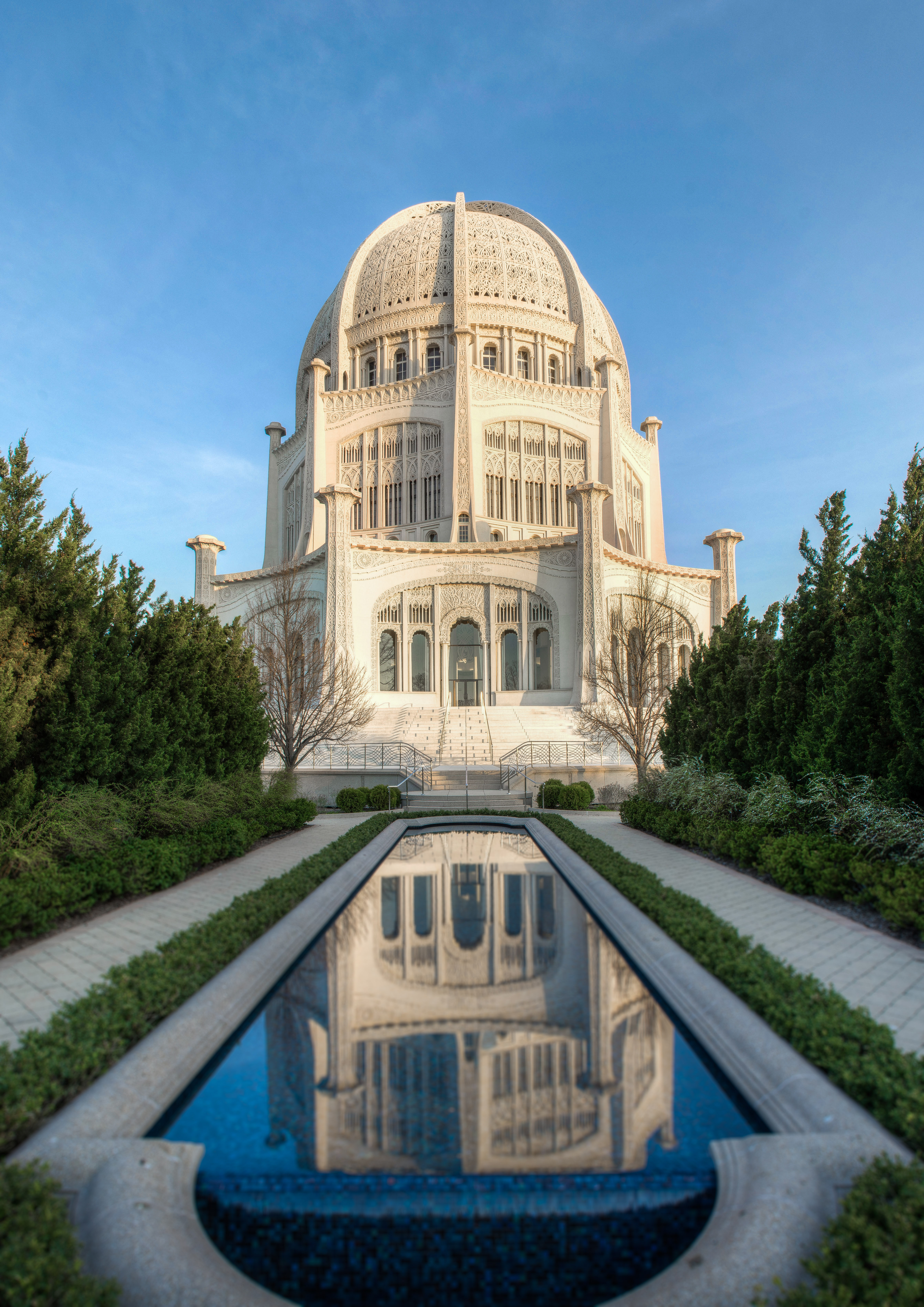
On May 1, 1912, a crowd of friends gathered in a field just north of Chicago, beside Lake Michigan. They had put up a big tent. The Bahá'ís hoped to build a House of Worship on this land, and 'Abdu'l-Bahá was coming to lay its first stone.
A believer in Chicago named Nettie Tobin wanted to help build the temple, but she did not have much money. Near her home some builders were putting up a building. She asked one of them if she could have a stone, and he told her to help herself from a pile of stones they did not want. She put a stone into an old baby carriage, and with the help of a Persian friend she took it on the streetcar toward the temple land. Near the end of the trip the carriage broke. Two boys came by with a wagon and lent it to them, and so the stone reached the field.
When 'Abdu'l-Bahá arrived, He first drove all around the edges of the land to look at it. Then He went into the tent and spoke to the friends about how the Faith of Bahá'u'lláh brings together the people of the East and the West.
Then a friend named Irene Holmes handed Him a golden trowel, a small digging tool made for this day. 'Abdu'l-Bahá dug into the earth Himself, to make a place for the stone. Then He passed the trowel on. Mírzá Maḥmúd, who was there and wrote it all down, tells us that friends from all over America took turns digging, and after them friends from the East: a Bahá'í from a Zoroastrian family, one from a Muslim family, one from the Arab lands, and a woman named Qudsíyyih Khánum for the Bahá'í women of the East.
The stone 'Abdu'l-Bahá chose to set in that place was Nettie's. With His own hand He set it in the ground. Later Nettie wrote: "Imagine my joy when 'the stone refused by the builder' was received and used by the Master!"
The House of Worship took many years to build. It was finished and opened for prayer in 1953, forty-one years after that day.
This is a retelling for children. For the fuller account, see "A Stone for the Mother Temple".
Cite this story
Maḥmúd-i-Zarqání, M.. (1998). *Mahmúd's Diary: The Diary of Mírzá Maḥmúd-i-Zarqání*. George Ronald.
Record yourself reading this story
Recording stays on this device only. Nothing is uploaded.
Related stories
A Stone for the Mother Temple
On May 1, 1912, 'Abdu'l-Bahá dug the ground for the House of Worship at Wilmette with a golden trowel, American delegates and Eastern believers continued the digging, and He set in place the stone Nettie Tobin had brought.
Nettie's Stone
Nettie Tobin wanted to give something for the new temple, so she brought a rejected stone from Chicago in an old baby carriage. 'Abdu'l-Bahá chose it as the cornerstone.
Nettie Tobin's Stone
On 1 May 1912 'Abdu'l-Bahá dedicated the site of the first Bahá'í House of Worship in the West. For the cornerstone He chose a rejected building stone that Nettie Tobin had brought from Chicago by baby carriage and streetcar.
The Stone Refused by the Builder
Nettie Tobin, who was not well off, brought a builder's rejected stone to the Wilmette Temple site by baby carriage, streetcar and a borrowed wagon, and the Master used it at the dedication of the land.