Friends From Far Away
Mírzá Maḥmúd-i-Zarqání, Mahmúd's Diary, (1998), George Ronald · Read original
When in Bahá'í history
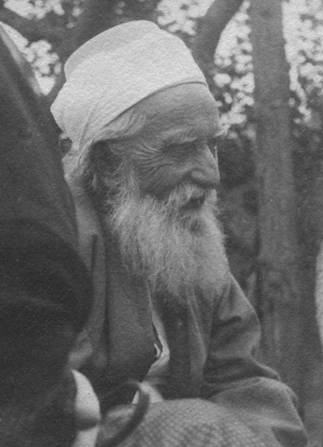
A retelling for children, based on Mahmúd's Diary (entry of 4 October 1912).
One morning in October 1912, in San Francisco, two visitors came to the house where 'Abdu'l-Bahá was staying. They were Bahá'ís from Japan.
'Abdu'l-Bahá was very happy to see how strong their faith was. He said that this meeting was an historic event. It was not every day, He said, that a person from Iran met people from Japan in San Francisco with such love and harmony. This had happened through the power of Bahá'u'lláh, and it was a reason to be thankful and happy. Then He said:
The power of Bahá'u'lláh makes all difficulties simple.
He told them that He liked the Japanese people very much, because they were bold and intelligent, and whatever they set out to do, they did well.
The visitors asked 'Abdu'l-Bahá to come to Japan. They also asked if they could write about the Bahá'í Faith in the newspapers of Japan. He gladly said yes, and He was very kind to them.
This is a retelling for children. For the fuller account, see "Two Japanese Bahá'ís in San Francisco".
Cite this story
Maḥmúd-i-Zarqání, M.. (1998). *Mahmúd's Diary*. George Ronald. https://bahai-library.com/zarqani_mahmuds_diary
Record yourself reading this story
Recording stays on this device only. Nothing is uploaded.
Related stories
Why the Master Bore the Hardships of Travel
Riding to a hotel in Chicago, ‘Abdu’l-Bahá explained that He bore the hardships of His travels in America because He feared that, after Him, self-seeking persons might disturb the love and unity of the friends.
No Golden Trowel
At the dedication of the Wilmette Temple site on 1 May 1912, ‘Abdu’l-Bahá set aside the golden trowel He was given and broke the ground with an ordinary axe and shovel.
My Invitation to America
After His release in 1908, American believers begged ‘Abdu’l-Bahá to visit. In 1911 He told Juliet Thompson that His invitation to America would be the unity of the believers.
The Storm at the Unity Feast
At the Unity Feast in West Englewood in June 1912, a sudden storm broke just as the meal was announced. Juliet Thompson watched ‘Abdu’l-Bahá sit at a distant crossroad, His face upturned to the sky, until the clouds raced away.