The Golden Trowel
Mírzá Maḥmúd-i-Zarqání, Mahmúd's Diary, (1998), George Ronald · Read original
When in Bahá'í history
A retelling for children, based on Mahmúd's Diary (entry of 1 May 1912).
On the first day of May, 1912, 'Abdu'l-Bahá travelled out from the city of Chicago to a piece of land beside a great lake, at a place called Wilmette. The Bahá'ís had bought this land to build a House of Worship, a temple where people could come to pray. It would be the first Bahá'í House of Worship in the Western world.
When He arrived, the friends had already put up a big tent. First He drove around the edges of the land. Then He went into the tent and spoke to the friends about how the Cause of Bahá'u'lláh brings together the people of the East and the West.
Then He went to the spot where the first stone was to be laid. A lady named Miss Holmes handed Him a trowel made of gold, made specially for this day. With it, 'Abdu'l-Bahá dug the earth for the foundation stone. The ground was full of gravel, so an axe and a shovel were brought as well.
Then, one by one, others took a turn at digging: Bahá'ís from the American communities, and Bahá'ís from the East, including a lady who represented the Bahá'í women of the East. People of many races and nations helped. When the digging was done, 'Abdu'l-Bahá set the stone in its place with His own hand.
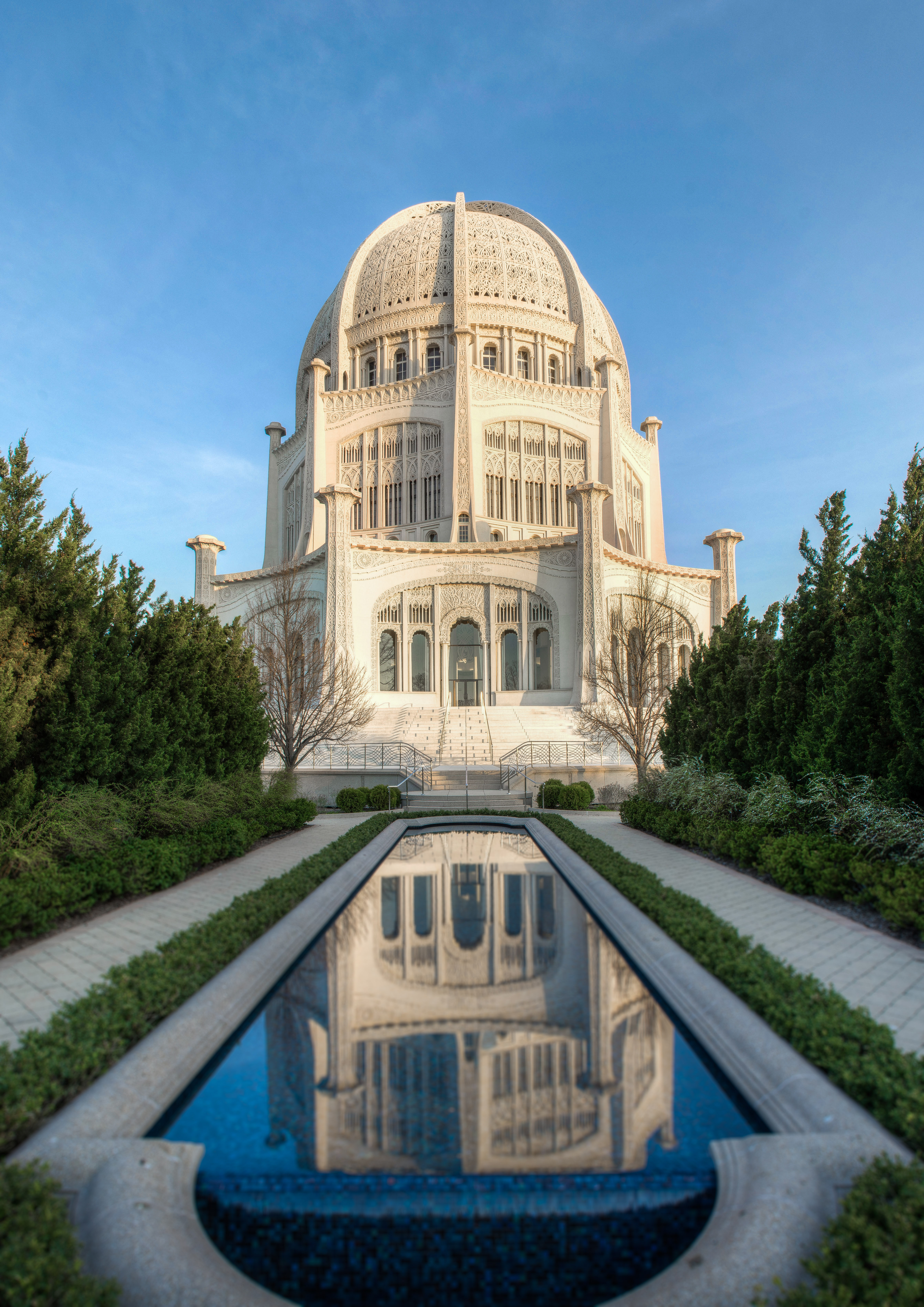
That field is not empty anymore. The Bahá'í House of Worship in Wilmette stands there today, with nine doors open to people of every kind.
This is a retelling for children. For the fuller account, see "The Golden Trowel".
Cite this story
Maḥmúd-i-Zarqání, M.. (1998). *Mahmúd's Diary*. George Ronald. https://bahai-library.com/zarqani_mahmuds_diary
Record yourself reading this story
Recording stays on this device only. Nothing is uploaded.
Related stories
The Golden Trowel
On May 1, 1912, at the site of the future House of Worship in Wilmette, 'Abdu'l-Bahá dug the ground for the foundation stone with a golden trowel. Believers of many backgrounds followed, and He set the stone in place.
The Mother Temple of the West
The House of Worship at Wilmette began with a petition from the Chicago believers in 1903. 'Abdu'l-Bahá laid its dedication stone in 1912, and the American Bahá'í community built it over the next three decades, finishing the exterior in 1942.
Why the Master Bore the Hardships of Travel
Riding to a hotel in Chicago, ‘Abdu’l-Bahá explained that He bore the hardships of His travels in America because He feared that, after Him, self-seeking persons might disturb the love and unity of the friends.
No Golden Trowel
At the dedication of the Wilmette Temple site on 1 May 1912, ‘Abdu’l-Bahá set aside the golden trowel He was given and broke the ground with an ordinary axe and shovel.