The Golden Trowel
Mírzá Maḥmúd-i-Zarqání, Mahmúd's Diary, (1998), George Ronald · Read original
When in Bahá'í history
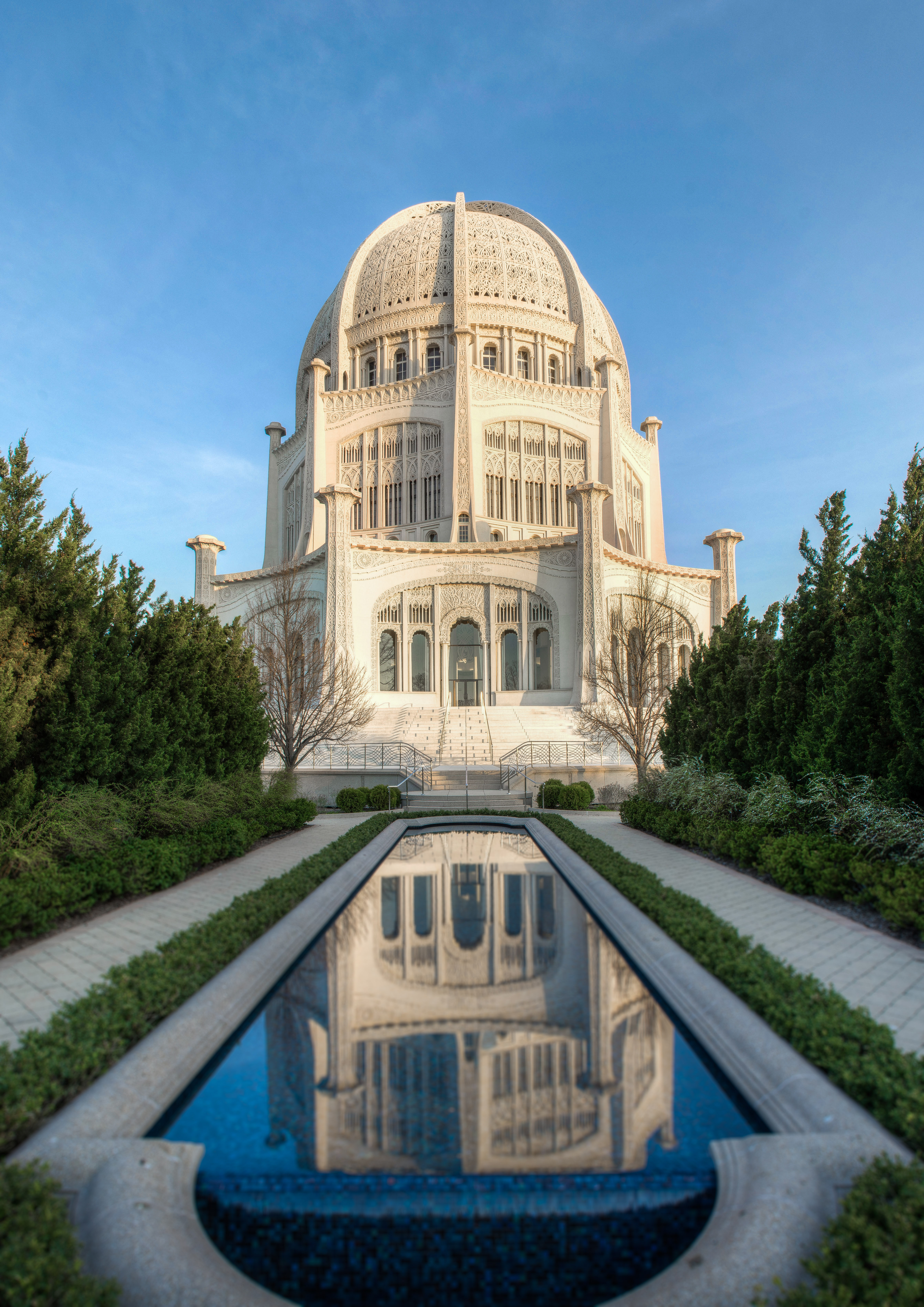
A retelling based on Mahmúd's Diary by Mírzá Maḥmúd-i-Zarqání (George Ronald), the day-by-day chronicle of 'Abdu'l-Bahá's travels in America, from the entry for 1 May 1912, with details from Honoré J. Jaxon's report in Star of the West. The narrative is retold in our own words. Read the full text for the original entry.
On Wednesday, May 1, 1912, 'Abdu'l-Bahá went out from Chicago to Wilmette, to the land the American believers had bought for a Mashriqu'l-Adhkár, a House of Worship. It was to be the first Bahá'í House of Worship in the West. Mírzá Maḥmúd-i-Zarqání, who travelled with Him, recorded the day.
By the time He arrived, the friends had assembled and pitched a large tent for the meeting. 'Abdu'l-Bahá first drove around the site, inspecting its boundaries, and then entered the tent. There He spoke on the power of the Cause of Bahá'u'lláh to unite the peoples of the East and the West beneath the shadow of the Word of God, and about the Mashriqu'l-Adhkárs of 'Ishqábád and America.
He then went to the spot where the stone was to be laid. Miss Holmes presented Him with a golden trowel made for the occasion, and He took it and dug the earth for the foundation stone. After Him, the delegates from the American assemblies and then representatives of the Eastern believers each took a turn at the digging. Among them were Mihtar Ardishír Bahrám Surúsh, representing the Bahá'ís of Pársí background; Siyyid Asadu'lláh, representing those of Muslim origin; Zia Bagdadi, representing the Arab friends; and Qudsíyyih Khánum Ashraf, representing the Bahá'í women of the East. When the digging was done, the Master set the stone in place with His own hand.
Honoré J. Jaxon, who reported the day for Star of the West, adds some details. The trowel was presented by Miss Irene C. Holmes of New York. Because the soil was gravelly, 'Abdu'l-Bahá returned the trowel to its leather case and called for an axe and then a shovel, and people of many races and nations who were present took turns with them. The stone had been brought to the site as a contribution from Bahá'ís of both East and West. According to Bruce Whitmore's history of the House of Worship, as 'Abdu'l-Bahá set the stone in the ground He said:
The Temple is already built.
He then showed His love to the friends and left the site. Most of them stayed and had lunch in the tent. That afternoon He spoke at a reception at the Plaza Hotel in Chicago.
This account is retold for the Bahai Story Library; it is a paraphrase, not the original text. See Mahmúd's Diary (Mírzá Maḥmúd-i-Zarqání, George Ronald), entry for 1 May 1912 and its notes; Honoré J. Jaxon, "Dedication of the Mashrak-el-Azkar Site," Star of the West, vol. 3, no. 4 (1912), pp. 5–6; and Bruce Whitmore, The Dawning Place, p. 65.
Cite this story
Maḥmúd-i-Zarqání, M.. (1998). *Mahmúd's Diary*. George Ronald. https://bahai-library.com/zarqani_mahmuds_diary
Record yourself reading this story
Recording stays on this device only. Nothing is uploaded.
Related stories
Nettie Tobin's Stone
Nettie Tobin had no money to give, so she brought a stone the builders did not want to the land for a House of Worship. On May 1, 1912, 'Abdu'l-Bahá set her stone in the ground with His own hands.
A Stone for the Mother Temple
On May 1, 1912, 'Abdu'l-Bahá dug the ground for the House of Worship at Wilmette with a golden trowel, American delegates and Eastern believers continued the digging, and He set in place the stone Nettie Tobin had brought.
The Farewell Aboard the Celtic
On December 5, 1912, believers crowded aboard the Celtic in New York to bid 'Abdu'l-Bahá farewell. He gave them His parting words, and as the ship sailed, a throng stretching as far as the eye could see waved goodbye.
The Golden Trowel
On a field beside a great lake, 'Abdu'l-Bahá dug the earth for the first stone of a House of Worship that still stands today, and friends from many lands took turns digging after Him.