A Reflection of the Heavenly Concourse
'Abdu'l-Bahá, 'Abdu'l-Bahá in London, (1912), Bahá'í Publishing Trust · Read original
When in Bahá'í history
London (today: London, United Kingdom)
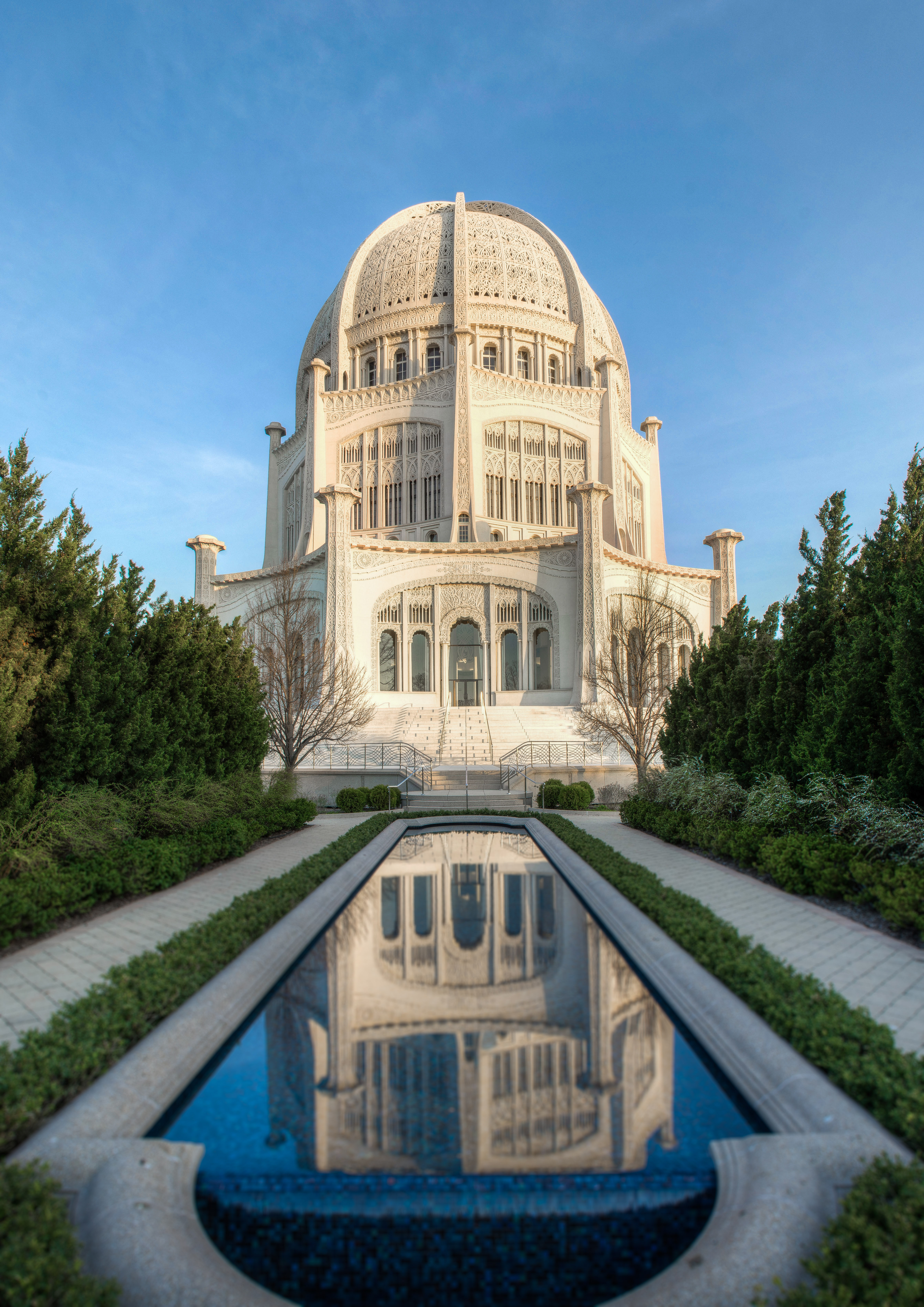
‘Abdu’l-Bahá arrived in London on the evening of Monday, 4 September 1911. On 13 September He spoke at the home of Mrs. Thornburgh-Cropper. The talk is printed in ‘Abdu’l-Bahá in London.
He began: “Thanks be to God, this is a good meeting. It is very enlightened, it is spiritual.” He then quoted a Persian poet: “The Celestial Universe is so formed that the under world reflects the upper world.” He continued:
That is to say whatever exists in heaven is reflected in this phenomenal world. Now, praise be to God, this meeting of ours is a reflection of the heavenly concourse; it is as though we had taken a mirror and had gazed into it. This reflection from the heavenly concourse we know as love.
He set the aims of those present beside the aims of the world:
Some of the people of the earth desire conquest over others: some of them are longing for rest and ease; others desire a high position; some desire to become famous:—thank God our desire is for spirituality and for union with God.
He prayed that they might “become celestial warriors,” spreading the Unity of God, enlightening the East and West, and giving to all hearts the love of God.
Near the end He said: “I am very happy to be with you all. I am pleased with the English King and Government, and with the people.” They could thank God, He told them, that in that land they were so free: “You do not know what lack of freedom there is in the East.”
He closed: “I wish God’s protection for you all. Goodbye to you all.”
A retelling based on ‘Abdu’l-Bahá in London (“Discourse at Mrs. Thornburgh-Cropper’s,” 13 September 1911). For the fuller account, see the original.
Cite this story
'Abdu'l-Bahá. (1912). *'Abdu'l-Bahá in London*. Bahá'í Publishing Trust. https://www.gutenberg.org/ebooks/19250
Record yourself reading this story
Recording stays on this device only. Nothing is uploaded.
Related stories
The Collective Center of Mankind
On June 2, 1912, speaking for the second time at the Church of the Ascension in New York, 'Abdu'l-Bahá described the church as a collective center and the Manifestations of God as the real Collective Centers of mankind.
Neither Whip nor Sword
At a dinner at the Parsons home in Washington on April 22, 1912, 'Abdu'l-Bahá told how a Zoroastrian high priest lost his prejudice against Muḥammad, and compared it with the power that had brought East and West to one table.
The French Teacher in the Master's Home
Letitia, a Catholic girl who taught French in the Master's home, was embarrassed after interpreting for a pilgrim. ‘Abdu’l-Bahá assured her that no one would try to make a Bahá’í of her.
Religion
To most men who have not heard the message of this teaching, religion seems an outward form, a pretence, merely a seal of respectability.