The Collective Center of Mankind
'Abdu'l-Bahá, The Promulgation of Universal Peace, (1922), Bahá'í Publishing Trust · Read original
When in Bahá'í history
New York (today: New York City, USA)
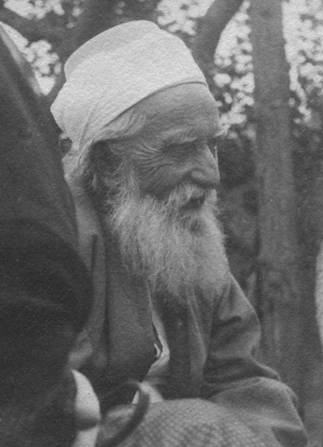
The Church of the Ascension, at Fifth Avenue and Tenth Street in New York, was the first church in America in which 'Abdu'l-Bahá spoke. Its minister, Dr Percy Stickney Grant, had welcomed Him to its pulpit on April 14, 1912, three days after His arrival. On June 2 the Master spoke there a second time. Mahmúd's diary records what He said of that day: "At the time of my arrival at the church I was in no condition to speak; but when I stood before this great gathering I found the atmosphere of the church filled with the Holy Spirit and so a state of wonderful happiness and joy came over me."
He began by explaining that in the terminology of the Holy Books the church is called the house of the covenant, a place where people of different thoughts, races and nations may come together in a covenant of permanent fellowship.
Consider how within a temple every race and people is seen and represented--all in the presence of the Lord, covenanting together in a covenant of love and fellowship, all offering the same melody, prayer and supplication to God.
The church, He said, is a collective center for mankind; but the real Collective Centers are the Manifestations of God, of Whom the church or temple is a symbol. Moses and the Mosaic law had been the unifying center for the scattered sheep of Israel. When Christ appeared, the peoples and sects of His time were brought together, not by political power, but through the breaths of the Holy Spirit. Abraham, Moses, Jesus Christ and Muḥammad were each the Collective Center of Their day, and all arose in the East.
Today Bahá'u'lláh is the Collective Center of unity for all mankind, and the splendor of His light has likewise dawned from the East.
He then spoke of East and West. Material civilization had reached its highest point in the West, He said, but divine civilization had been founded in the East; the East must acquire material civilization from the West, and the West must receive spiritual civilization from the East. Material civilization alone is not sufficient. A bird on the highest branch, with all the grain of the meadows for its food and all the fresh water of the springs for its drink, already enjoys the fullest material happiness. The honor of the human kingdom is the knowledge and love of God.
When the address was over, some in the audience asked, through Dr Grant, whether they might put questions. Each wrote a question on a slip of paper and handed it to an usher, and the questions were translated and answered through an interpreter. Asked about the status of women in the Orient, He said that Bahá'u'lláh had proclaimed the equality of man and woman and commanded that all women be educated. Asked whether He was the successor of the Founder of His Faith in the same way as the Pope of Rome, He answered:
I am the servant of Bahá'u'lláh, the Founder; and in this I glory. No honor do I consider greater than this, and it is my hope that I may be confirmed in servitude to Bahá'u'lláh. This is my station.
A retelling based on The Promulgation of Universal Peace ('Abdu'l-Bahá), talk of 2 June 1912 at the Church of the Ascension, Fifth Avenue and Tenth Street, New York (notes by Esther Foster), with details from Mahmúd's Diary. For the fuller account, see the originals.
Cite this story
'Abdu'l-Bahá. (1922). *The Promulgation of Universal Peace*. Bahá'í Publishing Trust. https://www.bahai.org/library/authoritative-texts/abdul-baha/promulgation-universal-peace/
Record yourself reading this story
Recording stays on this device only. Nothing is uploaded.
Related stories
A Reflection of the Heavenly Concourse
On 13 September 1911, nine days after arriving in London, 'Abdu'l-Bahá spoke at the home of Mrs. Thornburgh-Cropper and described the meeting as a reflection of the heavenly concourse.
At Temple Emanu-El in San Francisco
On October 12, 1912, 'Abdu'l-Bahá spoke at Temple Emanu-El in San Francisco. He praised Moses and asked His Jewish hearers why they, in turn, should not acknowledge Christ and Muḥammad.
Neither Whip nor Sword
At a dinner at the Parsons home in Washington on April 22, 1912, 'Abdu'l-Bahá told how a Zoroastrian high priest lost his prejudice against Muḥammad, and compared it with the power that had brought East and West to one table.
Religion
To most men who have not heard the message of this teaching, religion seems an outward form, a pretence, merely a seal of respectability.