Two People Equivalent to the Whole World
Star of the West Editors, Star of the West, (1916), Bahai News Service · Read original
When in Bahá'í history
Los Angeles (today: Los Angeles, California, USA)
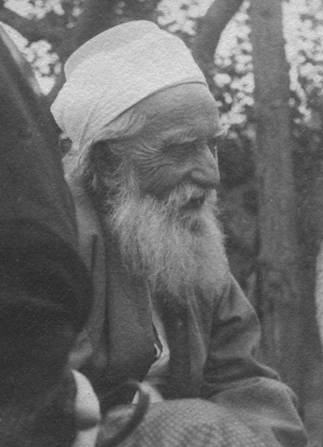
In Volume 7, Number 5 of the Star of the West, dated June 5, 1916, the editors printed extracts from a talk 'Abdu'l-Bahá had given in Los Angeles on the evening of Saturday, October 19, 1912, the day He visited the grave of Thornton Chase. They set over it the heading "Two people are equivalent in strength of character to the whole world."
He began with their numbers. "Do not look at your small number," He told them. What matters is not plurality of numbers but the bounty of God, the confirmation of the heavenly Kingdom. How often, He said, a small gathering had widened its circle until it included all nations and religions. The hearts must be looked at, not the numbers. If a limited number of souls have hearts that are pure and tender, that limited number is equivalent in strength of character to the whole population of the earth.
He gave them an example from Christian history. Fifty days after the crucifixion, eleven of the disciples gathered on a mountain and held a meeting there, with pure hearts, sincere intentions and exhilarated spirits. Because of the purity and sincerity of those souls, He said, the world was illumined: Christianity advanced, the Roman empire became Christianized, and the Assyrians and the Chaldeans were converted. All this was the fruit of that meeting of eleven souls.
Therefore, He went on, they should not look at their limited number. Importance is not attached to numbers; it concerns faith, assurance, veracity, firmness, attainment to the Kingdom of Abhá, and self-sacrifice in the path of the Kingdom. The sentence the Star took for its heading followed:
If you attain to this, though there be but two people, remember that two people are equivalent in strength of character to the whole world.
What was of essential importance, He added, was their unity and agreement. They must love one another and be self-sacrificing for one another. If they saw shortcomings in anyone, they should be forgiving and not harsh. Even an admonition should be given indirectly, lest any heart be saddened, for in the world of existence, He said, there is nothing so bad as injuring a heart.
A retelling based on the Star of the West, Volume 7, No. 5 (June 5, 1916), "Two people are equivalent in strength of character to the whole world," extracts from a talk by 'Abdu'l-Bahá at Los Angeles, October 19, 1912. For the fuller account, see the original.
Cite this story
Editors, S. O. T. W.. (1916). *Star of the West*. Bahai News Service. https://bahai.works/Star_of_the_West/Volume_7/Issue_5/Text
Record yourself reading this story
Recording stays on this device only. Nothing is uploaded.
Related stories
Distinguished in Morals
On June 15, 1912, in New York, 'Abdu'l-Bahá told the Bahá'ís that He did not want them distinguished by wealth or worldly success, but by love, justice, steadfastness and service to humanity.
Thanks from the Heart and in Deeds
At the Krug home on Park Avenue, New York, on July 15, 1912, 'Abdu'l-Bahá contrasted thanks spoken by the tongue with thanks felt in the heart and shown in deeds, and asked the friends to love one another.
This Is the Day of Faithfulness
At this hour while yet the heart burns with the anguish of sorrow, and the gloom of bereavement still hangs low, my thoughts turn in loving remembrance to my sincere beloved sisters and brothers in the Cause.
A Reflection of the Heavenly Concourse
On 13 September 1911, nine days after arriving in London, 'Abdu'l-Bahá spoke at the home of Mrs. Thornburgh-Cropper and described the meeting as a reflection of the heavenly concourse.