Thanks from the Heart and in Deeds
'Abdu'l-Bahá, The Promulgation of Universal Peace, (1922), Bahá'í Publishing Trust · Read original
When in Bahá'í history
New York (today: New York City, USA)
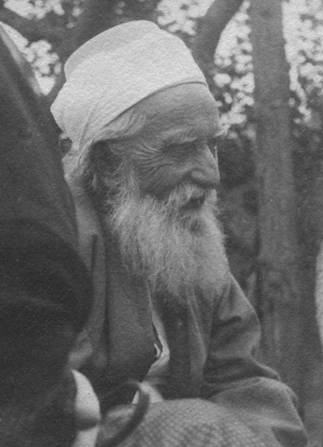
On the fifteenth of July, 1912, ‘Abdu’l-Bahá spoke to the friends gathered at the home of Dr. and Mrs. Florian Krug, 830 Park Avenue, New York. A prayer of thankfulness had just been offered, and He spoke about thankfulness.
There is, He said, a verbal thanksgiving, confined to a mere utterance of gratitude. The tongue may give thanks while the heart is unaware of it, as when we receive a gift and say “thank you” without meaning it. One may say thank you a thousand times while the heart remains thankless.
But real thankfulness is a cordial giving of thanks from the heart. When man in response to the favors of God manifests susceptibilities of conscience, the heart is happy, the spirit is exhilarated.
There is also, He said, a thanksgiving that expresses itself in deeds. In gratitude for the gift of guidance, a person must show forth praiseworthy actions: be self-sacrificing, love the servants of God, and show kindness to all the creatures.
He asked the friends to consider what they had been given: food and drink, sight and hearing, and endless spiritual blessings such as spirit, consciousness, thought, memory and perception.
Physically and spiritually we are submerged in the sea of God's favor.
In thanksgiving for these bestowals, He told them, they must act in accordance with the teachings of Bahá’u’lláh. They should read the Tablets, the Hidden Words, the Ishráqát and the Glad Tidings, and act according to them. To live in accord with these utterances, He said, is real thanksgiving.
At the close He said that He hoped to go away from New York with a happy heart, and that His heart was happy when the friends of God loved each other and showed the mercy of God to all people. If He saw this, He would go away happy.
A retelling based on The Promulgation of Universal Peace (talk of 15 July 1912 at the home of Dr. and Mrs. Florian Krug, 830 Park Avenue, New York). For the fuller account, see the original.
Cite this story
'Abdu'l-Bahá. (1922). *The Promulgation of Universal Peace*. Bahá'í Publishing Trust. https://www.bahai.org/library/authoritative-texts/abdul-baha/promulgation-universal-peace/
Record yourself reading this story
Recording stays on this device only. Nothing is uploaded.
Related stories
Two People Equivalent to the Whole World
At Los Angeles on October 19, 1912, 'Abdu'l-Bahá told the believers not to look at their small number: if they attained faith, firmness and self-sacrifice, even two people would be equivalent in strength of character to the whole world.
This Is the Day of Faithfulness
At this hour while yet the heart burns with the anguish of sorrow, and the gloom of bereavement still hangs low, my thoughts turn in loving remembrance to my sincere beloved sisters and brothers in the Cause.
A Reflection of the Heavenly Concourse
On 13 September 1911, nine days after arriving in London, 'Abdu'l-Bahá spoke at the home of Mrs. Thornburgh-Cropper and described the meeting as a reflection of the heavenly concourse.
Religion
To most men who have not heard the message of this teaching, religion seems an outward form, a pretence, merely a seal of respectability.