'Abdu'l-Bahá's Naw-Rúz Talk in Alexandria
J. E. Esslemont, Bahá'u'lláh and the New Era, (1923), George Allen & Unwin · Read original
When in Bahá'í history
Alexandria (today: Alexandria, Egypt)
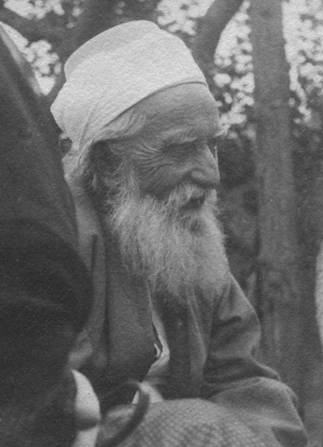
From Bahá'u'lláh and the New Era (J. E. Esslemont), chapter on the Bahá'í feasts.
In March 1912, shortly before He sailed for America, ‘Abdu’l-Bahá was in Egypt, and at Alexandria He gave a talk on the Feast of Naw-Rúz, the Bahá’í New Year. J. E. Esslemont quotes part of it in Bahá’u’lláh and the New Era, in his chapter on the Bahá’í feasts.
‘Abdu’l-Bahá said:
In the sacred laws of God, in every cycle and dispensation there are blessed feasts, holidays and workless days. On such days all kinds of occupations, commerce, industry, agriculture, etc., should be suspended. All should rejoice together, hold general meetings, become as one assembly, so that the national oneness, unity and harmony may be demonstrated in the eyes of all.
He went on:
As it is a blessed day it should not be neglected, nor deprived of results by making it a day devoted to the pursuit of mere pleasure. During such days institutions should be founded that may be of permanent benefit and value to the people.... Today there is no result or fruit greater than guiding the people. Undoubtedly the friends of God, upon such a day, must leave tangible philanthropic or ideal traces that should reach all mankind and not pertain only to the Bahá’ís. In this wonderful dispensation, philanthropic affairs are for all humanity without exception, because it is the manifestation of the mercifulness of God. Therefore, my hope is that the friends of God, every one of them, may become as the mercy of God to all mankind.
Esslemont adds that in Persia Naw-Rúz and the other great feasts were celebrated with picnics or festal gatherings, at which those present contributed music, the chanting of verses and Tablets, and short addresses. The intercalary days just before the month of fasting were given to hospitality to friends, the giving of presents, and ministering to the poor and the sick.
A retelling based on Bahá'u'lláh and the New Era (J. E. Esslemont), which quotes a Naw-Rúz talk by ‘Abdu’l-Bahá in Alexandria, 1912. For the fuller account, see the original.
Cite this story
Esslemont, J. E.. (1923). *Bahá'u'lláh and the New Era*. George Allen & Unwin. https://www.gutenberg.org/cache/epub/19241/pg19241-images.html
Record yourself reading this story
Recording stays on this device only. Nothing is uploaded.
Related stories
Naw-Rúz at Bahjí and Feasts for the Poor
During the First World War 'Abdu'l-Bahá Himself cooked the Naw-Rúz feast for the friends at Bahjí. On feast days He gathered the poor children of 'Akká for sweets and sharbat.
Feasts and Holy Days
The essential joyousness of the Bahá’í religion finds expression in numerous feasts and holidays throughout the year.
A New Year for Everyone
At Naw-Rúz in Alexandria in 1912, 'Abdu'l-Bahá said that a holy day should bring people together and leave behind something good that reaches everyone, not only Bahá'ís.
The Divine Springtime in New York
On 13 April 1912, three weeks after Naw-Rúz, 'Abdu'l-Bahá spoke at a New York home about the seasons. The coming of each Manifestation of God, He said, is a divine springtime, and Bahá'u'lláh has renewed that springtime.