The Three Portions of the Nineteen Day Feast
J. E. Esslemont, Bahá'u'lláh and the New Era, (1923), George Allen & Unwin · Read original
When in Bahá'í history
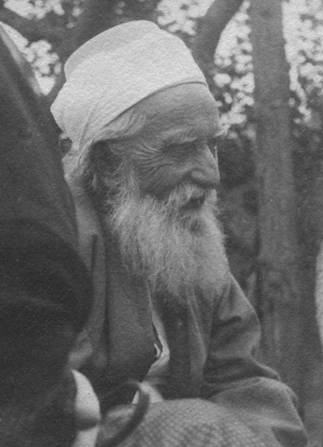
From Bahá'u'lláh and the New Era (J. E. Esslemont, revised edition), with details from a letter of the Universal House of Justice dated 27 August 1989.
The Nineteen Day Feast is held on the first day of each month of the Bahá’í calendar, whose nineteen months have nineteen days each. Bahá’u’lláh established it in the Kitáb-i-Aqdas. Later editions of Bahá’u’lláh and the New Era describe what it became after the passing of ‘Abdu’l-Bahá:
With the development of the Bahá’í administrative order since the ascension of ‘Abdu’l-Bahá, the Nineteen Day Feast, observed on the first day of each Bahá’í month, has assumed a very special importance, providing as it does not only for community prayer and reading from the Holy Books, but also for general consultation on all current Bahá’í affairs and for the association of the friends together. This Feast is the occasion when the Spiritual Assembly makes its reports to the community and invites both discussion of plans and suggestions for new and better methods of service.
In a letter of 27 August 1989 the Universal House of Justice explained that the Feast has three parts. The first is devotional: prayers and readings from the Holy Writings. The second is administrative: the Local Spiritual Assembly reports its activities, plans and problems, shares news and messages from the World Centre and the National Assembly, and consults with the friends and hears their recommendations. The third is social: refreshments and other activities that foster fellowship, in forms that vary from culture to culture.
The letter also records that after Local Spiritual Assemblies were established, Shoghi Effendi introduced the administrative portion and taught the community to regard the Feast as an institution.
Based on Bahá'u'lláh and the New Era (J. E. Esslemont) and the Universal House of Justice's letter on the Nineteen Day Feast (27 August 1989). For the fuller account, see the originals.
Cite this story
Esslemont, J. E.. (1923). *Bahá'u'lláh and the New Era*. George Allen & Unwin. https://www.gutenberg.org/cache/epub/19241/pg19241-images.html
Record yourself reading this story
Recording stays on this device only. Nothing is uploaded.
Related stories
Spiritual Assemblies
Before ‘Abdu’l-Bahá completed His earthly mission, He had laid a basis for the development of the administrative order established in Bahá’u’lláh’s Writings.
The Administrative Order
It has been the general characteristic of religion that organization marks the interruption of the true spiritual influence and serves to prevent the original impulse from being carried into the world.
The Nineteen Day Feast
With the development of the Bahá’í administrative order since the ascension of ‘Abdu’l-Bahá, the Nineteen Day Feast, observed on the first day of each Bahá’í month, has assumed a very special importance …
The Feast With Three Parts
Once every Bahá'í month the friends gather for the Nineteen Day Feast. They pray and read from the Holy Books, talk over the work of their community, and then spend time together.