Distinguished in Morals
'Abdu'l-Bahá, The Promulgation of Universal Peace, (1922), Bahá'í Publishing Trust · Read original
When in Bahá'í history
New York (today: New York City, USA)
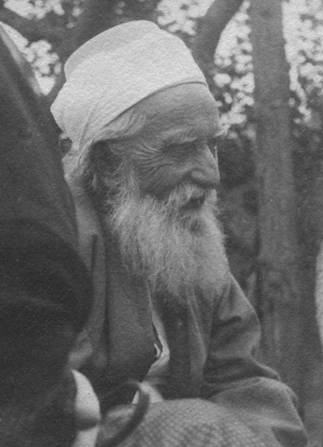
On the morning of June 15, 1912, the friends gathered at 309 West Seventy-eighth Street in New York to hear 'Abdu'l-Bahá. Howard MacNutt took the notes. The Master told them He had kept them waiting because He had been tired and had slept. In His sleep He had been talking with them, as though speaking at the top of His voice, and the sound of His own voice had woken Him. As He awoke, one word was on His lips: imtíyáz, "distinction." So that was the subject He chose for the morning.
All material things, He began, share common ties and yet have points of distinction. Mineral, plant, animal and human differ from one another, and among human beings there are differences of color and feature, of wealth and poverty, of wisdom and ignorance, of justice and injustice.
I desire distinction for you. The Bahá'ís must be distinguished from others of humanity. But this distinction must not depend upon wealth--that they should become more affluent than other people.
It was not financial distinction He wanted for them, He said, nor any scientific, commercial or industrial distinction.
For you I desire spiritual distinction--that is, you must become eminent and distinguished in morals. In the love of God you must become distinguished from all else. You must become distinguished for loving humanity, for unity and accord, for love and justice.
He named the virtues one after another: faithfulness and sincerity, justice and fidelity, firmness and steadfastness, philanthropic deeds and service to the human world, love toward every human being, unity and accord with all people, the removal of prejudices and the promotion of international peace, and finally heavenly illumination and the bestowals of God.
I desire this distinction for you. This must be the point of distinction among you.
A retelling based on The Promulgation of Universal Peace ('Abdu'l-Bahá), talk of 15 June 1912 at 309 West Seventy-eighth Street, New York (notes by Howard MacNutt). For the fuller account, see the original.
Cite this story
'Abdu'l-Bahá. (1922). *The Promulgation of Universal Peace*. Bahá'í Publishing Trust. https://www.bahai.org/library/authoritative-texts/abdul-baha/promulgation-universal-peace/
Record yourself reading this story
Recording stays on this device only. Nothing is uploaded.
Related stories
The Passing of Howard MacNutt
In January 1927 the Star of the West printed the obituary of Howard MacNutt, the early New York believer who died on December 26, 1926, and who had compiled, at the request of 'Abdu'l-Bahá, the Master's American addresses published as The Promulgation of Universal Peace.
Two People Equivalent to the Whole World
At Los Angeles on October 19, 1912, 'Abdu'l-Bahá told the believers not to look at their small number: if they attained faith, firmness and self-sacrifice, even two people would be equivalent in strength of character to the whole world.
At the Feast
Tonight we met ‘Abdu'l-Bahá and a large number of believers from all parts of the East at the Feast, or Supper, under the shadow of the Blessed Perfection.
A Reflection of the Heavenly Concourse
On 13 September 1911, nine days after arriving in London, 'Abdu'l-Bahá spoke at the home of Mrs. Thornburgh-Cropper and described the meeting as a reflection of the heavenly concourse.