America and the Banner of Peace
'Abdu'l-Bahá, The Promulgation of Universal Peace, (1922), Bahá'í Publishing Trust · Read original
When in Bahá'í history
New York (today: New York City, USA)
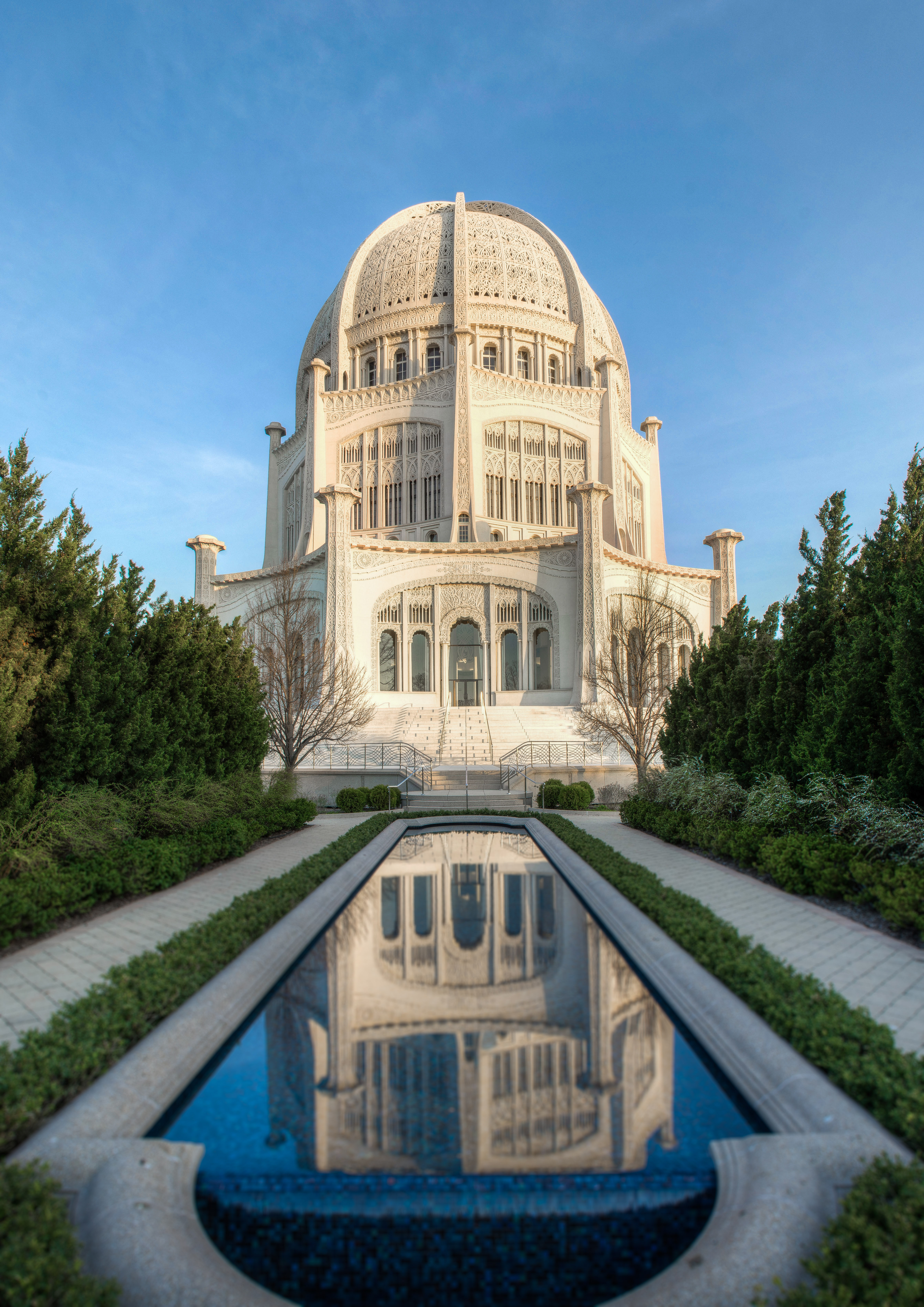
On May 12, 1912, ‘Abdu’l-Bahá spoke at a meeting of the International Peace Forum held at the Grace Methodist Episcopal Church on West 104th Street in New York. Earlier that same day He had travelled to Montclair, New Jersey, to speak at the Unity Church there.
He began with history. Strife and warfare had prevailed throughout the human world, and wars — religious, racial or political — had arisen from human ignorance, misunderstanding and lack of education. He took religious strife first, and refused to lay it at the door of the Founders. The divine Prophets, He said, have been the Shepherds and not the wolves. Moses gathered the scattered tribes of Israel; Christ brought together peoples of Chaldea, Egypt, Syria, Assyria and Phoenicia; Muḥammad reconciled the warring tribes of Arabia. If religion becomes the source of antagonism and strife, He said, the absence of religion is to be preferred.
Racial and national divisions, He continued, are human and artificial: All mankind are the fruits of one tree, flowers of the same garden, waves of one sea. He pointed to the war then being fought in Tripoli, to the mothers bereaved of their sons, and to rulers who live at ease in their palaces while sending the common people to the battlefield.
Then He turned to the country in which He was speaking. If Great Britain declared for international peace, He said, it would be said she did it to ensure the safety of her colonies; if France, that some hidden diplomatic policy lay behind it; if Russia, that she had national designs.
But the United States of America could not be accused of any such selfish interest. Your government has, strictly speaking, no colonies to protect.
He hoped, therefore, that America would stand forth as the first herald of peace and hoist its banner. He also warned that there was little time. Just now Europe is a battlefield of ammunition ready for a spark, and one spark will set aflame the whole world.
Near the close He returned to religion.
The foundations of all the divine religions are peace and agreement, but misunderstandings and ignorance have developed.
America had become renowned for her discoveries and inventions; now, He said, may she also become the herald and messenger of universal peace.
A retelling based on The Promulgation of Universal Peace (talk of 12 May 1912 at the International Peace Forum, Grace Methodist Episcopal Church, West 104th Street, New York; notes by Esther Foster). For the fuller account, see the original.
Cite this story
'Abdu'l-Bahá. (1922). *The Promulgation of Universal Peace*. Bahá'í Publishing Trust. https://www.bahai.org/library/authoritative-texts/abdul-baha/promulgation-universal-peace/
Record yourself reading this story
Recording stays on this device only. Nothing is uploaded.
Related stories
At the Eighth Street Temple, Washington
At a Washington synagogue on 8 November 1912, 'Abdu'l-Bahá argued that Christ had spread the Torah and the name of Moses throughout the world, and that Christians and Jews should therefore love one another.
At Temple Emanu-El in San Francisco
On October 12, 1912, 'Abdu'l-Bahá spoke at Temple Emanu-El in San Francisco. He praised Moses and asked His Jewish hearers why they, in turn, should not acknowledge Christ and Muḥammad.
Yet He Loved Them All
In Julia Grundy's pilgrim notes from 'Akká, 'Abdu'l-Bahá is asked how we can love someone whose personality is unpleasant. His answer points to Christ, who loved even those who crucified Him, and to the tree whose fruit is love.
A Reflection of the Heavenly Concourse
On 13 September 1911, nine days after arriving in London, 'Abdu'l-Bahá spoke at the home of Mrs. Thornburgh-Cropper and described the meeting as a reflection of the heavenly concourse.