The Covenant as an Ark of Salvation
Julia M. Grundy, Ten Days in the Light of Akka, (1907), Bahai Publishing Society · Read original
When in Bahá'í history
'Akká (today: Acre, Israel)
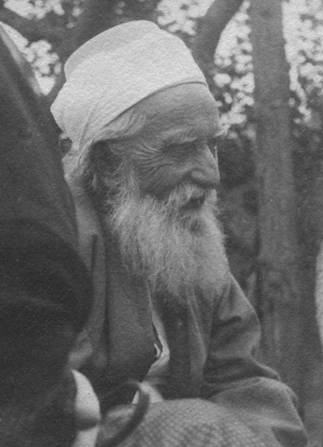
A retelling based on Ten Days in the Light of Akka by Julia M. Grundy, her record of a pilgrimage to 'Abdu'l-Bahá in 'Akká in 1905. The words in quotation marks are as she wrote them down. They are pilgrim's notes: her memory of what the Master said, not an authenticated text of His words.
In 1905 Julia Grundy, an American believer, made the pilgrimage to 'Akká. She kept notes of the talks she heard from 'Abdu'l-Bahá and published them in 1907. One of the talks is headed "Obedience."
It opens: "Today we will speak about Obedience!" The Master said that the Manifestation of God is "a perfect example of real obedience," and that every plan and longing must be given up to the Will of God. Of Himself He said: "I am only His Servant, nothing more."
He compared the believers to an army. "The soldiers in an army are under the will and control of one commander; therefore, they are united and can press on to victory," He said. If each soldier followed his own inclination, "nothing would be accomplished." The believers, He went on, are all "under the Tent of the Covenant in this Revelation. There is strength only in unity."
Then He gave two pictures of the Covenant:
"The Covenant of God in this Day of Manifestation is a Lifeboat, an Ark of Salvation. All true followers of the Blessed Perfection are sheltered and protected in this Ark. Whoever leaves it, trusting in his own will and strength, will drown and be destroyed."
"The Covenant is like the sea, and the believers are as the fishes in the sea. If a fish leaves the water, it cannot live."
The Blessed Perfection is Bahá'u'lláh. The Master reminded the pilgrims that He had put His Covenant in writing: "The Blessed Perfection wrote a Testament or Covenant with His Own Pen so that no one who obeys it will deny or disobey God." And He asked: "What cause of union could be greater than the Covenant God has revealed through His Manifestation Bahá'u'lláh?"
This is a retelling. For the full talk, see the chapter "Obedience" in Ten Days in the Light of Akka by Julia M. Grundy.
Cite this story
Grundy, J. M.. (1907). *Ten Days in the Light of Akka*. Bahai Publishing Society. https://bahai-library.com/grundy_ten_days_akka
Record yourself reading this story
Recording stays on this device only. Nothing is uploaded.
Related stories
New York, the City of the Covenant
In New York in 1912 'Abdu'l-Bahá declared His station as Centre of the Covenant and named the city the City of the Covenant. Three days before He sailed, He spoke there of the Covenant as Bahá'u'lláh's safeguard against division.
The First Western Pilgrims Reach 'Akká
In December 1898 the first pilgrims from the West began to reach 'Akká to meet 'Abdu'l-Bahá. One of them, Mrs. Thornburgh-Cropper, later described entering the prison-city by night with Phoebe Hearst and being led up to the Master by candlelight.
The Sin of Disobedience
On pilgrimage in ‘Akká in 1909, Juliet Thompson stayed up late instead of resting as the Master had asked, and argued about whether the New York Assembly was united. The next morning ‘Abdu’l-Bahá looked deep into her eyes and took her hand in a clasp of love.
How the Day of the Covenant Began
When the Bahá'ís begged for a day to celebrate as His, 'Abdu'l-Bahá would not let it be His birthday, which belonged to the Báb, and gave them 26 November instead. A tablet of His calls the believers to be firm.